Why HQ Always Learns of Store Sales Declines Too Late, and How FDAM AI Helps
A look at FDAM AI's prediction and analysis features, and the criteria to check before adopting them.

As the store count grows, headquarters' checking work doesn't just add up; it multiplies.
CORE SUMMARY
✓ As the store count grows, headquarters' checking work grows exponentially, not arithmetically.
✓ Franchise AI isn't a tool that solves problems for you; it's a tool that sets the order in which you check things.
✓ FDAM AI already offers features across several areas, including sales prediction, off-catalog purchasing analysis and CS response drafts, and the scope of use can vary by implementation type.
✓ If you're evaluating adoption, review how much data your headquarters has accumulated before looking at the feature list.
Franchise AI is technology that analyzes the sales, inspection and CS data headquarters already holds and lays out priorities for which franchise stores to check first. It doesn't fix problems automatically; it narrows down what people should check and in what order. Getting this definition clear up front lets you set accurate expectations when you review features later.
This article looks at the structural reasons franchisor headquarters notice sales declines late, how each of FDAM AI's existing prediction, analysis and response features connects to specific work, and what to check first when evaluating adoption. Since the scope of each feature can vary by implementation type, the most accurate way to confirm what applies to you is through a consultation.
HQ doesn't learn of sales declines late because it lacks data
In most cases, headquarters is slow to spot a particular store's crisis not because data is missing, but because it's scattered. When the accounting team manages sales files, supervisors manage inspection records and the customer center manages CS history, getting a complete picture of one store means going back and forth between three departments to cross-check materials.
Three places where time drains away
1. It takes time to tell whether a sales decline is seasonal or an operational problem.
2. Staff managing several stores at once spend time deciding which store to look at first.
3. Even after identifying the cause, there's relatively little time left to discuss it with the owner.
If you adopt franchise AI expecting "a tool that finds problems automatically," a gap easily opens between expectations and the actual experience. If instead you treat it as "a tool that organizes the order of checks and frees up more time for discussion," you can more accurately predict how staff work will actually change after adoption. This difference in perspective is the first criterion to settle when evaluating adoption.
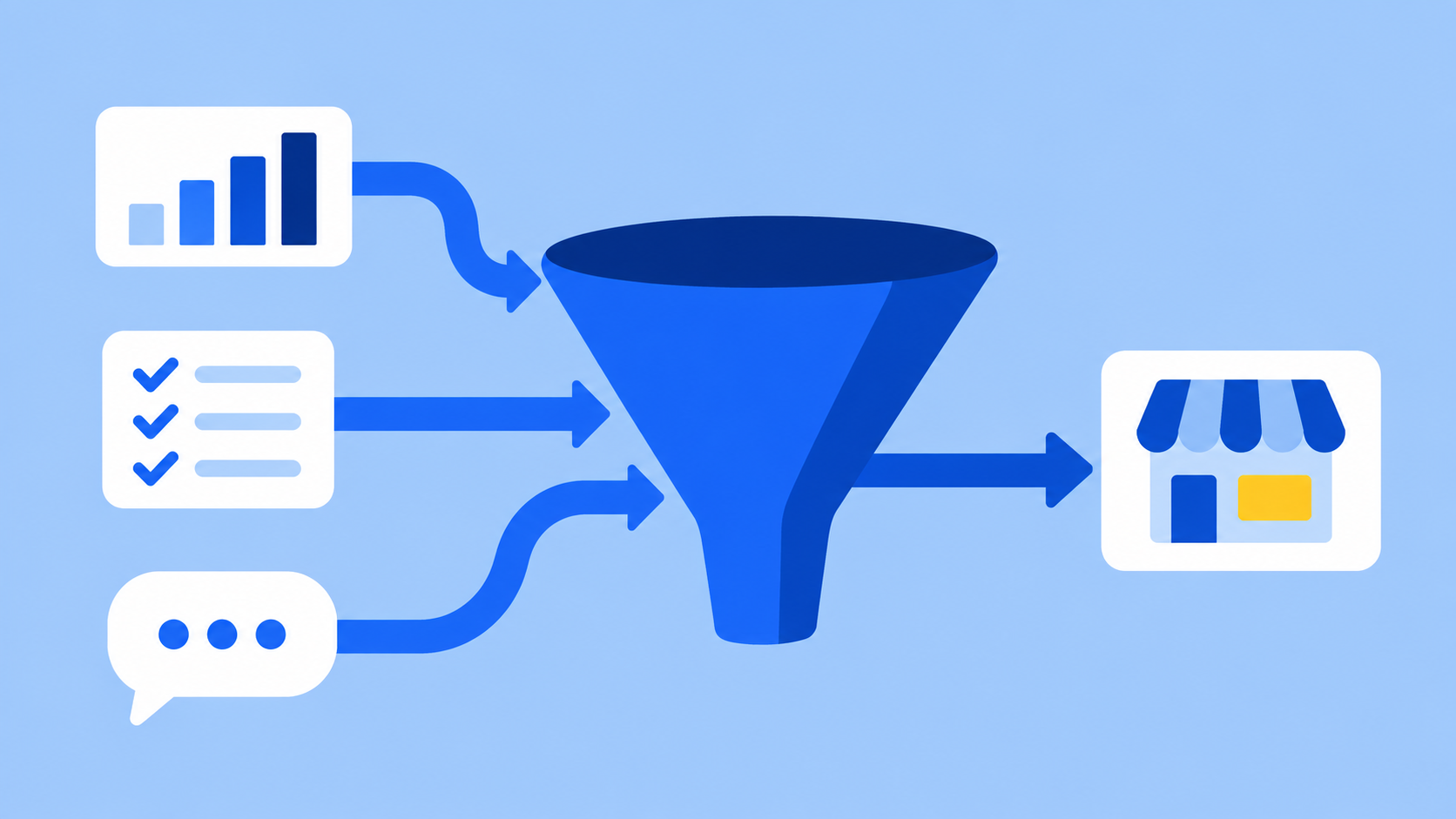
The problem isn't missing data; it's scattered data.
FDAM AI's prediction features don't settle outcomes; they narrow down what to check
FDAM AI offers features that predict the likelihood of sales declines and store closures, as well as the likelihood of sales growth. Their role isn't to settle the future, but to narrow down the list of stores headquarters should review first.
Sales decline prediction is especially useful for managing underperforming stores. Instead of inspecting every store evenly each month, staff can visit stores showing risk signals first or schedule consultations with their owners. That said, prediction results tell you what to review; they don't prove the cause. Actual action must always be decided after staff compare the results with conditions on the ground.
Sales growth prediction gets less attention but is an important feature. When headquarters is busy responding only to urgent problems, support for stores with growth potential naturally gets pushed back. If you can spot growth signals early, you can make decisions such as extra support or choosing test stores for new menu items sooner. For both prediction features, it's better to use them as reference material that brings on-site checks forward rather than basing decisions on definitive figures or accuracy rates.

A prediction isn't a conclusion; it's reference material for deciding what to check first.
Off-catalog purchasing analysis and reporting focus on cutting handoff time between staff
A drop in order volume alone isn't enough to conclude that a store is purchasing off-catalog. The store may have used up existing stock first, changed its ordering cycle, or simply be in a slow season. The off-catalog purchasing analysis feature narrows down, among these possibilities, the stores that need further checking.
For this feature to actually matter, the analysis has to reach the next person accurately. Since the person who analyzes sales and the supervisor who visits the store are often different people, you also need a report-style feature that packages the analysis and the items needing checks for handoff. FDAM AI's focus, too, is less on the analysis itself than on how smoothly it connects this handoff process.
When evaluating features like this in practice, it's easier to decide if you break them into four steps.
| Step | What staff check |
|---|---|
| 1. Review results | Stores needing priority review and related metrics |
| 2. Cross-check evidence | Missing data, temporary fluctuations |
| 3. Decide response | Order of visits and consultations, staff assignment |
| 4. On-site check | Review the actual situation with the owner |
Of these four steps, AI handles only step 1. The remaining three still require human judgment and face-to-face communication, and recognizing that clearly before adoption narrows the gap between expectations and real-world operations.

AI handles only the first step; the judgment that follows belongs to people.
For repetitive CS and review responses, draft generation is where it really pays off
If prediction and analysis features focus on organizing priorities for judgment, CS response features focus on cutting time spent on repetitive work. FDAM AI generates draft answers to frequent inquiries and draft review replies.
What needs to be clear here is the scope of this feature. Creating a draft and actually posting it are different steps. Store owners remain the primary responders to reviews, and headquarters supports draft writing so the brand voice stays consistent. Even after a draft is generated, there must always be a step where staff verify the facts and each store's circumstances and edit as needed. In particular, matters requiring case-by-case judgment, such as compensation or refunds, must not use the draft as is and must be checked against headquarters' internal standards.
The value of this feature isn't fully replacing response quality, but cutting the daily time spent drafting so staff have time to review the prediction and analysis results discussed earlier. In the end, FDAM AI's features don't operate independently of each other; they connect into a single flow that reallocates the time saved to higher-priority judgments.

Checking and editing after a draft is generated is still up to staff.
If you're evaluating adoption, check your data before the feature list
The most common approach to evaluating franchise AI is to start by looking at what features it has. But how useful those features actually are depends heavily on the volume and format of the data headquarters holds. Whether you have only a few months of sales data, whether inspection records are entered as standardized items, and whether CS history is managed separately by store all change how much value you get from the same feature.
POINT
The first step in evaluating adoption isn't looking for new features. It's identifying the work your headquarters responds to most slowly and confirming how far back the data for that work goes.
Which features to review first depends on whether the work is one where responses come late, like managing underperforming stores; one where decisions take a long time, like selecting growth stores; or one where time piles up, like repetitive responses. In areas with too little data, the right order is to fix your data entry system before introducing features.
Reviewing in this order lets you approach franchise AI not as adding yet another system, but as a reorganization to make better use of existing data, and it raises the odds that it settles naturally into real operations after adoption.
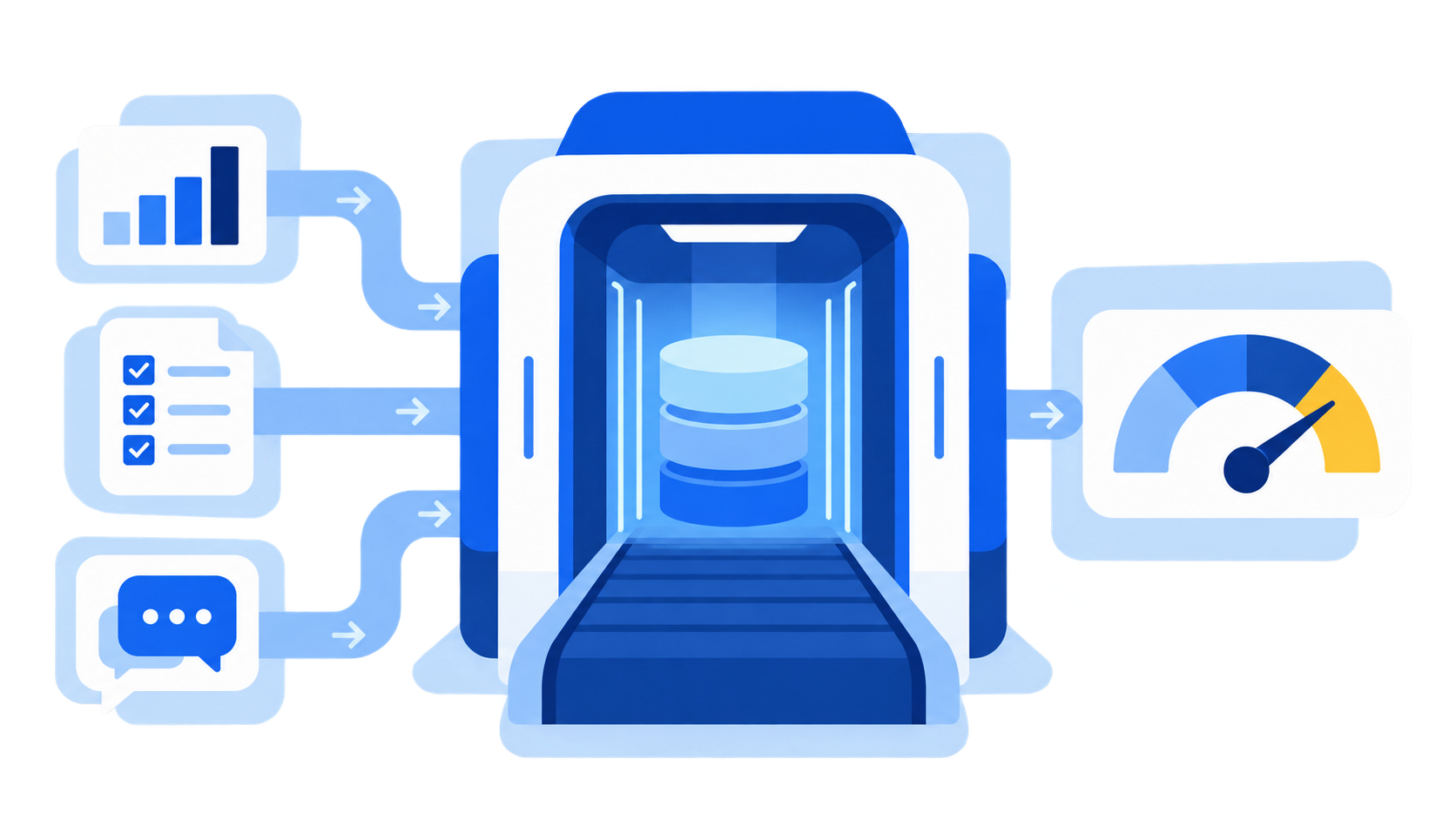
What to check before features is your headquarters' data.
Frequently asked questions
Q. Can we decide on actions for a store based on FDAM AI's prediction results alone?
A. No, actions should not be decided on prediction results alone. Predictions are reference material that point you to stores needing checks first; actual actions must be decided after staff compare them with conditions on the ground.
Q. Are all FDAM AI features included by default when we adopt FDAM?
A. Sales prediction, off-catalog purchasing analysis and CS response draft features are already available, but the detailed scope can vary by implementation type, so it's best to confirm exactly what applies through a consultation.
Q. What should we prepare before evaluating FDAM AI?
A. A good starting point is checking how far back, and in what format, your current sales, inspection and CS data has been accumulated.
Q. Can we use AI-written review replies or CS answers as is?
A. Drafts should be used only after staff verify the facts and each store's circumstances, and matters requiring case-by-case judgment, such as compensation or refunds, must be checked against headquarters' standards.
Franchise AI isn't technology that makes decisions for headquarters. It organizes the order of checks so staff can spend their time on more important judgments. FDAM AI already offers features in prediction, analysis and response. If you're evaluating adoption, we recommend first mapping out the checking work that takes the most time at your headquarters and the data you currently hold, before looking at the feature list.
Drawing on experience working alongside franchisor headquarters on day-to-day operations, MS Benter offers consultations on the right implementation approach for each headquarters' data.
See whether FDAM AI features fit your headquarters
Tell us about the data you hold, and we'll advise on applicable features and what to prepare.
Explore FDAM AI features with salesFDAM AI, franchise AI, store sales analysis, underperforming store management, FDAM, franchise ERP, sales prediction, AI CS responses, franchisor operations, franchisor headquarters, MS Benter