What Is a Franchise ERP? How FDAM Connects Every Step of HQ Work
FDAM franchise ERP: connecting everything from consultation to operations

A franchise ERP connects the entire HQ workflow into a single flow
CORE SUMMARY
✓ Franchisor HQ work runs through three stages: sales management, opening management and operations management. When information breaks between stages, management costs turn into more management headcount.
✓ Unlike a general enterprise ERP, a franchise ERP is designed to manage not only the HQ organization but also the many franchise stores outside it.
✓ FDAM is an operations ERP for headquarters that connects prospect consultations, e-franchise agreements, opening preparation, QSCV inspections and sales aggregation on a single data flow.
✓ When evaluating a franchise ERP, the practical yardstick is not the number of features but whether information from earlier stages carries through intact to later ones.
A franchise ERP is software that handles the entire franchisor HQ workflow, from startup consultations and franchise agreements to opening preparation and store operations management, in a single system. Unlike general business software or accounting programs that handle department-level work, a franchise ERP is designed around the dual structure of headquarters and franchise stores.
In this post, we start with where franchisor HQ work actually breaks down, then cover the structure of a franchise ERP that connects that flow, how FDAM links sales management, opening management and operations management, and finally the criteria to check when evaluating adoption.
Where franchisor HQ work breaks down
Franchisor HQ work is hard not because there is too much of it, but because each stage uses a different tool and information breaks between them.
Tools scattered across every stage
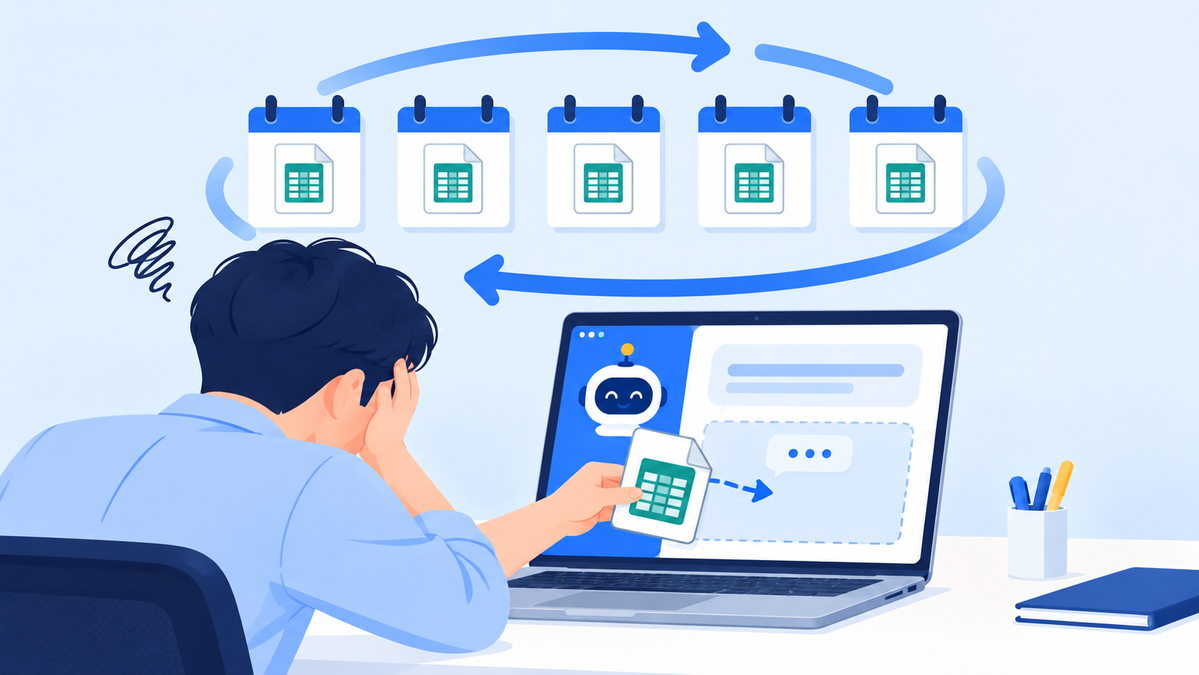
Startup inquiries live in personal Excel files, consultation notes in notepads and messaging apps, disclosure documents in email, contracts on paper, opening preparation in yet another Excel file, and inspection checklists and sales data in separate formats. Because every stage uses a different tool, the job of connecting them ultimately falls to people.
The problem is that this connection depends on people's memory and manual work. When staff change, consultation history disappears with them, and it becomes hard to track which inquiry was answered when. To find out on what terms a particular store signed and what issues came up at opening, you have to dig through multiple files and staff members' memories at the same time.
This cost grows as the number of stores increases. Realistically, it is hard to add management staff in proportion to how fast stores are added. Eventually HQ reaches a point where it must choose between adding more people or moving the workflow itself onto a system. That is exactly where a franchise ERP comes under consideration.

When tools change at every stage, the burden of connecting information falls on people
What a franchise ERP is and why it differs from a general ERP
A franchise ERP is a system designed to manage the many franchise stores outside headquarters in addition to the HQ organization itself.
A typical enterprise ERP is built around internal processes such as accounting, HR and purchasing. Its purpose is to organize data generated within the organization, so it does not need features for managing separate business entities outside it. Franchisor headquarters, by contrast, has a dual structure: it must manage not only its own organization but also the many franchise stores bound to it by contract.
This difference carries straight into day-to-day features. Work such as delivering pre-contract disclosure documents, e-franchise agreements, per-store QSC inspections and store sales aggregation is unique to franchising and often falls outside the standard scope of a general enterprise ERP. Handling this work with general-purpose collaboration tools means constantly bolting on extra forms and procedures, and in the end the same breaks described above happen again.
That is why the market serving franchisor headquarters has franchise-specialized ERPs, designed from the ground up around how franchise work is structured. When evaluating one, the criterion is not how many features it has, but how naturally the system reflects the franchise-specific workflow running from consultation to operations.

A franchise ERP covers both the HQ organization and the franchise store network
FDAM: an HQ operations ERP connecting sales, opening and operations
FDAM (Fdam) is an operations ERP for headquarters that organizes and standardizes franchisor HQ work in one place. The F stands for Franchise.
FDAM's design principle is about sequence, not the number of features. It lays out HQ work in three stages, sales management → opening management → operations management, and its data structure is designed so that information entered at earlier stages carries through intact to later ones.
FLOW
01Sales management
Manages prospect consultations, disclosure documents and e-franchise agreements.
02Opening management
HQ itemizes and manages progress on documents, interiors and training.
03Operations management
Manages QSCV inspections, POS sales aggregation and store information together.
The state this structure creates is simple: who did what and when is recorded and can be checked right away. Even when staff change, consultation history, contract terms and opening progress stay in the system, so no information is lost during handovers. With support for PC, tablet and mobile, work proceeds on the same data whether in the office or in the field.
In the next two sections, we first look at sales management in detail, then cover opening management and operations management.

FDAM is designed so that data from earlier stages flows into later ones
Sales management: from prospect consultations to e-franchise agreements
The first problem to solve at the sales management stage is making sure consultation history builds up as an HQ asset rather than staying in individual staff members' records.
FDAM's sales management consists of prospect management, startup inquiry management, disclosure documents and e-franchise agreements. When a startup inquiry comes in, it is registered as a lead (prospective franchisee), and consultation status and history keep accumulating. You can view pipelines and consultation progress by staff member, and see at which stage the most prospects drop off.
The part directly tied to legal risk is the disclosure document. In FDAM, you can generate documents and send them via KakaoTalk, email or text, and the viewing timestamp is recorded. Because the history of when documents were delivered and opened is kept, it can serve as supporting evidence whenever the delivery date needs to be confirmed later. Since delivering disclosure documents is a legally important step in franchising, whether this history is recorded automatically in the system is a must-check item when evaluating a franchise ERP.
The step where consultation turns into a contract is connected to e-franchise agreements. There is less printing of paper contracts and exchanging them by mail or in person, and an automatic alert 30 days before expiry helps prevent missed renewal dates. The more contracts you have, the greater the risk of omissions when tracking expiry dates by hand, and this alert reduces that risk.

Consultation history and contract information stay in the HQ system, not with individual staff
Opening and operations management: standardized openings, plus inspections and sales in one place
The key question at the opening and operations management stages is whether opening-preparation quality is maintained by standards recorded in the system rather than by individual staff experience.
Opening management consists of document management, interior management and training management. Headquarters is in charge at this stage: HQ itemizes and manages the documents to prepare before opening, interior progress, training schedules and evaluation results. Opening preparation is hard not because the items themselves are complex, but because those items run on staff memory rather than documentation. The more openings you have and the more often staff change, the clearer the limits of this approach become. In FDAM, opening-preparation work is managed item by item, so you can check progress and spot missing steps, and at handover you can pass on the history kept in the system as-is, reducing variation in opening quality.
Operations management consists of store QSCV inspections, POS sales aggregation and store information management. This covers management after a store opens. Inspections are conducted against quality, service, cleanliness and value criteria, and regular inspection results are recorded and tracked by store. The limitation of paper checklists is that it is hard to confirm whether past findings were actually addressed; once inspection history accumulates in the system, that becomes possible.
POS sales aggregation comes along with it. Because inspection results and sales data can be viewed in one flow rather than separately, it becomes easier to connect operational quality with sales performance when making decisions. Store information is also standardized to HQ criteria, so you can find what you need faster when coordinating operations support or inspection schedules. When evaluating a franchise ERP, we recommend checking whether inspection data and sales data sit in the same system, on the same store basis.
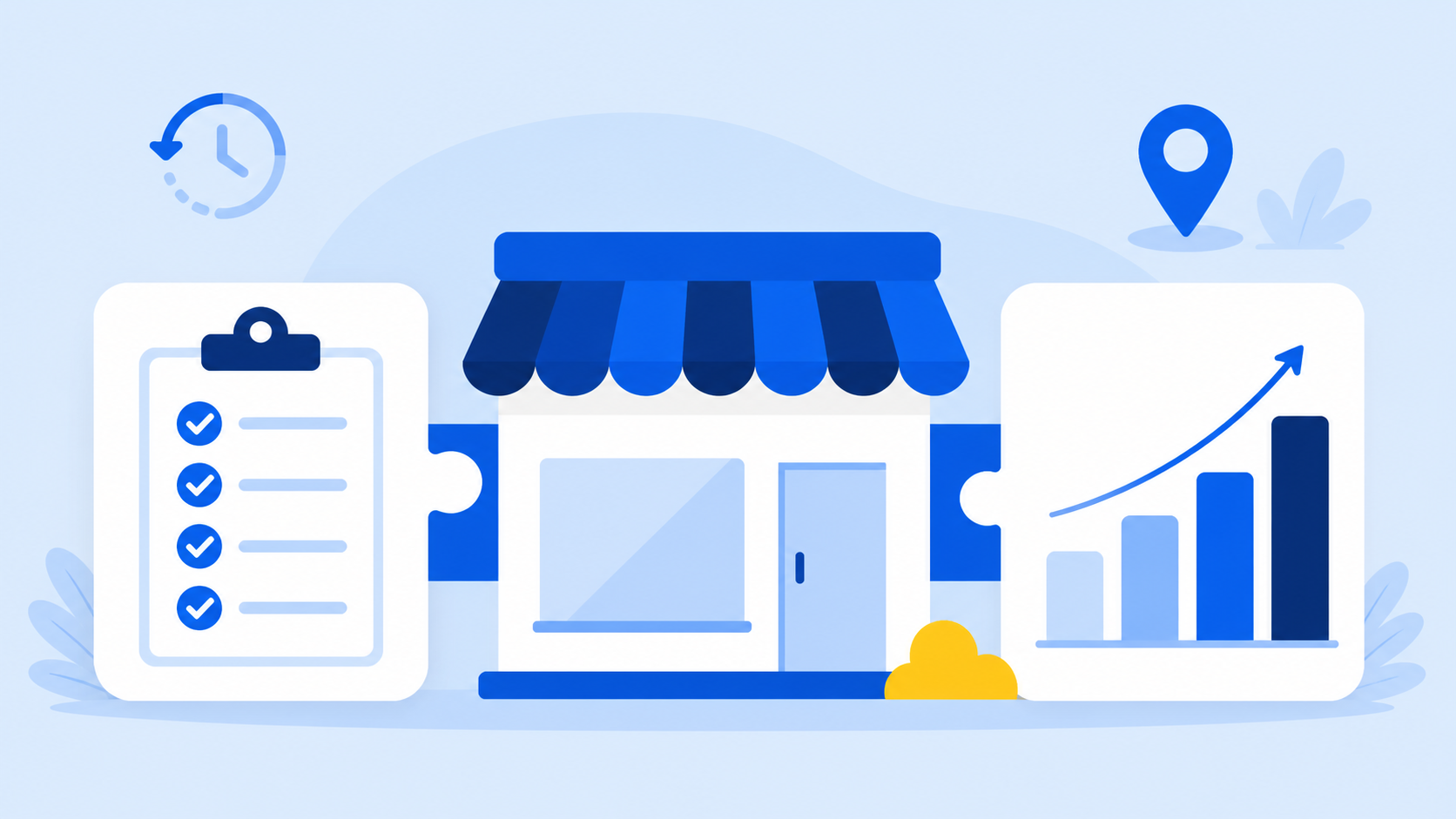
Inspection results and sales data can be viewed together on the same screen
Criteria to check when evaluating a franchise ERP
When deciding whether to adopt a franchise ERP, the starting point is pinpointing where work breaks down most often at your headquarters today.
CHECK
✓ HQs that cannot add management staff as fast as stores grow
✓ HQs with frequent openings or that want to standardize opening quality
✓ HQs that want to raise operational quality by viewing inspections and sales together
✓ HQs that need to manage legal risk around contracts and disclosure documents in practice
If two or more of the items above apply, it is worth evaluating. Conversely, if your biggest bottleneck right now is logistics and inventory management, it makes more sense to start with Logidam, our logistics ERP, rather than FDAM.
Beyond the core flow, FDAM offers CS management, survey management and dispute management as optional features, so you can adjust the scope to suit your brand. Its AI features include drafting review replies; store owners remain the primary responders to reviews, while HQ supports them in keeping the brand's tone consistent.
If you need two-way communication between headquarters and stores, you can also consider Sodam. It is a store communication app that handles notices, recipe sharing, surveys, CS requests and on-site QSCV inspections in the app, connecting FDAM's HQ management with communication in the field.
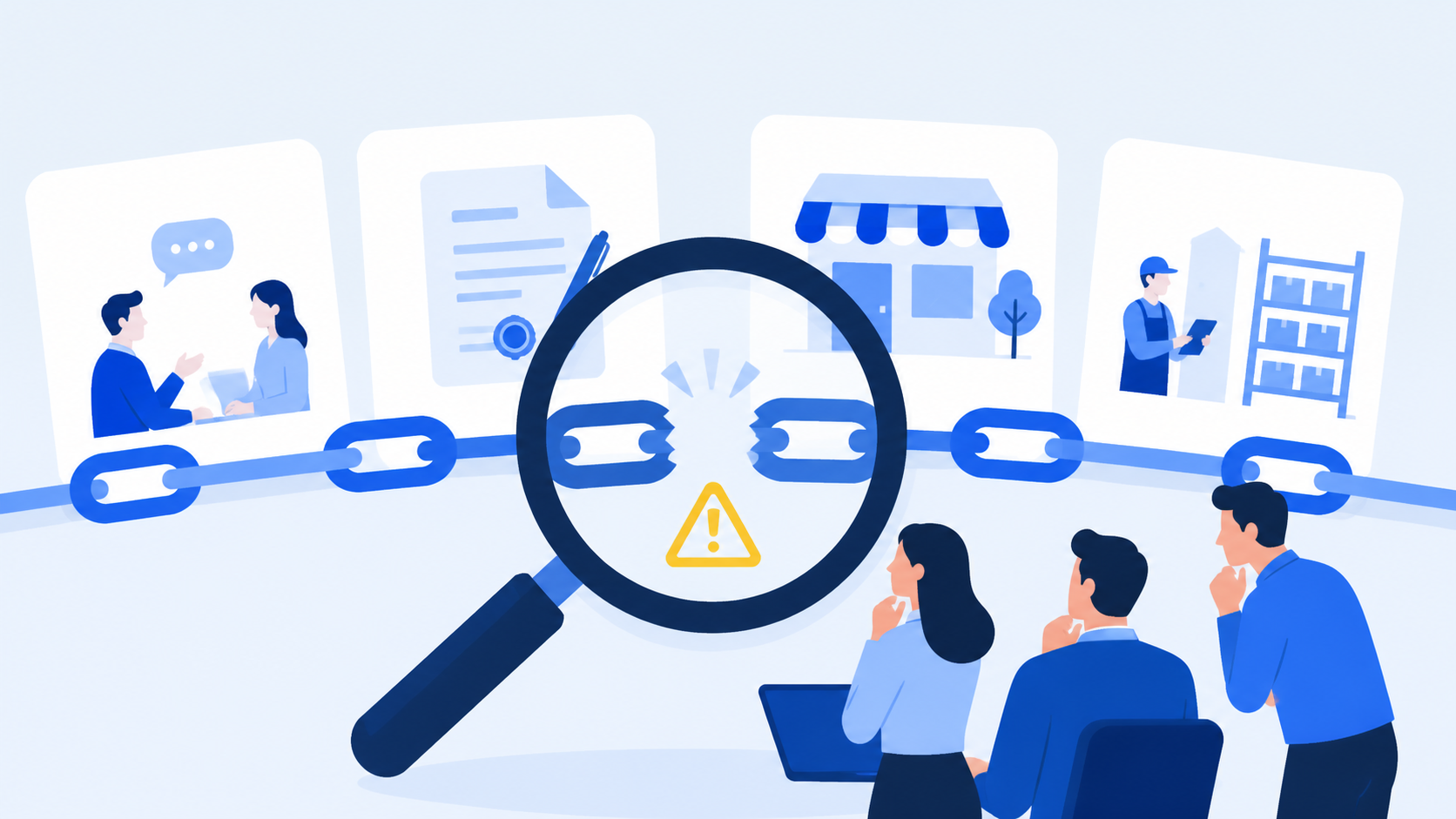
The starting point of an evaluation is pinpointing where work breaks down most often today
Frequently asked questions
Q. Which features should we evaluate first when adopting a franchise ERP?
A. Start by pinpointing the stage in your current workflow where breaks or omissions happen most often, then check how the system connects that point. If consultation history management is the problem, look first at sales management; if variation in opening quality is the problem, look first at opening management.
Q. How do we migrate store data we have been managing in Excel or on paper?
A. Existing data such as store information and consultation history is organized to fit the system's standards and then migrated. During the sales consultation, we first review the format and scope of the materials you currently manage.
Q. Does an early-stage brand with only a few stores need a franchise ERP?
A. Setting standards for consultations, contracts and openings early reduces the burden of overhauling your management system as the store count grows. Defining standards before openings become frequent makes later expansion easier.
Q. How is a franchise ERP different from a store communication app?
A. A franchise ERP is a system HQ uses to manage consultation, contract, opening and operations data, while a store communication app is a tool for two-way communication between HQ and stores, such as notices, surveys and on-site inspections. The two serve different roles, but used together they connect HQ management and field communication in a single flow.
In the end, franchisor HQ work is one long flow. Keeping that flow, from consultation through contract and opening to operations, from breaking along the way is why you evaluate a franchise ERP.
Find out where work breaks down most often at your HQ today
MS Benter has developed only franchise-specific software since 2007 and built FDAM on its experience with more than 500 brands and its government-recognized franchise IT research lab.
Contact salesExplore the product Chat on KakaoTalk
Inquiries 1544-7120 (Korea) · msb@benter.co.kr
franchise ERP, FDAM, franchise store management system, e-franchise agreements, franchisor HQ operations, prospect management, QSC inspections, franchisor HQ system, franchise agreement management, opening management, franchise solutions, MS Benter