Paik's Coffee in Taiwan: Conditions for Overseas Franchise Growth
Operational standardization strategies for franchises in expansion mode, through the lens of Paik's Coffee's moves into Taiwan and Japan

Same brand, different entry structures — how expansion differs in Japan and Taiwan
CORE SUMMARY
✔ Paik's Coffee chose company-owned stores in Japan and a master franchise agreement in Taiwan, and each choice demands different preparation.
✔ With company-owned stores, HQ controls operations directly but shoulders the investment and staffing burden; with a master franchise, success in passing on standards depends on the local partner's execution.
✔ Either way, opening procedures and quality inspections must be standardized in documents and data so the same results are achieved even when staff change.
✔ The faster the expansion, the more HQ must personally oversee across the entire process of contracts, openings and inspections.
Expanding a franchise overseas means reproducing the operating standards a brand has proven at home, unchanged, in a new market. The two entry approaches Paik's Coffee recently took show just how differently that reproduction has to be prepared for.
Paik's Coffee opened a company-owned store in Tokyo, Japan, in August 2026, and in September of the same year signed a 10-year master franchise agreement with a Taiwanese company. That one brand chose a different entry approach for each market, and that the nature of HQ's work changes with that choice, offers plenty of lessons for Korean franchisor headquarters considering overseas expansion. In this article, we lay out the structural differences between the two approaches and look at the operational standardization tasks HQs tend to miss during expansion. The analysis is as of Sep 15, 2026, and this article does not cover the background of Paik's Coffee's internal decisions.
Paik's Coffee in Taiwan vs. company-owned stores in Japan: why the different paths?
Paik's Coffee is expanding overseas by choosing a different expansion structure for each market. In Japan, it opened company-owned stores in Shimbashi and Kanda in Tokyo, with HQ operating the stores directly, while in Taiwan it signed a 10-year master franchise agreement with a local partner, handing over the rights to develop the business.
This difference is not just a matter of regional strategy; it is a decision about how far HQ controls the field and where it starts entrusting things to a partner. With company-owned stores, the burden of upfront investment and staffing falls on HQ, but HQ can watch local reactions from up close and adjust operating standards. A master franchise lets the brand leverage the local partner's capital and market knowledge, but because HQ has a hard time seeing into the stores directly, the completeness of its indirect controls — contracts, training and inspections — becomes the ceiling on brand quality.
According to a Sep 8 report by the Seoul Shinmun, the first Taiwan store is scheduled to open in the first half of 2027, with a target of 150+ cumulative stores by year five. However, this is a target presented at the contract stage, not a confirmed result, so plans and outcomes should be kept separate until actual openings and operating results come in.
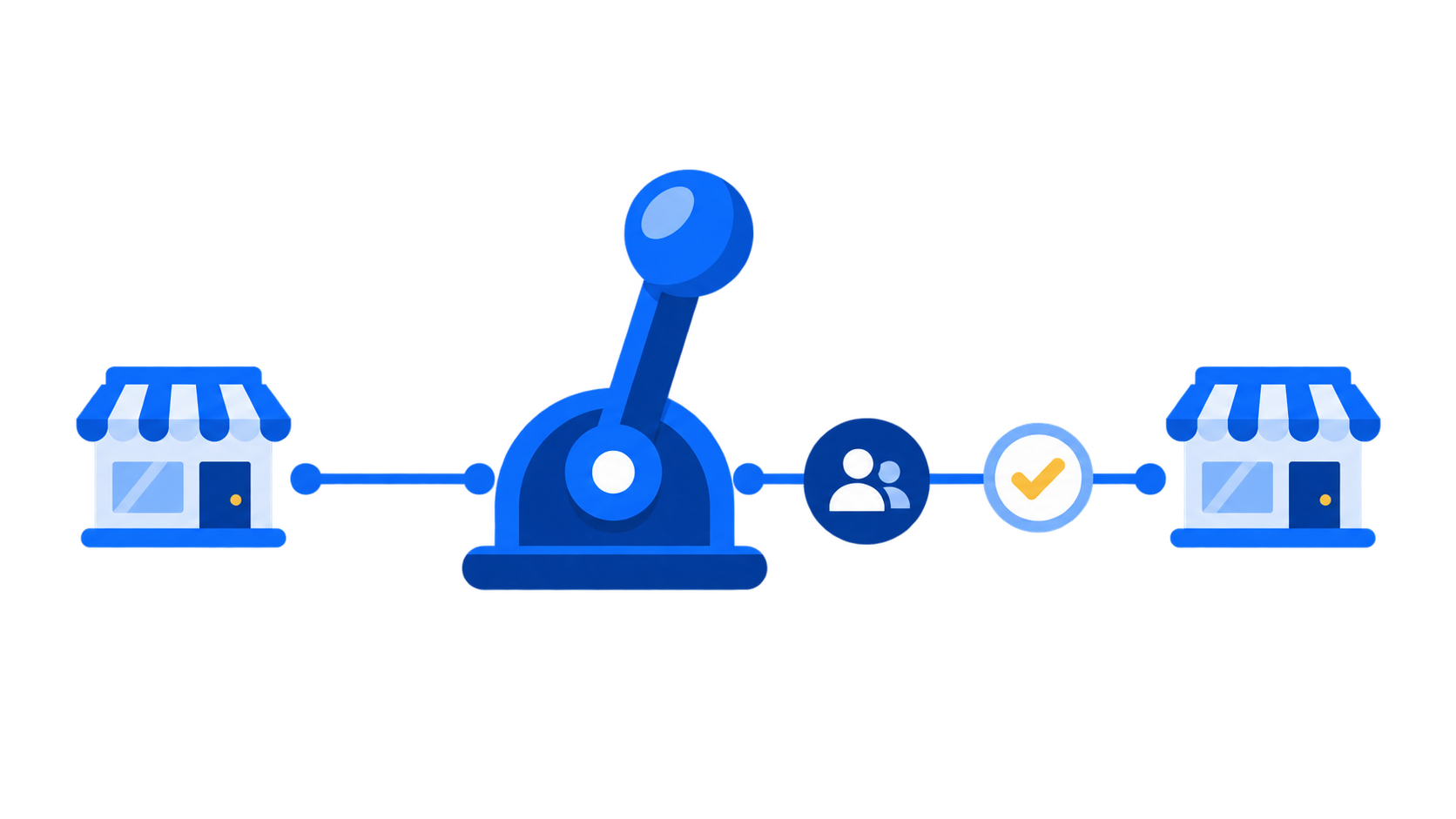
The scope of HQ control depends on the entry approach
Company-owned vs. master franchise: HQ's role is structurally different
Different expansion approaches fundamentally change the nature of the work HQ must prepare. Under a company-owned structure, HQ handles everything directly, from store opening to hiring and day-to-day operations, so the management burden grows as headcount grows. Under a master franchise structure, by contrast, HQ's role shifts from running the field to designing and verifying standards.
The same difference appears in domestic franchise expansion. HQs that add company-owned stores must also expand their hiring, training and field management staff, while HQs that expand through franchising take on a bigger role in managing how accurately store owners reproduce HQ standards. Either way, the quality of expansion is determined by how consistently the standards HQ creates are executed in the field.
Problems arise when these standards are not documented and instead depend on individual staff members' experience and memory. With one or two openings, it hardly shows, but the moment you prepare several stores at once or a staff member is replaced, inconsistencies in the standards surface. The faster the expansion, the greater the need for a system to manage those inconsistencies.
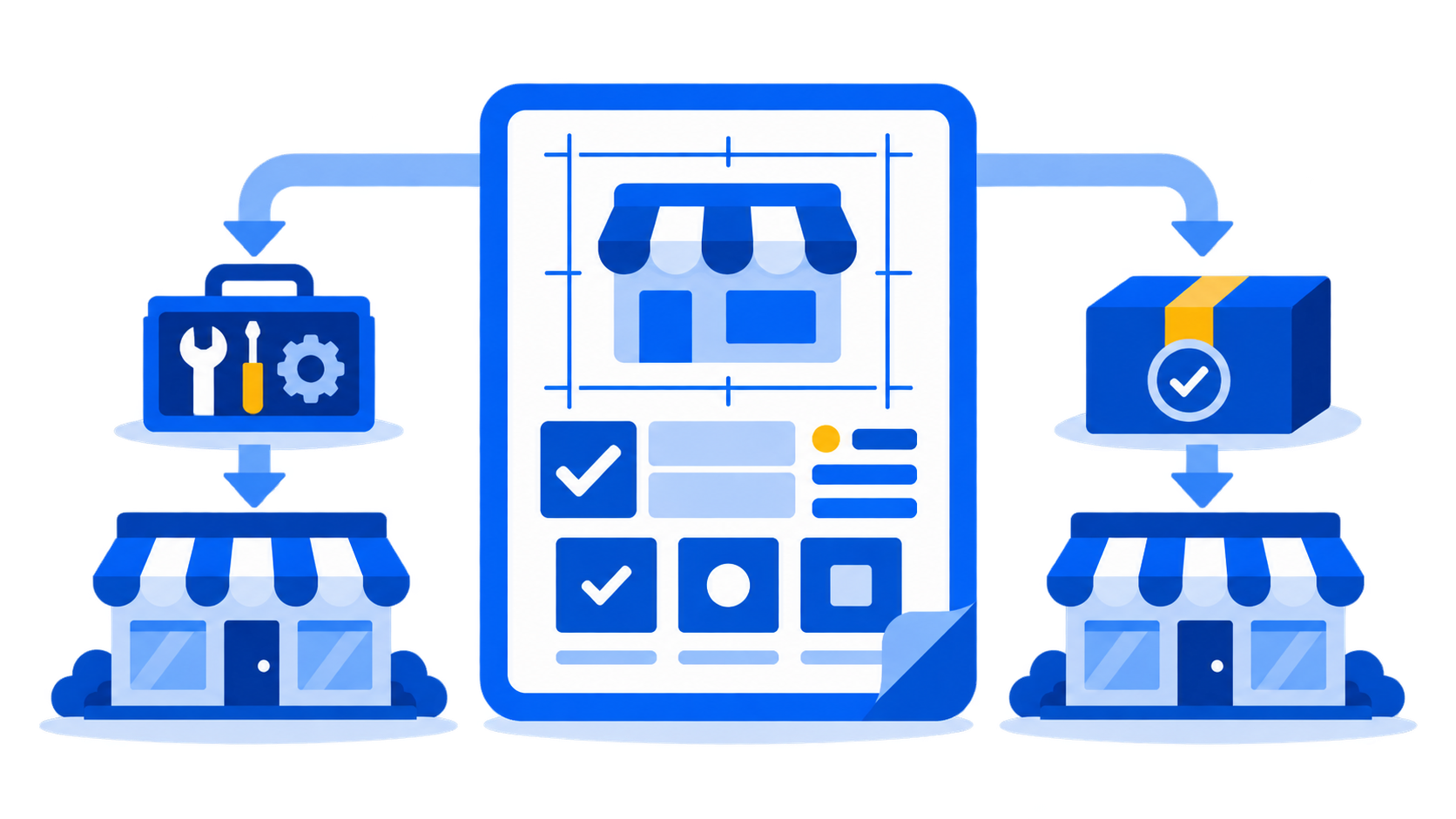
When the expansion approach changes, so does the nature of HQ's work
Opening quality ultimately comes from standardized procedures
Whether overseas or at home, opening a new store rests on three pillars: preparing paperwork, carrying out the interior build-out and training staff. If these three pillars rely only on staff experience, even stores opened by the same HQ can easily end up with different levels of preparation.
In this situation, the Opening module of FDAM, the ERP built for franchises, approaches the problem by having HQ break opening preparation into itemized tasks to reduce variation between staff. HQ sets out in Document Management which documents must be ready by when, records progress stages in Interior Management, and manages schedules and evaluation criteria in Training Management. The module's core aim is to keep the same procedures and standards in place even as openings multiply or staff change.
MS Benter has developed software for franchisor headquarters for about 25 years, and in watching the opening and operating processes of more than 500 brands, it has seen this variation problem recur at HQs in expansion mode. A structure in which openings run on people's memory rather than checklists can hold up when there are only a few stores, but hits its limits the moment expansion picks up speed.

Itemizing opening preparation keeps standards in place even when staff change
At the master franchise contract stage, HQs face risks that are easy to miss
In structures like a master franchise, where development rights are handed to a local partner, managing the stage before the contract is signed also becomes important. Whether consultation history with partner candidates is organized, and whether the information that must be provided before the contract was delivered through a formal process, determine the likelihood of later disputes.
The same kind of risk exists in domestic franchising. If consultation history from the first franchise inquiry to the contract remains only in individual staff notes, inquiries get missed and it becomes hard to track consultation progress at the organizational level. And if HQ cannot prove when and how it delivered the pre-contract disclosure documents required under Korea's Franchise Business Act, it may find itself in a weak position in a later dispute.
FDAM's Sales module targets exactly this point. It registers franchise inquiries as leads and accumulates consultation history by staff member, and when pre-contract disclosure documents are sent via KakaoTalk, email or text, it records the time they were viewed so the delivery date can be confirmed. At the contract stage, this flows into an electronic franchise agreement, and an automatic alert 30 days before contract expiry helps ensure renewal dates are not missed. The more expansion runs across multiple regions and partners at once, the greater the need for this kind of record-keeping.

Managing records before the contract reduces risk later
Maintaining standards after opening requires QSCV inspections and data
Expansion does not end with opening a store. It must be followed by ongoing inspections to confirm whether early interest turns into repeat visits and whether quality and service standards hold as stores multiply. Especially when many stores must be managed at once, a frequent problem is that inspection results stay in documents and are never tracked.
FDAM's Operations module records and tracks QSCV inspection results against quality, service, cleanliness and value standards, and manages store information standardized to HQ criteria. With POS sales aggregation, sales data for each store can be organized and shared, making it possible to judge operating quality by looking at inspection results and sales data together. When the standards created in Opening management carry through to the Operations stage, the quality the brand promised holds up even after expansion.

Maintaining quality after opening starts with accumulating inspections and data
Frequently asked questions
For overseas franchise expansion, which is better: company-owned stores or a master franchise?
It is hard to say one is always better. Company-owned stores offer greater control on the ground but concentrate investment and staffing burdens on HQ, while a master franchise lets you leverage a partner's capital and market knowledge, with success hinging on how complete your contract, training and inspection systems are.
Why does the delivery date of pre-contract disclosure documents matter in franchising?
If the delivery date and method are not clearly recorded, it can be hard for HQ to prove in a later dispute that it followed the proper procedure. Using a system that records delivery history automatically can reduce this risk.
Do HQs with relatively few stores also need standardized opening management?
With few stores, operations can run on individual staff members' experience, but the need for standardized procedures grows once expansion picks up speed or staff change. If you have expansion plans, it pays to put a system in place early.
Paik's Coffee's moves into Japan and Taiwan show that the scope and nature of the work HQ must prepare differ depending on the expansion approach. Yet whichever approach you choose, what is always required is a system that allows the standards HQ creates to be executed the same way regardless of staff or region. How consistently those standards carry through, from managing franchise inquiries to preparing openings and running QSCV inspections after opening, decides whether expansion succeeds.
Do your store opening preparations and franchise contract management depend on individual staff members' experience?
See how FDAM's Sales and Opening features organize the process.
Contact salesKakaoTalk chat · 1544-7120 (Korea)
Overseas franchise expansion, Paik's Coffee Taiwan entry, master franchise agreement, company-owned store operations, store opening management, franchise operational standardization, QSCV inspections, franchisor HQ ERP, pre-contract disclosure documents, electronic franchise agreement, FDAM, MS Benter