How 4 Korean Food Brands Stand Out in China by Redefining Category
How four Korean food brands redefined their categories in China
FRANCHISE INSIGHT · GLOBAL EXPANSION
How Four Korean Food Brands Stand Out in China: Redefining the Category
From a single menu to a K-food experience and cultural space: case studies of BBQ Village, Myungryun Jinsa Galbi, Yoajung and Samjin Eomuk
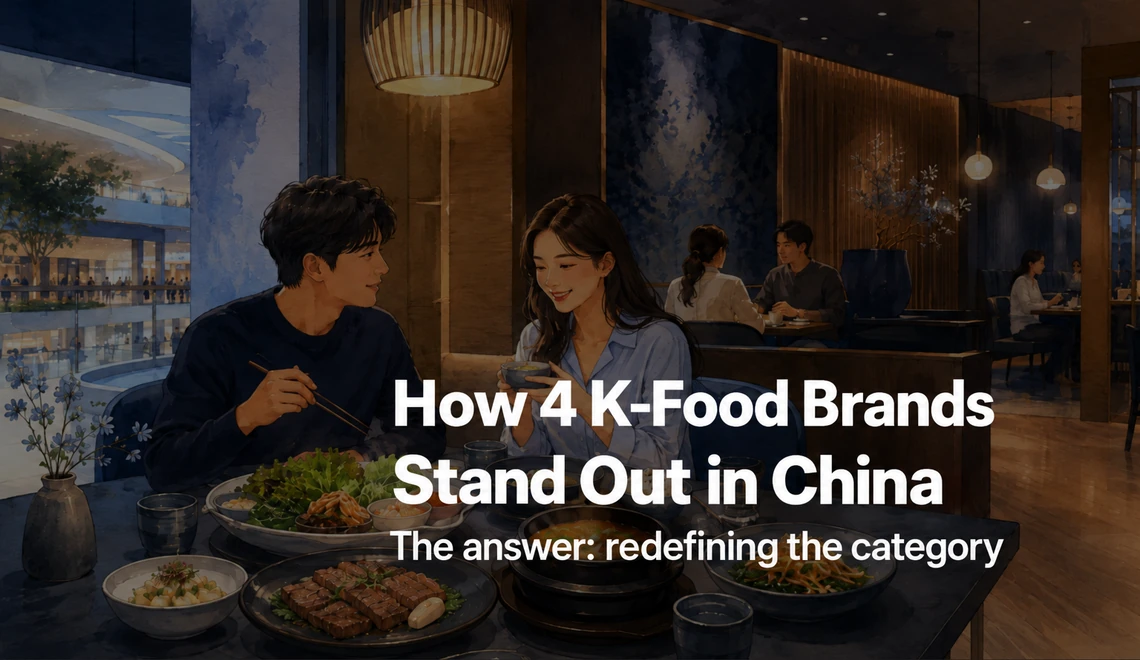
Korean dining spaces regrouping around premium retail districts (concept image)
CORE SUMMARY
The differentiation strategies of Korean restaurant companies that recently entered China are converging on category redefinition rather than selling a single menu · They keep a familiar entry point such as fish cakes, chicken, galbi or ice cream, but lift their positioning a level higher into K-food experience, culture and space · Common patterns include premium retail locations, master franchise partnerships and validation on local digital platforms
The most powerful way for Korean food brands to stand out in China is "category redefinition": redesigning their positioning so the store is not a place that sells one menu, but a space that offers a new experience and culture. This article analyzes four Korean food companies that entered China with distinctive concepts since 2024 and summarizes the common patterns and implications for headquarters operations.
A market in transition: the structural shift facing Korean food brands in China
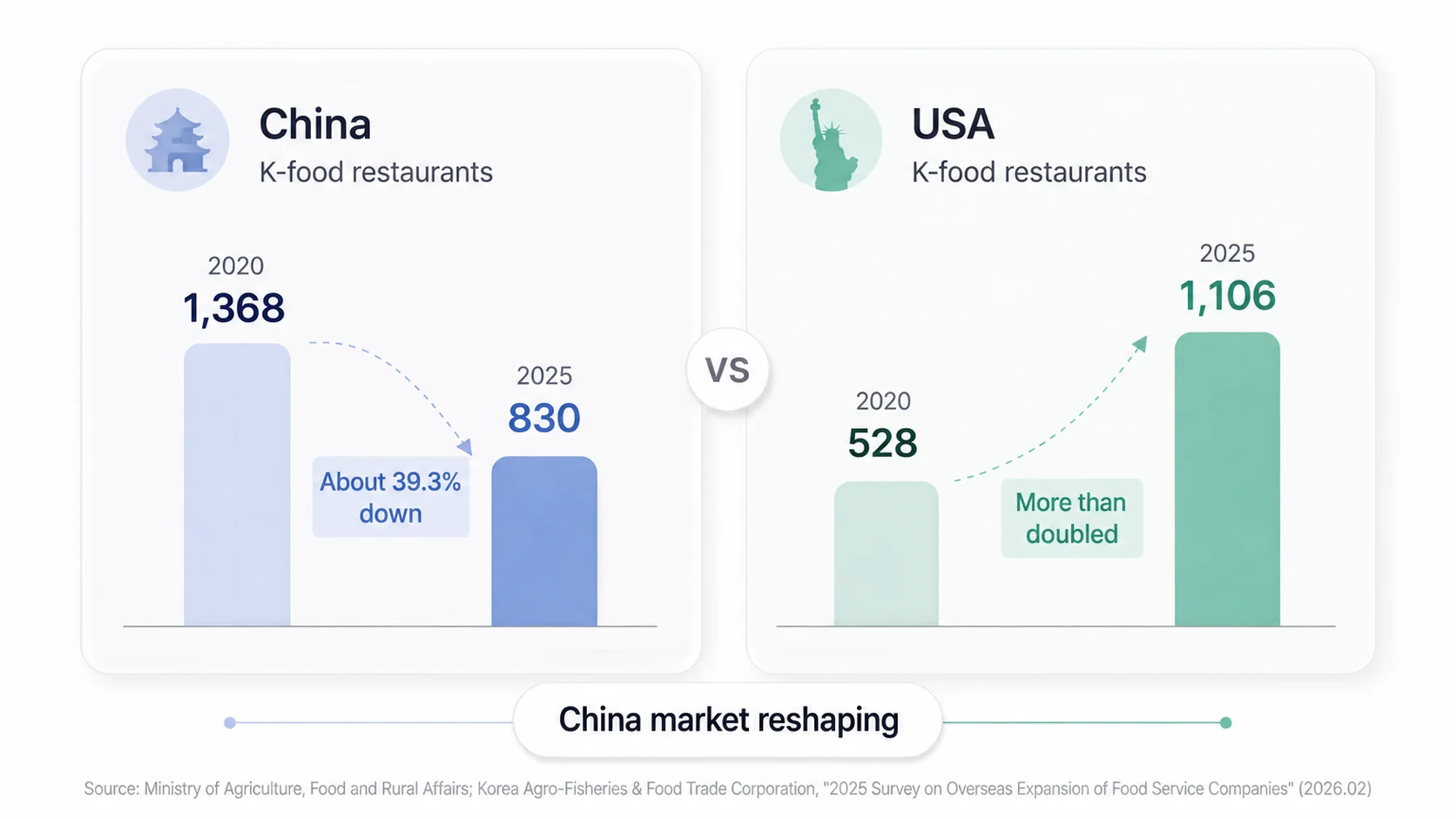
The number of Korean restaurant stores in China fell by about 40% in five years, yet differentiated brands are accelerating their entry
According to the "2025 Survey on Overseas Expansion of Food Service Companies," released in February 2026 by Korea's Ministry of Agriculture, Food and Rural Affairs and the Korea Agro-Fisheries & Food Trade Corporation (aT), stores run by Korean food service companies in China fell from 1,368 in 2020 to 830 in 2025, a 39.3% decrease. Over the same period, U.S. stores more than doubled from 528 to 1,106, making the U.S. the main market for Korean food brands.
The root cause of the shrinking market is fiercer competition from local brands. As homegrown Chinese brands evolve rapidly on price, menu and store operations, simply "bringing over what's popular in Korea" no longer works. Even so, there is a steady stream of Korean food brands re-entering or newly succeeding in China with differentiated concepts. What they share is clear: they redefined the category, not just the menu.
Case 1. BBQ Village: from chicken franchise to a gateway to K-food
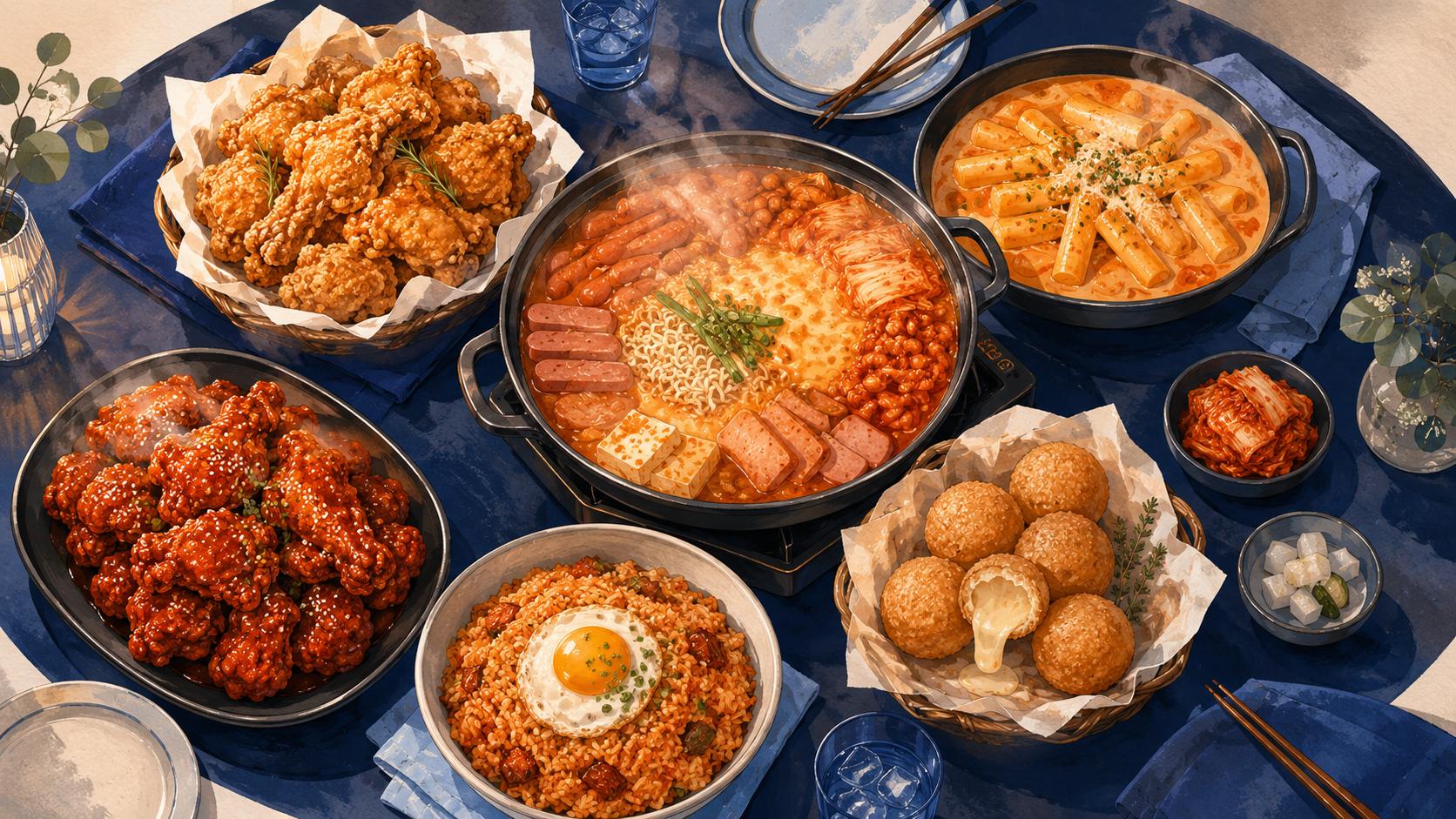
A setup that uses chicken as the entry point to experience a wide range of Korean food in one place (concept image)
In January 2026, Genesis BBQ opened "BBQ Village Shenzhen Huaide MixC" in MixC Life, a premium shopping mall in Bao'an District, Shenzhen, Guangdong Province. BBQ had once pulled out of China during the THAAD dispute, and for its return it chose the concept of a "Village" rather than a "chicken place."
The menu brings together a K-chicken lineup (Golden Olive Chicken, Yangnyeom Chicken, Cheesling, Honey Garlic) with Korean dishes such as budae-jjigae, samgyetang, rosé tteokbokki, kimchi fried rice, kimchi pancakes and cheese balls. Chicken remains the familiar entry point, but the range extends across Korean cuisine so that a single visit offers four or five K-food experiences.
Shenzhen, with about 17.98 million residents, is one of China's top three high-income cities and is called "China's Silicon Valley" for its cluster of IT, finance and advanced manufacturing. Starting from this base, BBQ has begun developing delivery-only menus and convenience foods with partners in Guangdong and Hubei, and aims for 10,000 stores in China by 2030.
Shift 01
From "a whole chicken" to "a K-food course experience." Instead of going deeper in one category, BBQ lifted the category itself a level higher.
Case 2. Myungryun Jinsa Galbi: from all-you-can-eat galbi to a K-BBQ cultural space
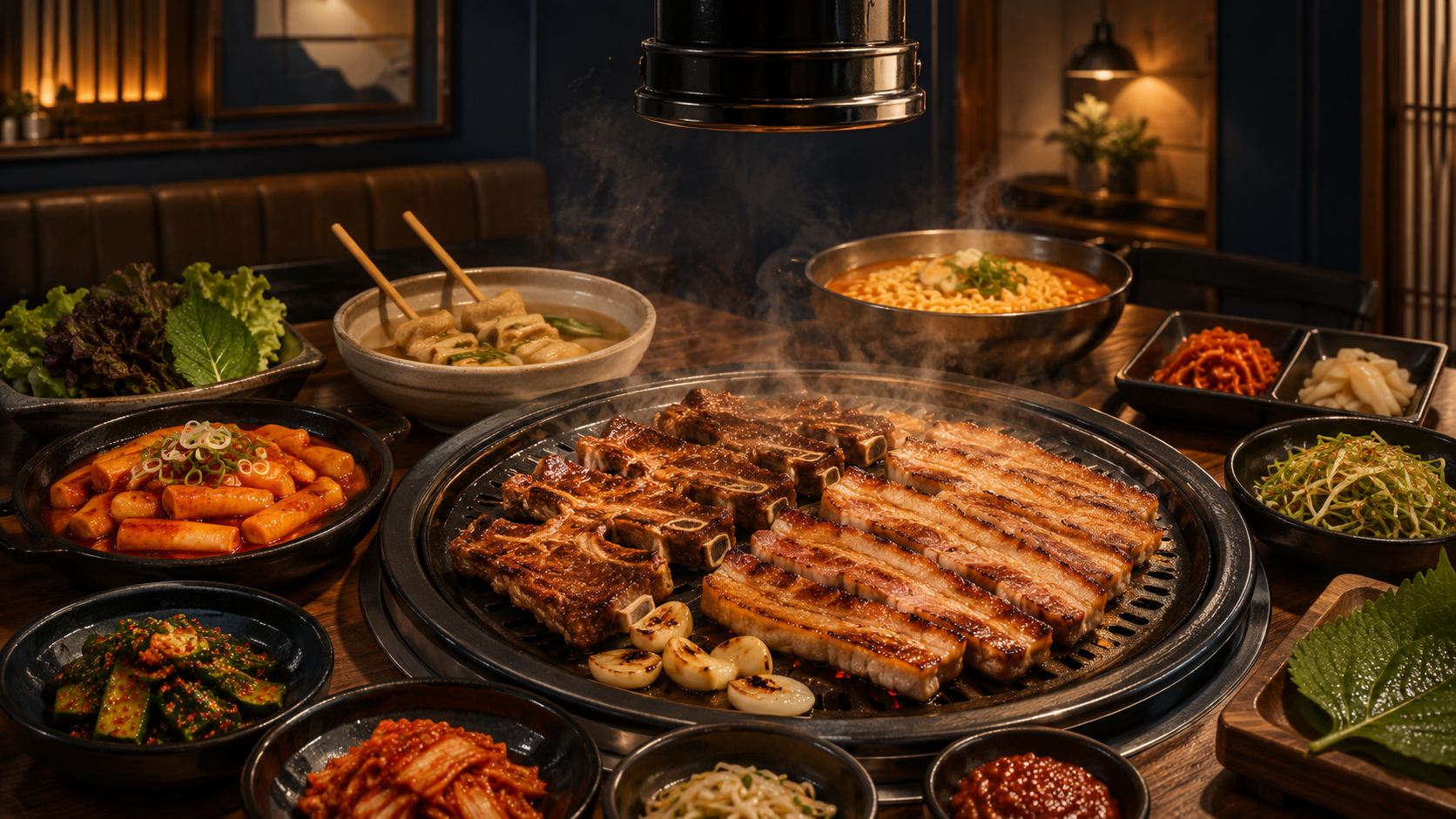
A Korean food culture course combining grilled meat with bunsik (Korean snack food) sides (concept image)
Myungryun Jinsa Galbi opened its first China store on Yintinglu in Shanghai in July 2024, then added a Dalian Roosevelt store that December, launching its full-scale entry into China. The menu is what stands out.
Its signature is pork galbi seasoned with 22 natural ingredients including maesil (green plum). Alongside meats such as pork belly, pork neck, fresh pork ribs and dak-galbi, it serves bunsik sides like tteokbokki, skewered fish cakes, fried chicken, vegetable fritters, gimmari and Han River-style ramyeon. It essentially turns the Korean meal flow (main meat → bunsik sides → ramyeon to finish) into a single course experience.
The Dalian store occupies 173 pyeong (about 572 m²) in the popular Roosevelt shopping mall district and seats up to 200 people. With the message "We will spread K-BBQ culture across China," the company clearly positioned itself as a cultural space, not just a restaurant. The bunsik sides also lower the "what do I order?" barrier for Chinese consumers visiting a Korean restaurant for the first time.
Case 3. Yoajung: from yogurt ice cream to a healthy-pleasure dessert

A hands-on K-dessert where customers mix and match about 50 toppings (concept image)
Premium dessert brand Yoajung signed a master franchise agreement for China in the first half of 2025 and opened its first store in Shanghai and second in Suzhou. It then expanded to locations such as Shenzhen MixC World, passing 20 stores in 7 countries, including Australia, Hong Kong, China, Japan, Singapore and the U.S., less than a year after going overseas.
Yoajung's differentiation rests on two pillars.
1
A hands-on dessert experience
A customization model where customers combine about 50 toppings, including fresh fruit, granola, chocolate shell and honey, to their taste. It turned the act of "making your own menu," rather than "receiving a menu," into the product itself.
2
Tapping the healthy-pleasure trend
It ties into the global lifestyle trend of "enjoying the process of staying healthy," positioning itself not as plain ice cream but as "a dessert you enjoy while taking care of yourself."
Its visual polish, reflecting global dessert trends that spread on social media, drove organic buzz on Chinese content platforms such as Xiaohongshu and Douyin. The company plans to ramp up franchising in China from the second half of 2026, aiming to open 100 stores within the year.
Case 4. Samjin Eomuk: from snack food to a K-fish cake bakery & café
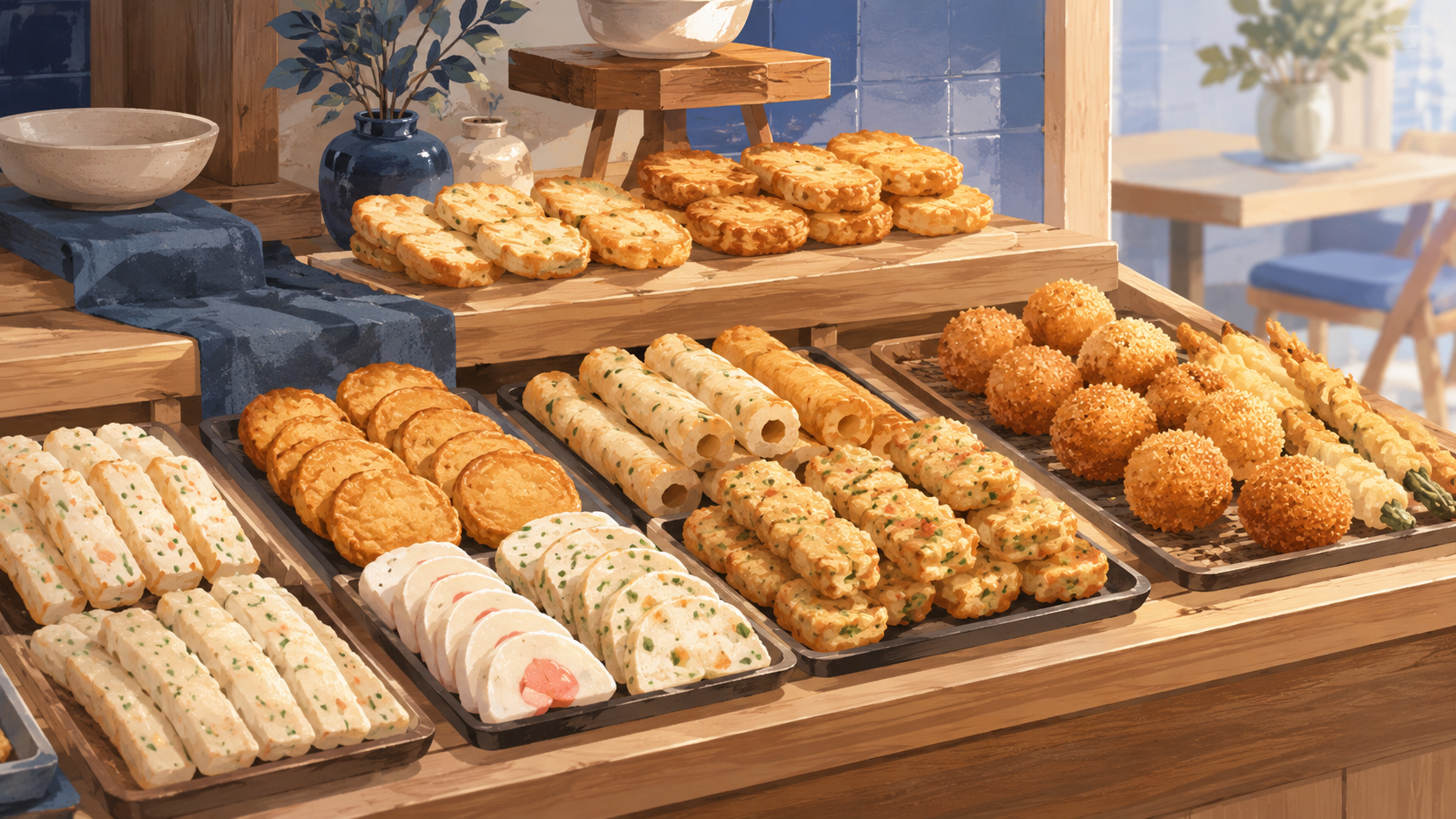
A bakery-style store that lowers the entry barrier by displaying fish cakes like bread (concept image)
The most recent case is Samjin Foods' first Samjin Eomuk store in China. In May 2026 it opened in TASKIN MALL, a prime retail district in Changsha, Hunan Province, not as a simple fish cake snack shop but as a "K-fish cake bakery & café," a combined dining space.
The store features a bakery-style UX that displays fish cakes like bread, with seating that supports both dining and café culture. It translates fish cakes, a Korean snack category, into the "bakery" format familiar to Chinese consumers, replacing the barrier of "food I've never tried" with "a store experience I already know."
Right after opening, it ranked No. 1 among new Korean restaurants in Changsha on Dianping (大众点评), China's leading restaurant review platform, quickly validating early demand. Starting from Changsha, the company plans to spread K-fish cake culture across inland China.
Four common patterns across the four cases
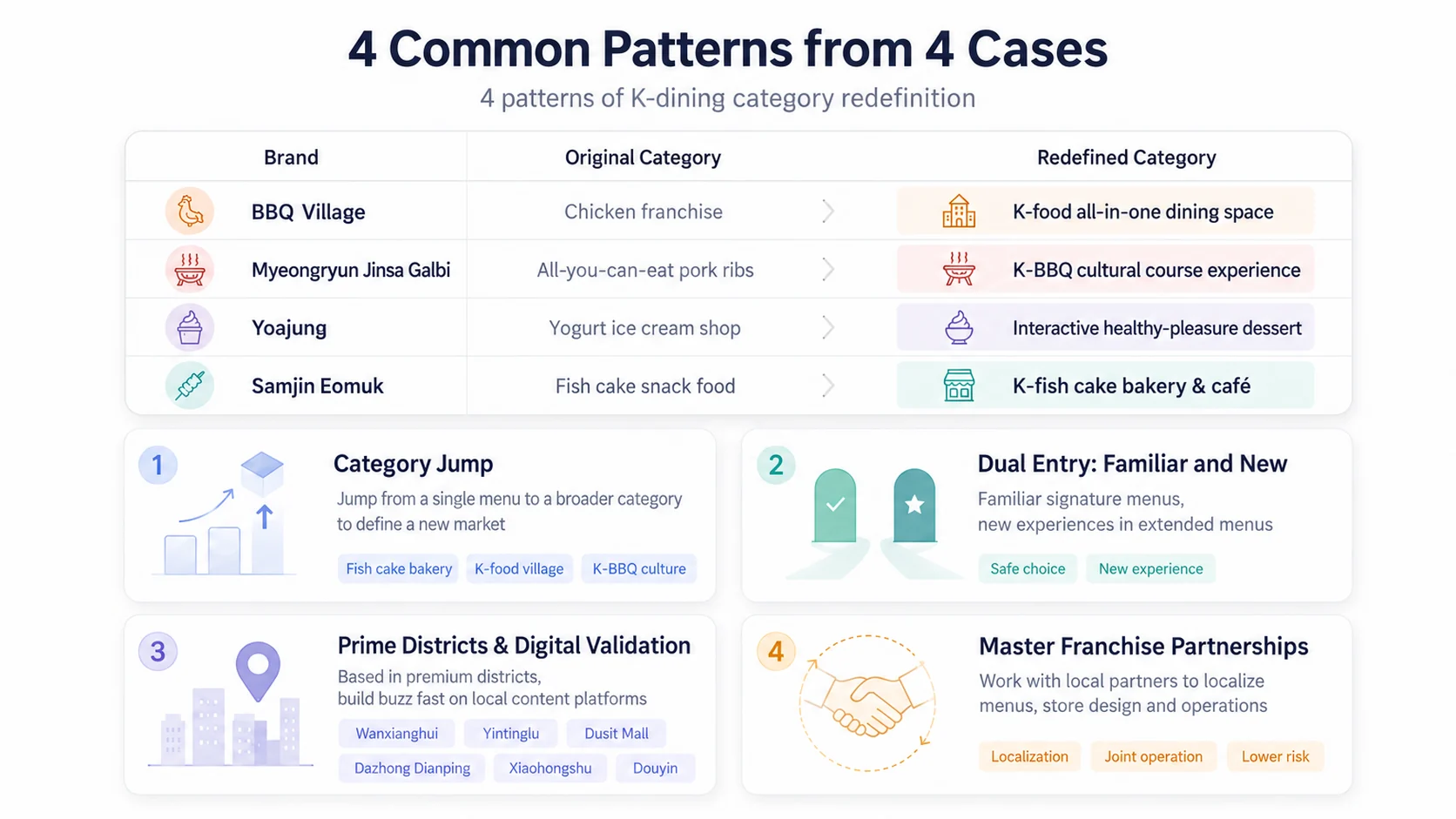
Four common pillars of the category redefinition strategy running through all four cases
Comparing the four cases side by side yields the following formula for differentiation.
Brand
Original category
Redefined category
BBQ Village
Chicken franchise
All-round K-food dining space
Myungryun Jinsa Galbi
All-you-can-eat pork galbi
K-BBQ culture course experience
Yoajung
Yogurt ice cream shop
Hands-on healthy-pleasure dessert
Samjin Eomuk
Fish cake snack shop
K-fish cake bakery & café
1
Category jump
Fish cakes → fish cake bakery, chicken → K-food village, galbi → K-BBQ culture. Instead of selling a single menu, each brand jumps to a higher-level category and defines a new market. It changes the terms of competition.
2
A dual entry path: familiar and new
The signature menu works as the familiar entry point, while sides and extended menus deliver a new K-food experience. First-time local customers get both a "safe choice" and an "adventure."
3
Prime locations and local digital platform validation
Brands anchor in premium districts of tier-1 and new tier-1 cities, such as MixC in Shenzhen, Yintinglu in Shanghai and TASKIN MALL in Changsha, and quickly build early buzz on local content platforms like Dianping, Xiaohongshu and Douyin.
4
Collaboration through master franchising
Yoajung, BBQ, Samjin Eomuk and Myungryun Jinsa Galbi all localized their menus, store design and operating systems with local master franchise partners. This reduces the risk of HQ entering directly while quickly absorbing local know-how.
Category redefinition starts at headquarters, not in the store

A category redefinition strategy leads to global expansion only when backed by HQ operating infrastructure
Looking at these cases from an HQ operations perspective, one thing becomes clear: category redefinition is a decision made by the HQ system, not at the store level.
Redefining a category means redesigning the entire HQ operating system for multiple countries, from menu structure, pricing policy and staff training to local marketing operations and the collection and analysis of store-level sales data. In master franchise expansion especially, accurate data sharing and operational standardization with local partners determine success or failure.
Operating challenges for HQs expanding overseas
· Inefficiency from franchise sales, consultation and e-contract records being managed separately by country
· Complexity of aggregating and settling store sales across multiple countries and currencies
· Localizing HQ standard operating manuals (QSCV) and managing inspection data
· Record-keeping under the Franchise Business Act, such as pre-disclosure documents and contract expiration alerts
Where things are heading
The way HQ is used to operating in Korea needs to scale flexibly to local currencies, languages, tax rules and store environments. This isn't just adopting a system; it is HQ's global operating capability itself, and the final piece that turns a category redefinition strategy into real sales.
FDAM, MS Benter's ERP built for franchisor headquarters, provides an integrated environment for HQ to manage stores systematically, covering sales management, store opening management, operations management, QSCV inspections, POS sales aggregation and e-contract records. It is Korea's first AI-powered franchise ERP, designed on more than 25 years of franchise IT expertise and collaboration data from over 500 brands, and multilingual and multi-currency capabilities are being added for headquarters preparing to expand overseas.
Frequently asked questions
Q. What is the most effective way for Korean food brands to stand out in China?
A. Category redefinition is the direction seen most consistently in recent cases. Rather than selling a single menu, brands lift their positioning to the level of culture, experience and space, offering a familiar entry point (a signature menu) and a new K-food experience in the same store.
Q. Which is better: master franchising or direct entry?
A. All four cases in this article used master franchising. It greatly reduces early entry risk because it quickly provides local market knowledge and networks for licensing, logistics and staffing. However, partner collaboration only runs smoothly when HQ's operating standards and data management are well established.
Q. Which HQ systems should a franchisor review first when considering overseas expansion?
A. Four areas are key: franchise sales and consultation records, e-contract and pre-disclosure document records, store sales data aggregation and standard QSCV inspection processes. These need to be standardized in Korea first so you can hand local partners a consistent operating manual and later integrate data across countries.
Q. Is FDAM suitable for headquarters expanding overseas?
A. FDAM is an ERP built for franchisor headquarters that manages the full cycle from franchise sales to store opening to operations. Multilingual and multi-currency capabilities are being added, and if you are preparing to go overseas, we can work with you now on how to standardize your Korean operating standards and turn them into data assets.
FRANCHISE ERP FDAM
What a globally expanding HQ
should prepare first
Start with FDAM: 25 years of franchise IT know-how
and an AI-driven operating system.
Explore FDAM Chat on KakaoTalk
Korean food brands, China expansion, franchise overseas expansion, BBQ Village, Samjin Eomuk, Yoajung, Myungryun Jinsa Galbi, K-food, category redefinition, franchise ERP, FDAM, Fdam, master franchise, franchisor HQ system, Korean food global expansion, K-BBQ culture, global franchise