Global Restaurant Franchise Weekly Briefing: Dec 22, 2025
A weekly briefing on global restaurant franchising, with takeaways for Korean headquarters
global franchising, international restaurant news, US franchising, China franchising, Japan restaurant market, Southeast Asia restaurant market, franchise ERP, FDAM, overseas expansion, restaurant trends
Weekly Briefing · 2025.12.22
Global Restaurant Franchise
Weekly Briefing
This week's keywords · US: regional hit brands expanding to new regions and experimenting with experiential concepts · China & Taiwan: large chains scaling up and reshaping brand portfolios · Japan & Singapore: new formats and casualization lifting dwell time and average check · Hong Kong & Vietnam: targeted promotions and price redesign amid rising costs · Korea: BBQ ranks No. 180 on the US NRN "Top 500" (the only Korean brand in the Top 200) |

This is a weekly briefing on international franchising and the restaurant industry for Korean franchisor headquarters. We've rounded up the latest news from 10 countries and regions, including the US, China, Japan, and Southeast Asia. Take a look at the trends worth considering for your overseas expansion strategy and operating decisions.
Compiled by: FDAM, the franchise-specialized ERP
1. US West | PopUp Bagels opens its first store in Brentwood, LA
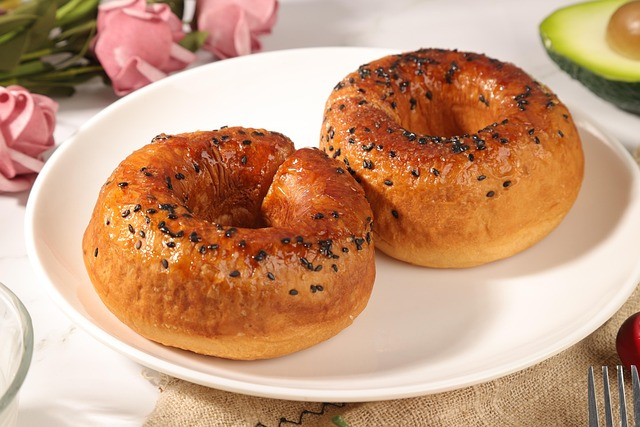
Image © pixabay
PopUp Bagels, a bagel chain that grew rapidly in New York, opened its first store in Brentwood, LA on December 19, 2025, once again confirming the trend of hit brands from other regions landing on the West Coast. The pattern continues: build a local fan base after the pandemic, then accelerate expansion through signature products and high-turnover operations.
Takeaways for Korean HQs When entering LA, a phased approach works well: design the format first (turnover, flow, peak-hour productivity) before localizing the menu, validate demand with a small flagship, then move to multi-unit expansion. |
2. US East | A rush of December openings in New York as concept and neighborhood experiments continue

Image © pixabay
New restaurants kept opening in New York into mid-December, with culinary concept experiments continuing neighborhood by neighborhood. More openings, such as an Indian restaurant that joined on December 17, are combining a neighborhood-based (Brooklyn) menu identity with cocktails and a service experience.
Takeaways for Korean HQs In a New York-style market, with brand story and spatial experience as a given, the core competitive edge is operating capability: (1) designing media and review pathways at launch, and (2) standardizing reservation, waitlist, and turnover data so the next store can be replicated. |
3. China | Mixue opens its first US store in LA: the global ambitions of the world's largest chain
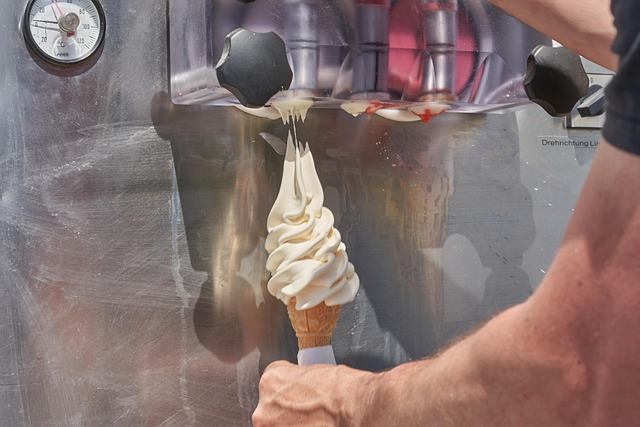
Image © pixabay
Mixue, now the world's largest fast-food chain, opened its first US store in Hollywood, Los Angeles, as Chinese restaurant brands accelerate their push into the US. As of June 2024, Mixue reportedly had more than 53,000 stores worldwide, surpassing McDonald's and Starbucks.
Beyond Mixue, which won the market with low-priced drinks and ice cream at around KRW 1,200 (CNY 6), Chinese brands such as Nayuki, Luckin Coffee, and Haidilao are entering the US one after another. Industry experts say Chinese brands are raising the bar for local service industries through highly efficient operations and innovative consumer experiences.
Takeaways for Korean HQs Global expansion of ultra-low-price models is decided not by price competition alone but by cost and logistics structures that protect per-store margins. When expanding overseas, Korean HQs should first set up a system to standardize and manage store-level profit structures, alongside price-point design. |
4. Japan | Godiva opens the first store of its new "Godiva Crêpe" concept
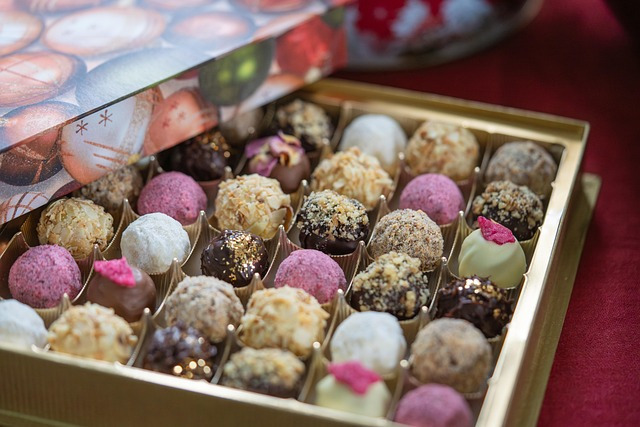
Image © pixabay
In Japan, new brand-operated formats keep appearing in the dessert and cafe market. With the first store of its crêpe concept, Godiva has chosen a strategy of going beyond selling existing products to made-to-order, experiential menus that raise dwell time and average check.
Takeaways for Korean HQs In Japan, beyond menu localization, a route worth studying is to design in-store performance in preparation and serving (visible cooking, limited menus, collaboration merchandise) to build a brand fan base, then use that data to move from department store and station pop-ups to permanent stores. |
5. Hong Kong | Fast-food chains defend demand with senior discounts and campaigns

Image © pixabay
Local Hong Kong media reported on December 22 that the fast-food industry is defending demand by expanding senior discounts and targeted promotions. Under pressure from fixed costs (rent and labor), rather than forcing up the average check, chains are securing visit frequency with benefits aimed at specific customer groups (seniors, families, office-worker lunches).
Takeaways for Korean HQs When inflation bites, defend sales with targeted benefits (by daypart, membership, or set bundles) instead of across-the-board discounts, and have a system to review promotion performance immediately with POS and app data. |
6. Taiwan | Wowprime signals renewed expansion toward 500 stores across Taiwan and China

Image © pixabay
According to Taiwan's Economic Daily News, Wowprime announced plans to expand, aiming to surpass 500 combined stores across Taiwan and China in 2026 as the Chinese market shows signs of recovery after restructuring. The main pillars are reorganizing its brands, redesigning price points, and profitability-focused store operations. In China in particular, consumption and price tiers are being reshaped, with analysts noting fiercer competition in the CNY 200-plus segment.
Takeaways for Korean HQs When entering Taiwan or China, it's worth redesigning price points (average check) and cost structures to local standards and managing "brand portfolio operations (focusing on categories that perform)" as a group-level KPI. |
7. Singapore | A "casual French" boom as bistros, brunch spots, and wine bars keep opening

Image © pixabay
Local Singapore media highlighted the growing "casual French" trend, with bistros, brunch spots, and wine bars opening one after another. The strategy lowers the barrier of fine French dining while keeping core experiences, such as sauces, steak, and wine pairing, to drive repeat visits.
Takeaways for Korean HQs In high-rent, high-labor-cost markets like Singapore, a "high-low mix" model is worth benchmarking: (1) a core menu with lower cooking complexity, (2) margins supplemented by drinks and desserts, and (3) separate lunch and dinner peaks to secure turnover. |
8. Philippines | Bistro Group confident on 2025 results and expansion, expecting a dining recovery

Image © pixabay
Philippine business media reported that Bistro Group showed confidence in growth on the back of improved results and stronger brand portfolio management, premised on a recovery in dining demand. In the Philippines, dining is concentrated in shopping malls and mixed-use areas, so tenant strategy and brand mix determine performance.
Takeaways for Korean HQs When entering the Philippines, building these first reduces early trial and error: (1) partnerships with mall operators and developers, (2) set and sharing menus that reflect family and group demand, and (3) staffing and standardized operations for weekend peaks. |
9. Vietnam | Growing tax and cost issues for small F&B businesses pressure price and promotion redesign
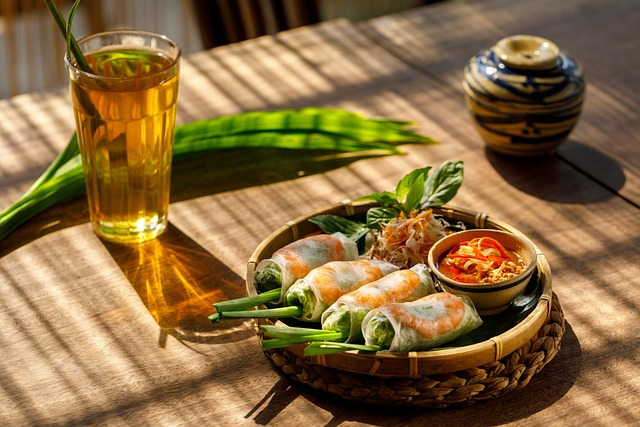
Image © pixabay
Vietnamese business media reported in mid-December that changes in the tax and cost burden on small businesses and F&B operators could translate into pressure to raise prices. When regulatory changes pile on top of ingredient and labor costs, the risk grows that conventional low-price, discount-driven operations will quickly erode margins.
Takeaways for Korean HQs In Vietnam, rather than competing on low prices, expand stably by first putting in place (1) a menu structure resilient to cost swings, (2) promotions shifted from "discounts" to "bundle and set upselling," and (3) a system for checking each store's P&L weekly. |
10. Korea | BBQ ranks No. 180 on the US NRN "Top 500," the only Korean brand in the Top 200
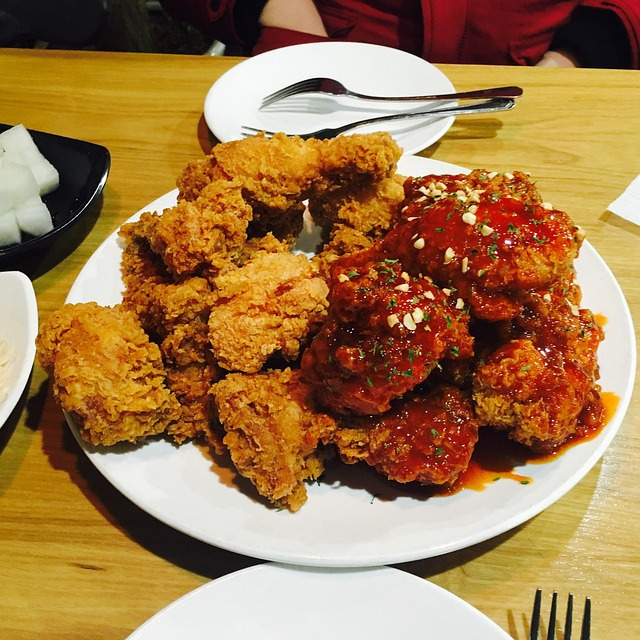
Image © pixabay
Genesis BBQ Group ranked No. 180 in the "2025 Top 500 US Restaurant Franchise Brands" published by US foodservice trade publication NRN (Nation's Restaurant News), continuing its rise for a fourth straight year. After first entering the list at No. 376 in 2021, BBQ climbed to No. 333 in 2022, No. 270 in 2023, and No. 223 in 2024 before reaching No. 180 this year.
This makes it the only Korean brand to break into the Top 200 in the US, the home of the franchise industry. NRN's "Top 500" is based on a comprehensive analysis of brands' annual sales, store counts, and growth rates in the US restaurant industry, and is regarded as the industry's most authoritative benchmark.
Takeaways for Korean HQs This is a sign that global recognition of Korean franchises is building step by step. As overseas store counts grow, HQ needs a system that can manage and compare each store's operating data against the same criteria in order to turn growth into profit. |
This week's insight
Across the US and Asia, restaurant franchising is going through expansion and structural reshaping at the same time. In the US, regional hit brands continue to move into new regions and experiment with experiential concepts, while in China and Taiwan, competition is intensifying as large chains scale up and reshape their portfolios.
Japan and Singapore are raising dwell time and average check with new formats and casualization, while in Hong Kong and Vietnam, targeted promotions and redesigned pricing have emerged as key tasks amid rising costs. For Korean HQs, format-led expansion, store-level P&L management, and brand portfolio strategy are becoming increasingly important.
Operations ERP for franchisor headquarters
Everything HQ does, from A to Z:
FDAM, the franchise ERP
Manage franchise sales, contracts, store openings, and operations in one system,
and standardize each store's operating data to HQ criteria.
Learn more about FDAM Contact us on KakaoTalk