Global Franchise Weekly Briefing: October 20, 2025
A weekly briefing on global restaurant franchising, with takeaways for Korean franchisor headquarters
Global franchising, international restaurant news, franchise ERP, FDAM, overseas expansion, multi-format strategy, food festivals, franchising, pricing policy, HQ operations system
Weekly Briefing · 2025.10.20
Global Restaurant Franchise
Weekly Briefing
This week's keywords · US — Firehouse Subs passes 1,400 stores on the strength of identity branding · China & Japan — Haidilao moves into conveyor-belt sushi; a large gyukatsu restaurant opens in Shinjuku · Hong Kong & Taiwan — Hong Kong's food carnival and Taipei's beef noodle festival boost festival-driven spending · India & UK — Curefoods × Papacream go nationwide in India; a UK sandwich shop heads to Dubai · France & Singapore — The Michelin transparency debate and paid restaurant water put reputation management in focus |

Over the past seven days, franchise growth moved in step across North America, Asia and Europe. In the US, Firehouse Subs passed 1,400 stores; in China, Haidilao entered conveyor-belt sushi; and in Japan, a large gyukatsu restaurant opened in Shinjuku. Hong Kong's food carnival and Taiwan's beef noodle festival drove spending, while India and the UK accelerated overseas expansion. With the Michelin transparency debate in France and the paid-water issue in Singapore, it was a week that highlighted the importance of pricing and reputation communication.
Compiled by: FDAM, the ERP built for franchises
1. US | Firehouse Subs passes 1,400 stores worldwide
Firehouse Subs passed 1,400 stores on Oct 16. Aggressive openings centered on North America and an overseas expansion pipeline were both confirmed, notable for value menus running alongside community-focused campaigns.
Takeaways for Korean HQs Korean HQs entering North America can look to the growth of the sandwich and hot-sandwich format and the effect of identity branding such as the "firefighter concept." The deciding factor in long-term growth is not competing on menu category alone, but consistently weaving the brand identity itself into the store experience and campaigns. |
2. China | Haidilao reportedly enters conveyor-belt sushi
On Oct 16, Haidilao, known for its rapid expansion, signaled its entry into the sushi category. Observers see a move to use off-peak hours with low-priced conveyor-belt sushi beyond hot pot, spread out its cost structure, and optimize average spend per customer by running multiple formats at once. As large restaurant companies pursue multi-format strategies in earnest, competition over local partnerships and supply chains is expected to heat up further.
Takeaways for Korean HQs It is time for Korean HQs to consider multi-format strategies to reduce dependence on a single brand. But as formats multiply, HQ must be able to compare and manage P&L and supply chain data by brand on the same basis in its ERP; only then does multi-format become a growth asset rather than a decision-making burden. |
3. Japan | A large gyukatsu restaurant opens in Shinjuku, Tokyo
A gyukatsu specialty brand opened a large store in Kabukicho, Shinjuku, on Oct 15. It is a case where a high-turnover single menu, a highly efficient cooking line and a location strategy that captures tourist demand after the dining reopening all worked together. The recovery of single-item specialty franchises in Japan continues.
Takeaways for Korean HQs For Korean brands entering Japan, focusing on a single item and targeting late-night demand is a useful reference. Concentrating on one or two core items rather than a broad menu lineup is key to raising turnover in Japan's tourist districts. |
4. Hong Kong | The 12th Hong Kong Food Carnival opens Oct 25
The Hong Kong Food Carnival, the city's largest outdoor F&B fair, runs for nine days from Saturday, Oct 25, to Sunday, Nov 2, at the Kwai Chung Sports Ground. This year it features six themed zones, including health, snacks, kitchenware, food and drink, and dining guides, with some 320 booths, plus daily limited HK$1 and 90%-off deals and opening- and closing-day promotions.
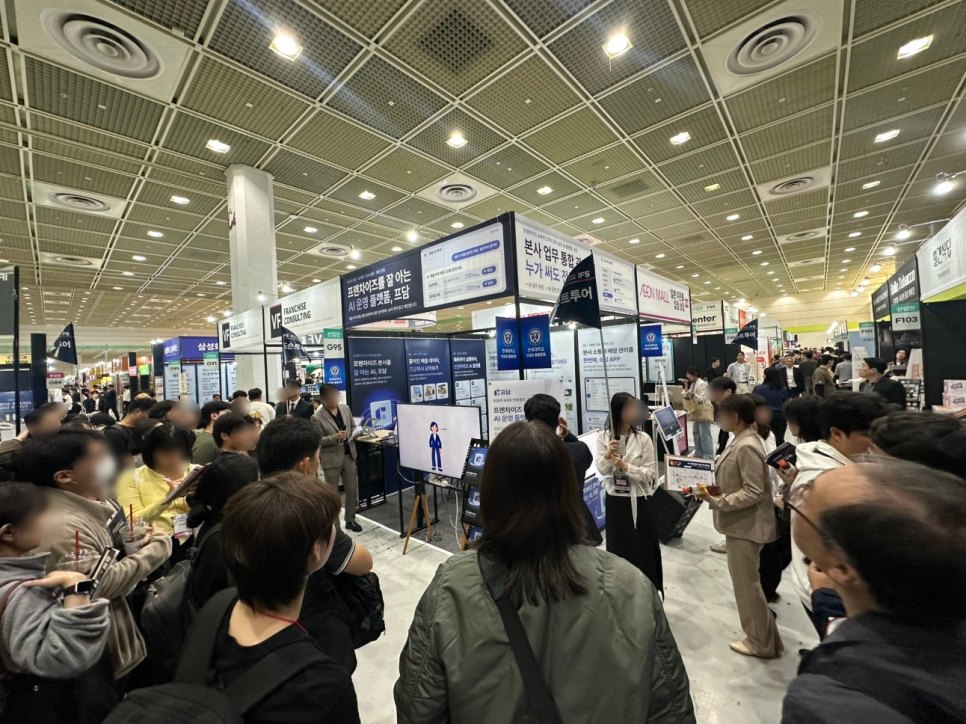
Takeaways for Korean HQs For Korean HQs, this is an opportunity to collect franchise and B2B leads and test reactions to new products at the same time through pop-ups, tastings and bundle sales. More important than taking part in the event itself is designing a way to feed the leads and reaction data collected there into the HQ system for sales follow-up. |
5. Taiwan | Taipei International Beef Noodle Festival draws crowds, Oct 10–13
According to reports at its close on Oct 13, the festival drew an estimated 100,000+ visitors over three days. A festival-style F&B event combining collaborations between local and international chefs, limited menus and on-site sales proved a powerful draw for spending.
Takeaways for Korean HQs In Taiwan, limited-menu and pop-up strategies tied to local festivals work well. If HQ and the master franchisee design seasonal campaigns together under a co-marketing model, a single event can grow both brand awareness and franchise leads. |
6. India | Curefoods × Papacream sign a nationwide franchise partnership
Curefoods, a multi-brand cloud kitchen and QSR operator, announced a nationwide franchise expansion with Papacream. It also unveiled plans to open first in Mumbai and Pune before expanding nationwide in stages, as franchising accelerates in India's dessert and ice cream category.
Takeaways for Korean HQs For Korean dessert formats entering India, a "master franchisee + regional multi-unit owners" structure is realistic. Long-term collaboration is possible only if HQ also has an ERP that lets it manage the master partner's operating data in a standardized form. |
7. Vietnam | Culinary profile surges as hotel and fine-dining collaborations grow
The rise of leading restaurants such as Quince, Ănăn Saigon and Gia Hanoi, together with gastronomic competition among global hotel chains, is strengthening the synergy between "local gastronomy + tourism."
Takeaways for Korean HQs For Korean HQs, an approach built on "local chef collaborations, limited menus and tourist-focused districts" works well. A good fit is raising Korean brands' awareness through Korea-Vietnam joint pop-ups and gradually deepening collaboration with local chef networks. |
8. UK | "Sandwich Sandwich" makes its first overseas move (Dubai), speeding its shift to franchising
"Sandwich Sandwich," the "stacked sandwich" concept that won a cult following in Bristol and London, has begun global expansion under a franchise model. It is a textbook case of going from social media buzz to flagship to franchising, and competition to find overseas master franchisees is fierce across the UK's dessert, sandwich and chicken categories.
Takeaways for Korean HQs For Korean HQs, this is a useful signal when looking for master franchisees or joint-venture partners in the UK market. Rather than competing head-on with UK brands, designing a phased entry through a master partner in the UK or Dubai is the more stable approach. |
9. France | Former Michelin Guide director reveals evaluation criteria in a YouTube interview
On the YouTube channel "LEGEND," former Michelin Guide international director Michael Ellis offered a rare look at internal operations, including inspector selection, evaluation criteria and the anonymity controversy. He said there were no forbidden ingredients in 1,600 meals, and also shared unusual experiences such as "Amazon ants" at D.O.M. in Brazil. The interview drew 340,000 views in two weeks, reigniting the debate over the guide's opacity and signaling a direct ripple effect on restaurant reputations and reservation demand.
Takeaways for Korean HQs An operating system that lets HQ standardize its own quality and service standards and apply them consistently across stores, rather than relying solely on external rating systems, becomes a true reputation asset. The starting point is accumulating and managing QSCV inspection results on the same basis in the HQ ERP. |
10. Singapore | "Is charging for water in restaurants fair?" becomes a TV issue
The debate over some restaurants charging for water has flared up again, further heightening consumer sensitivity to dining prices and service policies. Singapore is a market where communication about add-on costs such as service charges, water and tissues directly affects sales and reputation.
Takeaways for Korean HQs When entering Singapore, refining pricing policies, menu labeling and customer service manuals is essential. HQ must be able to send stores unified price display guidelines and customer service manuals so that small add-on costs do not turn into reputation risks. |
This week's insight
This week's global restaurant market can be summed up in one phrase: "growth and reputation management, at the same time." In the US, India and the UK, store openings and overseas expansion are accelerating, and China is absorbing new categories through multi-format strategies. At the same time, the Michelin transparency debate in France and the paid-water issue in Singapore signal that the steeper the growth curve, the more reputation and pricing communication must be managed alongside it.
Festival-driven spending in Hong Kong and Taiwan is also an area that pays off only when HQ designs seasonal campaigns together with franchise and B2B lead collection. Here are the trends Korean HQs should review.
Four trends for Korean HQs to review ① Identity branding — make the store experience consistent around brand identity, not menu category ② Multi-format strategy — compare and manage P&L by brand and format on the same basis in the HQ ERP ③ Festivals and pop-ups — connect lead and reaction data to the HQ system, not just show up ④ Pricing and reputation communication — HQ standardizes price displays and customer service manuals and delivers them consistently to stores |
ERP for franchisor HQ operations
Everything HQ does, from A to Z:
FDAM, the franchise ERP
Manage sales, contracts, store openings and operations in one system,
and standardize each store's operating data to HQ standards.
Learn more about FDAM Ask us on KakaoTalk