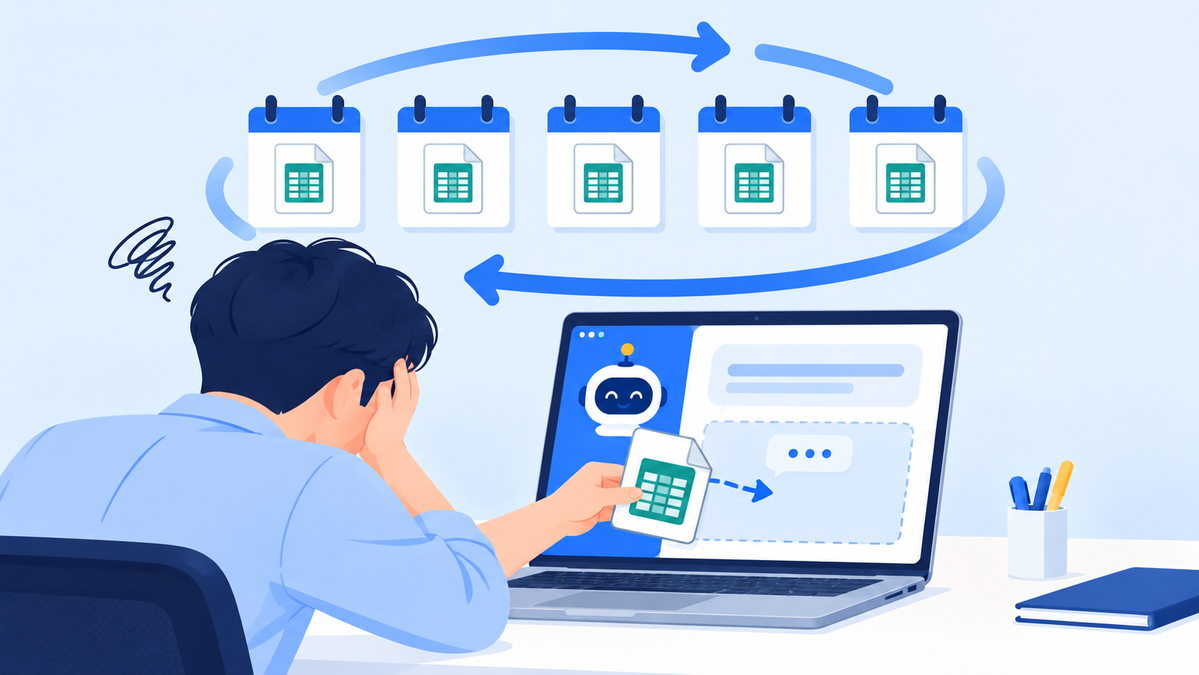
Franchise Training Manuals: Confirm Understanding, Not Just Delivery
How HQ can manage franchise training manuals beyond KakaoTalk, through to understanding and implementation
Franchise training manuals: how to manage not just delivery
but confirmation of understanding
Starting from the challenges supervisors face in the field, we outline a step-by-step approach for headquarters to standardize manual operations.
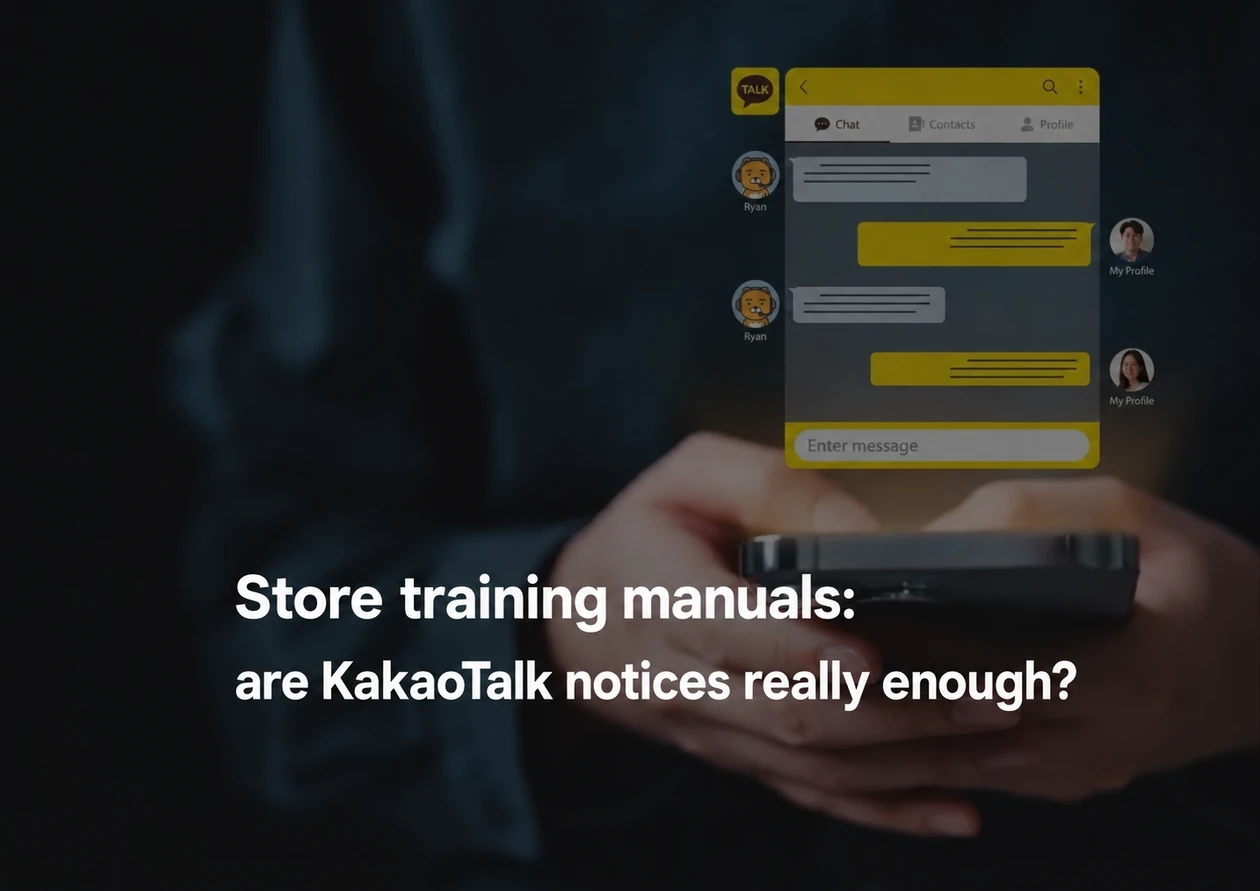
In manual operations, HQ capability shows in management more than in creation
CORE SUMMARY
Franchise training manual management consists of four stages: delivery, confirmation of understanding, implementation checks, and response to non-compliance. A KakaoTalk notice handles only the first stage; everything after that requires system-based management with notice boards, surveys, and QSCV inspection features. An approach that depends solely on individual supervisors’ (SVs’) notes and visits hits its limits as the number of franchise stores grows. When headquarters systematizes manual operations, it can track how well every store understands and applies the manual through data, without visiting each one.
A franchise training manual is an operating guide that franchisor headquarters creates to deliver its operating standards consistently to store owners and store staff. It sets the standards for work repeated daily in stores, such as menu recipes, customer service guidelines, hygiene standards, and closing procedures.
Creating a manual is familiar work for headquarters. The harder part begins afterward: it is a question of HQ operational design, namely how to deliver revisions when the manual changes and how to confirm that store owners have actually understood them.
In this article, we start from a common concern supervisors (SVs) raise in the field about how to deliver manuals, and explain how headquarters can manage franchise training manuals step by step.
A supervisor’s dilemma in the field: is a KakaoTalk notice enough?

A messenger notice is only the first stage of manual management
When a recipe changes or a manual is revised, the first decision a supervisor faces is how to deliver it: whether a KakaoTalk notice is enough, whether to visit the store and explain in person, or how to combine the two.
This topic comes up often when supervisors get together. When a new supervisor asks, “Should I announce a recipe change on KakaoTalk, or do I need to visit?”, experienced supervisors tend to answer along similar lines.
Operating principles shared by field supervisors
Even if the change notice itself goes out by messenger, stopping there makes follow-up difficult, so regular store visits are needed to confirm the change is actually applied.
When a store owner does not accept the change, the next step is to explain the nature of the franchise business and the intent behind HQ policy.
If it is still not implemented, HQ should secure supporting evidence so it can respond through formal procedures, such as sending a certified letter.
In short, franchise training manual management consists of the following four stages.
| Stage | Key activity | Possible via messenger notice? |
|---|---|---|
| ① Delivery | Notify stores of changes | Yes |
| ② Understanding check | Check that store owners understood the content correctly | Limited |
| ③ Implementation check | Confirm it is actually applied in the store | Difficult |
| ④ Non-compliance response | Retraining; securing evidence for formal procedures | No |
A messenger notice solves only stage 1. If everything from stage 2 on depends on individual supervisors’ memories of visits and KakaoTalk history, operations quickly slip beyond what headquarters can control as the number of stores grows.
Structural reasons manual operations get harder

Stores keep multiplying while information to track piles up on a single desk at HQ
As the number of franchise stores grows, the manual operation problems headquarters faces converge on three issues.
1
Difficulty tracking revision history
For brands that revamp their menu several times a year, it is hard for headquarters to track which store is working from which version of the manual. It is not unusual for some stores to keep operating with an old recipe.
2
Reliance on individuals to confirm understanding
When supervisors ask questions and take notes during store visits, the history breaks off whenever a supervisor changes. This means objective, HQ-level data on understanding never accumulates.
3
Lack of grounds for responding to non-compliance
In a dispute with a store owner, headquarters’ statement that “we informed you several times” carries little weight as proof. When, what materials, and to whom headquarters provided them must be recorded in a system to support HQ’s position in formal proceedings.
How franchisors systematize even the understanding check
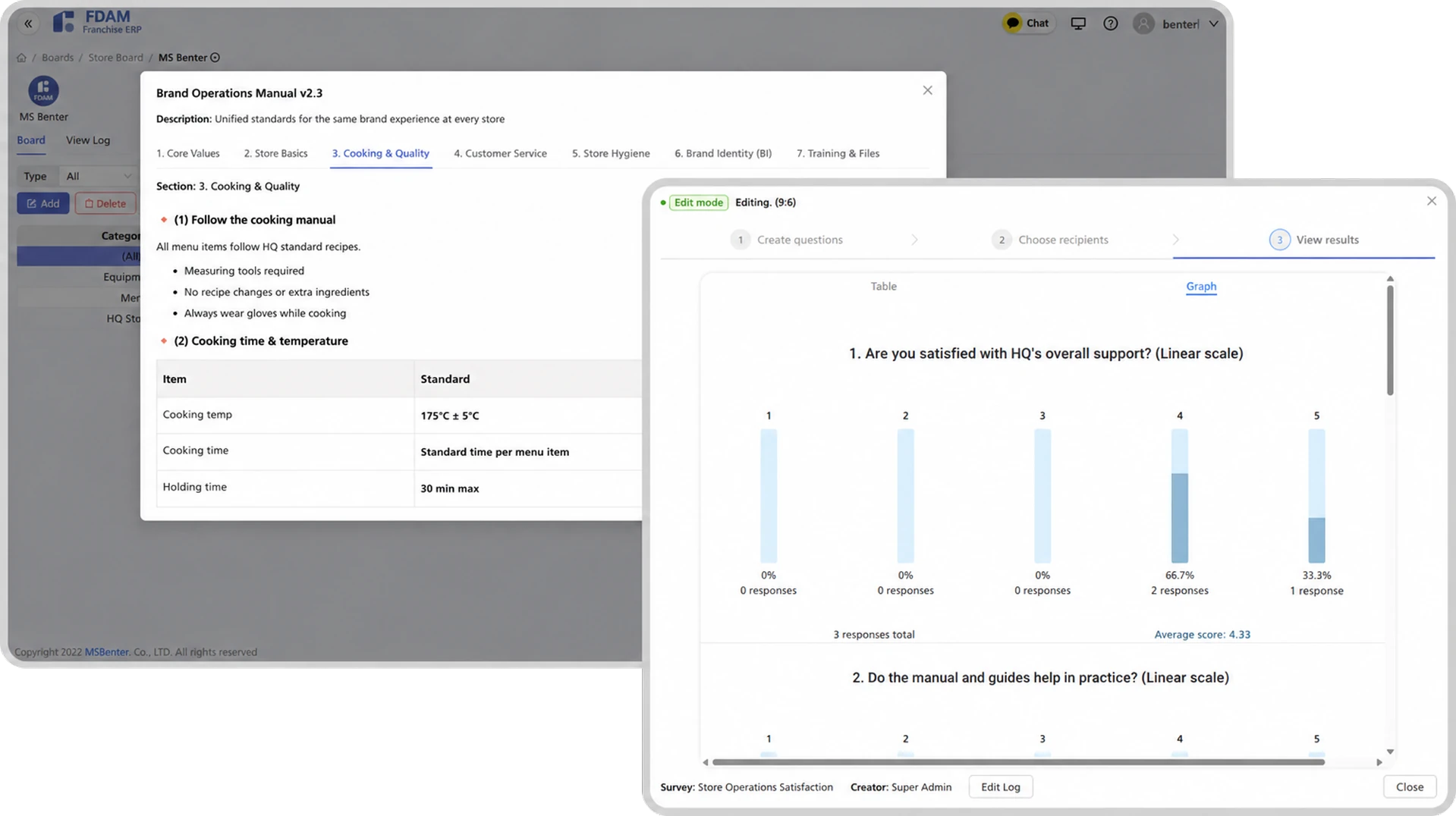
Combining notice boards and surveys turns manual management into a data-driven process
To solve these problems, a growing number of franchisors are moving manual management out of personal messengers and paper documents and into their operations system.
The essential change here lies not in the tool but in perspective. Instead of treating a manual as “done once HQ has sent it,” they begin treating it as an operating asset that lets HQ verify each store’s level of understanding through data. A messenger notice turns a manual into a one-off message, but once it is treated as an operating asset, the manual accumulates as data that demonstrates HQ’s standardization capability.
From this perspective, the tools headquarters needs narrow down to two: a notice board that keeps manuals in one place and records each store’s viewing history, and a survey that objectively confirms understanding. Below are three changes these two tools bring to HQ operations.
Change 01
Turning “delivery history” into data with a notice board
When headquarters posts manual revisions or changed recipes to the notice board, the system automatically records which store checked the post and when. Supervisors can instantly see delivery history for each store on the HQ screen, without separate notes.
Change 02
Making the “understanding check” objective with surveys
After a set period following the post, send a short survey based on the same content. Checking only the key items is enough, such as the key gram measurements in a changed recipe or the main phrases in a new customer service guide. Response data accumulates by store and by item, identifying stores that need additional training.
Change 03
Focusing supervisor visits “where they are needed”
Instead of visiting every store at the same frequency, you can prioritize stores with low survey scores or weak understanding. Supervisors’ visit resources are allocated based on operating data.
The operating experience changes for franchise stores, too. Instead of receiving one-way messenger notices, they are formally informed of changes and get confirmation that they are keeping up, which builds trust that headquarters is consistently involved in store operations.
Running manual operations with FDAM’s notice board and survey features
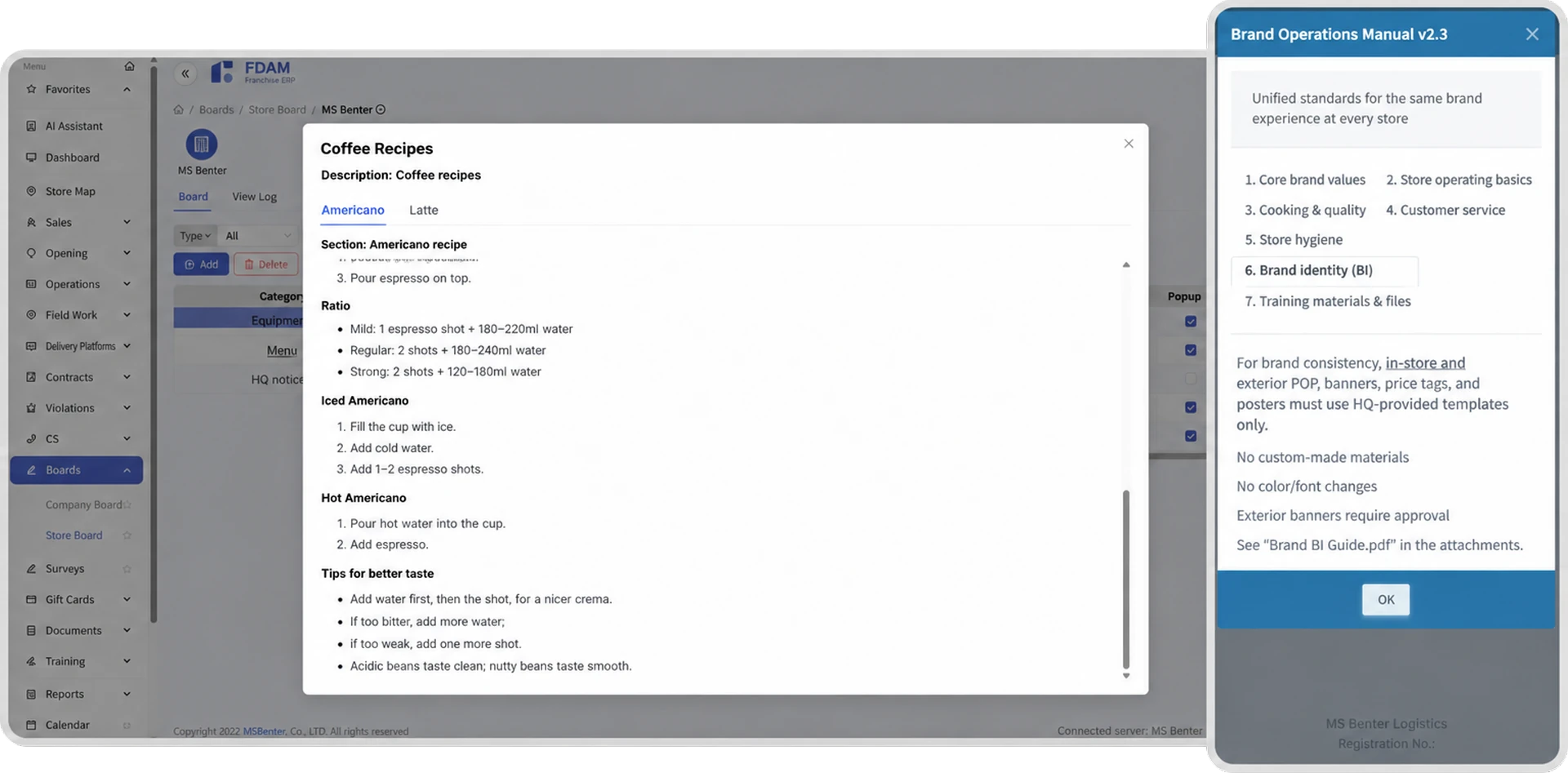
The HQ ERP and the store owner app are connected in a single flow
FDAM is an ERP for franchisor headquarters designed to handle the entire HQ workflow in a single system, from sales management (leads, consultations, e-contracts) through opening management (documents, interior, training) to operations management (QSCV inspections, POS sales aggregation, franchise store information). It is built by MS Benter Co., Ltd., which has developed software specialized for franchisor headquarters for about 25 years and holds multiple GS (Good Software) certifications.
For manual operations, FDAM works together with the HQ ERP and the store owner app Sodam.
Notice board: HQ notices reach store apps instantly
When headquarters posts a manual in FDAM, store owners receive it in the Sodam app with a push notification. HQ notices, changed recipes, and operating policy changes can be posted by category, making it easy for store owners to search for them again when needed. Viewing history for each post accumulates, so the HQ dashboard instantly shows which store checked it and when.
Surveys: turning manual understanding into store-level data
When headquarters builds survey questions around the key points of a revised manual and sends them out, store owners respond in the Sodam app. Results accumulate on the HQ dashboard by store and by item, giving a clear view of overall understanding across the brand and the areas where individual stores need training.
QSCV field inspections: checking manual “implementation” with data
The third stage of manual management, the implementation check, confirms whether the manual is actually applied in the store. When supervisors record results for each inspection item in the Sodam app during store visits, they accumulate on the HQ dashboard by store and by item. Data shows which stores fall short of standards on which manual items, providing objective grounds for prioritizing the next manual revision or additional training.
The flow of delivering with the notice board, confirming understanding with surveys, and checking implementation with QSCV inspections is connected in a single system. The first three of the four manual management stages described above run on the system, and the final stage, responding to non-compliance, can also be based on the accumulated data.
Frequently asked questions
Q. What should a franchise training manual include?
Typically, it consists of a brand manual (brand philosophy, logo, tone and manner), an operations manual (opening, closing, hygiene, inventory), a cooking and service manual (recipes, plating), and a customer service manual (ordering, payment, complaints). It serves as the foundation for consistently implementing HQ’s operating standards in every store.
Q. Is a KakaoTalk notice enough for a recipe change?
The change notice itself can be sent by messenger, but that solves only the first of the four manual management stages (delivery). As the number of stores grows, you need a system that also manages the understanding check, implementation check, and non-compliance response.
Q. Can you confirm manual understanding without visiting every store?
Yes. Running a manual notice board and surveys together accumulates each store’s viewing history and survey responses as data. Supervisors can prioritize visits to stores with low responses and use their visit resources efficiently.
Q. How do you confirm the manual is actually applied in stores?
When supervisors record results for each QSCV (Quality, Service, Cleanliness, Value) inspection item on mobile during store visits, they accumulate on the HQ dashboard by store and by item. Data shows which stores fall short of standards on which manual items, providing objective grounds for prioritizing the next manual revision or additional training.
In closing
Franchise training manuals are harder to operate than to create. Sending a change notice by messenger is only the first step of HQ work; a manual fulfills its purpose only when the understanding check, implementation check, and non-compliance response that follow are managed as well.
As the number of franchise stores grows, relying solely on individual supervisors’ skills and notes reaches its limit. With a system that offers notice boards, surveys, and QSCV inspections, headquarters can track manual understanding and implementation through data without personally visiting every store, and store owners gain confidence that headquarters is managing store operations alongside them.
FRANCHISE OPERATIONS SOLUTION
Want to manage manual operations
within a system?
See FDAM’s notice board, survey, and QSCV inspection features for yourself.
Contact salesExplore FDAM Chat on KakaoTalk 1544-7120
Franchise training manual, Franchise manual, Supervisor, SV work, Franchisor headquarters, Franchise store management, Recipe changes, Manual distribution, Franchise ERP, FDAM, HQ operations system