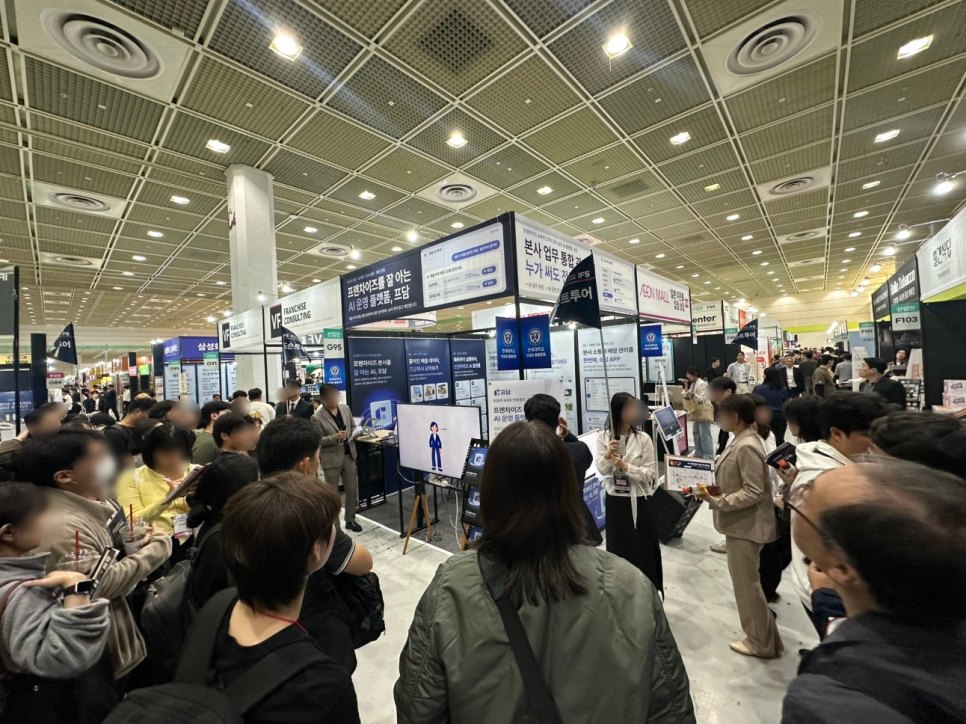
Franchise Systems: Why HQ Needs One When Ingredient Prices Swing
This post explains why franchisor headquarters need a franchise system to respond quickly to food ingredient price swings, rising costs, and store-level profit changes, and how FDAM can help.
FRANCHISE INSIGHT · COST RISK MANAGEMENT
Franchise Systems:
Why HQ Needs One When Ingredient Prices Swing
The more raw material prices fluctuate, the more HQ needs data on impact scope, store-level P&L, and response criteria, not just a price list
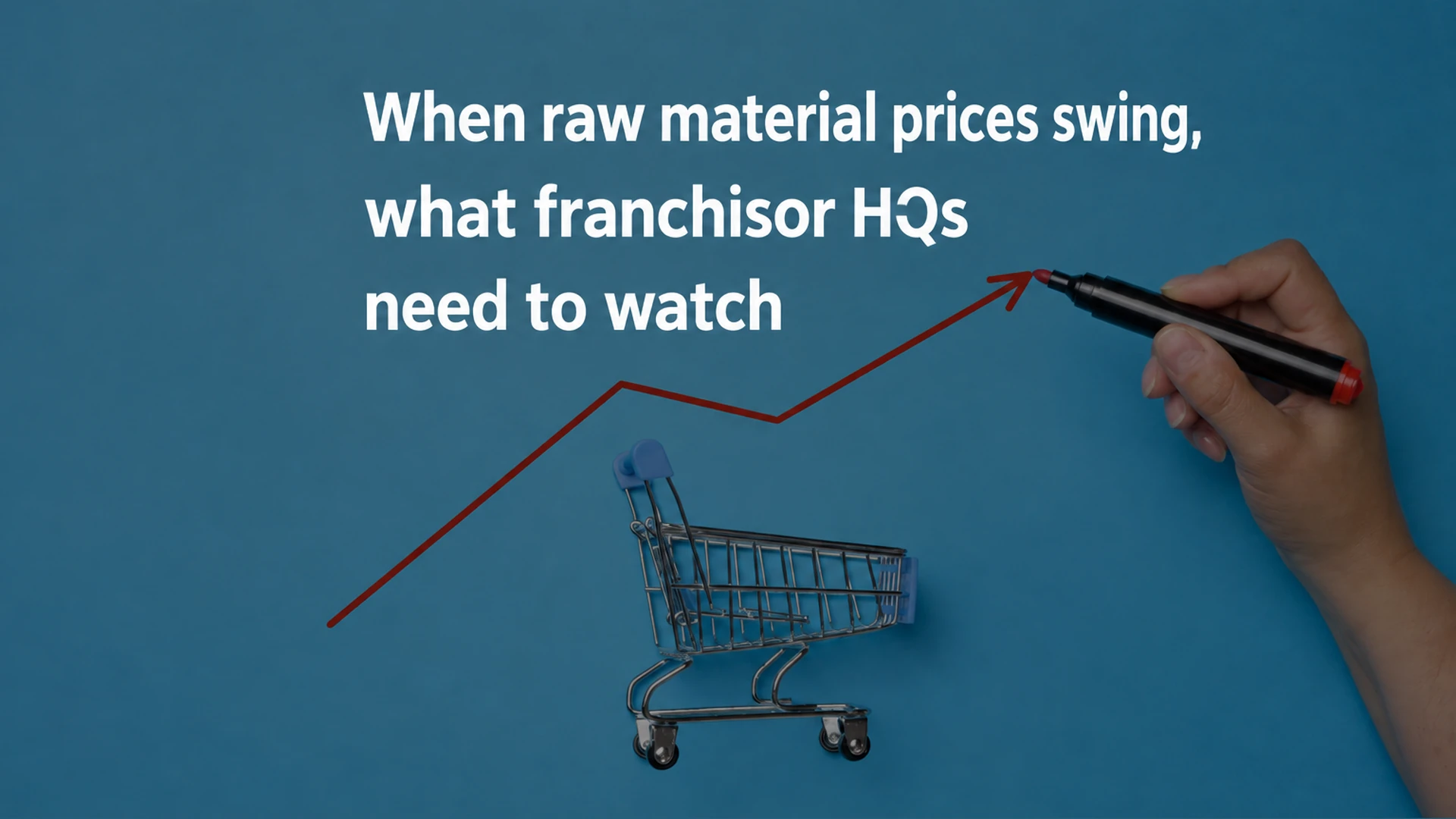
CORE SUMMARY
Raw material prices are one of the hardest variables for franchisor headquarters to predict. Store sales can be forecast to a degree, but ingredient prices can shift quickly with weather, supply, exchange rates, logistics costs, and seasonal demand. When raw material prices move, HQ has to revisit supply prices and menu prices, and franchise stores feel their margins shrink. So HQ needs to go beyond simply announcing that "prices went up" and quickly identify which items changed, by how much, and which stores are affected.
Sources: Ministry of Agriculture, Food and Rural Affairs, Key Findings of the 2025 Restaurant Business Survey, Google AI Search Optimization Guide, Google Guide to Creating Helpful, People-First Content
ANSWER FIRST
A franchise system is not a tool for controlling ingredient prices.
It is the operational foundation that lets HQ quickly judge the impact of price changes.
When raw material prices change, menu costs, menu prices, store margins, HQ supply prices, royalties, receivables, and store owner inquiries all move together. Leave this web of connections to spreadsheets and staff memory, and your response will lag.
POINT 01
Impact scope over price
You need to see which items affect which menu items and stores.
POINT 02
Change history over spreadsheets
Before-and-after prices, affected stores, and reasons for change must be recorded for HQ to explain its decisions.
POINT 03
Profit changes over sales
Even when sales grow, stores struggle if costs rise faster.
Sales are up, but less money is left over
Recent trends in the restaurant market make it clear why ingredient price swings are a core issue for HQ operations. In 2024, average annual sales per restaurant business were KRW 255.26 million, up 41.4% from 2021. Yet the operating margin fell to around 8.7%. Sales grew, but the money actually left over shrank.
In this environment, when raw material prices rise, franchise stores are the first to feel the margin squeeze. HQ must decide whether to adjust supply prices, adjust menu prices, keep promotions running, or substitute certain items. But these decisions can't be made by looking at a single price list. HQ needs to consider usage by item, cost ratio by menu item, sales structure by store, and supply terms by region, all together.
The gap between HQ teams that respond on gut feel and those that respond with data widens when prices are volatile. When prices are stable, spreadsheets and staff experience may seem good enough. But the moment prices start swinging and store owner inquiries pile up, how fast and how convincingly HQ responds depends on whether it has a system.
AEO ANSWER BLOCK
Franchise systems matter when ingredient prices swing because rising raw material prices ripple into menu costs, store margins, menu prices, supply prices, royalties, receivables, and store owner inquiries. HQ needs to quickly see not only how each item's price changed, but which menu items and stores are affected and by how much.
1. Raw material price swings are an operational risk for franchisor headquarters
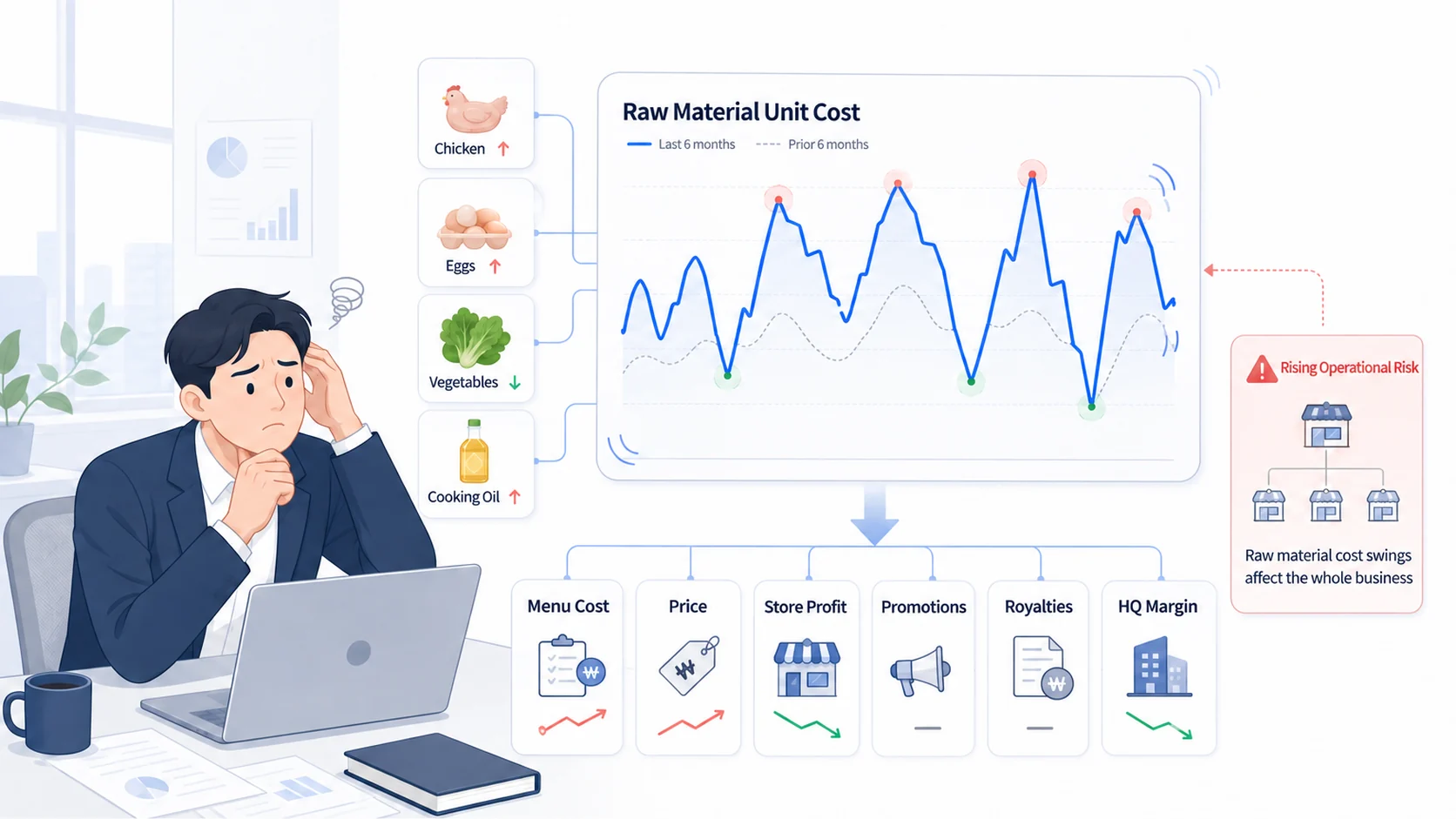
A franchisor HQ staff member reviewing response criteria as an ingredient price chart fluctuates
Raw material price swings are not just the purchasing team's problem. They are an HQ operational risk that connects to menu costs, menu prices, store profitability, promotions, royalties, and HQ margins. For example, when prices of frequently used items such as chicken, eggs, vegetables, and cooking oil rise, the cost ratios of many menu items change at once.
If HQ manages purchase prices, supply prices, menu prices, and per-store usage separately, its response will inevitably be slow. When an item's price goes up, it's hard to see right away which menu items are affected, and adjusting supply prices means checking the affected stores in spreadsheets all over again. Often HQ sends out a notice, but staff still have to check separately whether each store has actually applied the change.
In short, raw material price swings are not a simple unit-price update. They are a variable that shakes HQ's entire operating framework. What's riskier than the price change itself is HQ responding late without knowing the impact scope.
| Volatile items | Connected operations | What HQ should check |
|---|---|---|
| Chicken & meat | Core menu cost ratios, combo prices, supply prices | Affected menu items and high-usage stores |
| Eggs & vegetables | Toppings, sides, seasonal items, waste rate | Seasonal demand and order volume changes |
| Cooking oil & sauces | Costs shared across the menu, supply prices of required items | Brand-wide cost sensitivity |
| Packaging & logistics | Delivery P&L, supply terms by region | Burden felt by each store |
2. You need a franchise system to see "impact scope," not just "price"
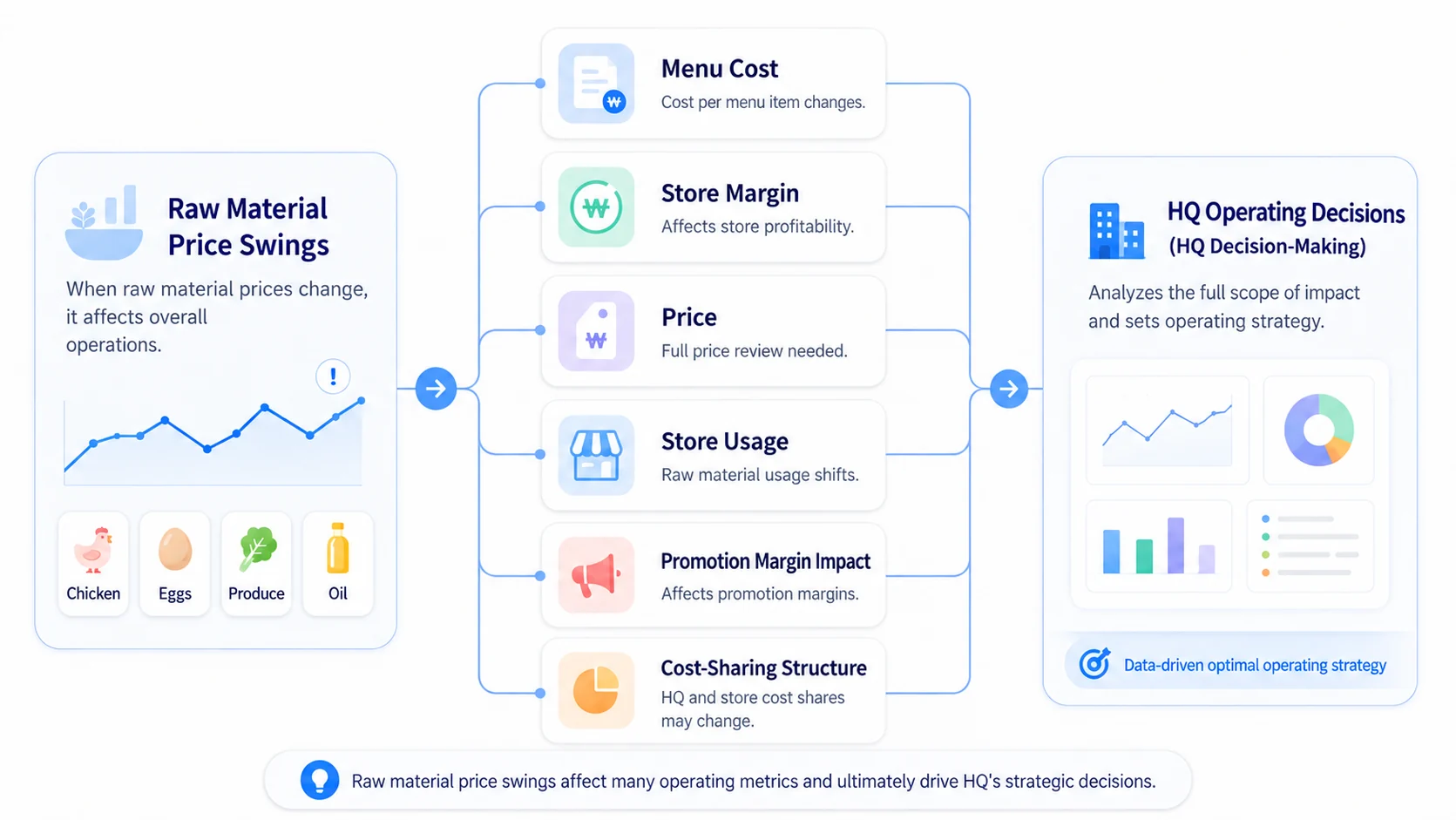
Flow infographic showing raw material price changes connecting to menu costs, store margins, menu prices, and HQ reports
When raw material prices rise, the first thing HQ should look at is not a single price list. What matters more is the impact scope: which items went up, which menu items use them, which stores use them most, and whether margins hold at current menu prices.
A price change looks like a single number, but in practice it leads to many operational decisions. HQ must decide whether to hold supply prices, adjust store supply prices, raise consumer prices, pause promotions, or offer operational consulting to specific stores. Every one of these decisions depends on knowing the impact scope.
The key items franchisor headquarters should check during periods of raw material price volatility are purchase and supply price changes by item, cost ratio changes by menu item, usage and order volume by store, whether a price increase is needed, the margin impact of running promotions, and how costs are shared between HQ and stores. Only when HQ can check this data quickly can it explain its decisions clearly to stores.
What HQ should check when prices swing
① Purchase and supply price changes by item
② Cost ratio changes by menu item
③ Usage and order volume by store
④ Whether a price increase is needed
⑤ Margin impact of running promotions
⑥ Cost-sharing structure between HQ and stores
3. With spreadsheets alone, your response to ingredient price swings will lag
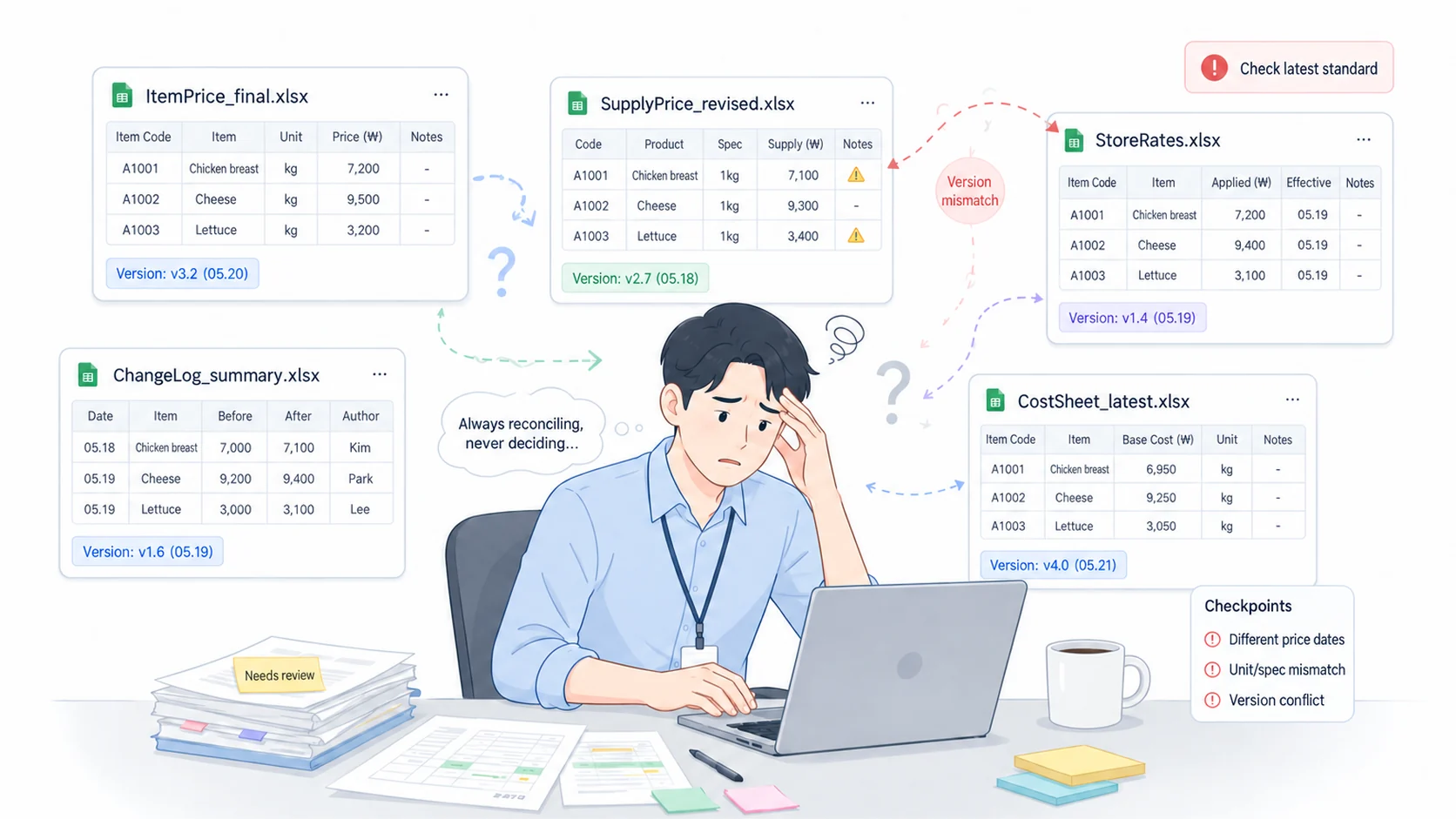
A franchisor HQ staff member juggling several complex spreadsheets to align the latest price standards
Early on, spreadsheets can handle items and unit prices. But as the number of brands, stores, and items grows, spreadsheets quickly hit their limits. The biggest problem is keeping everyone on the latest standard. Each staff member keeps different files, change histories are stored separately, and it takes time to confirm which standard applies to which store.
Ingredient prices can change suddenly. When they do, HQ needs to quickly answer: "What are we supplying each item at right now?", "How much does that differ from the previous price?", and "Which stores should the change apply to first?" With spreadsheets, file versions drift, some stores end up on different standards, and the reasons for changes often go unrecorded.
When this happens again and again, HQ staff spend their time reconciling files instead of analyzing data. HQ's job should not be reorganizing data, but making decisions based on it. A franchise system is the operational foundation that frees up time for those decisions.
Common problems with spreadsheet management
· Item names and specs are entered differently by each staff member
· Before-and-after price histories and effective dates aren't kept in the file
· It's hard to track when some stores are on a different standard
· Reasons for change, approvers, and store owner notices are scattered elsewhere
· Every executive report requires repeated manual work
4. FDAM helps HQ make decisions based on store operating data
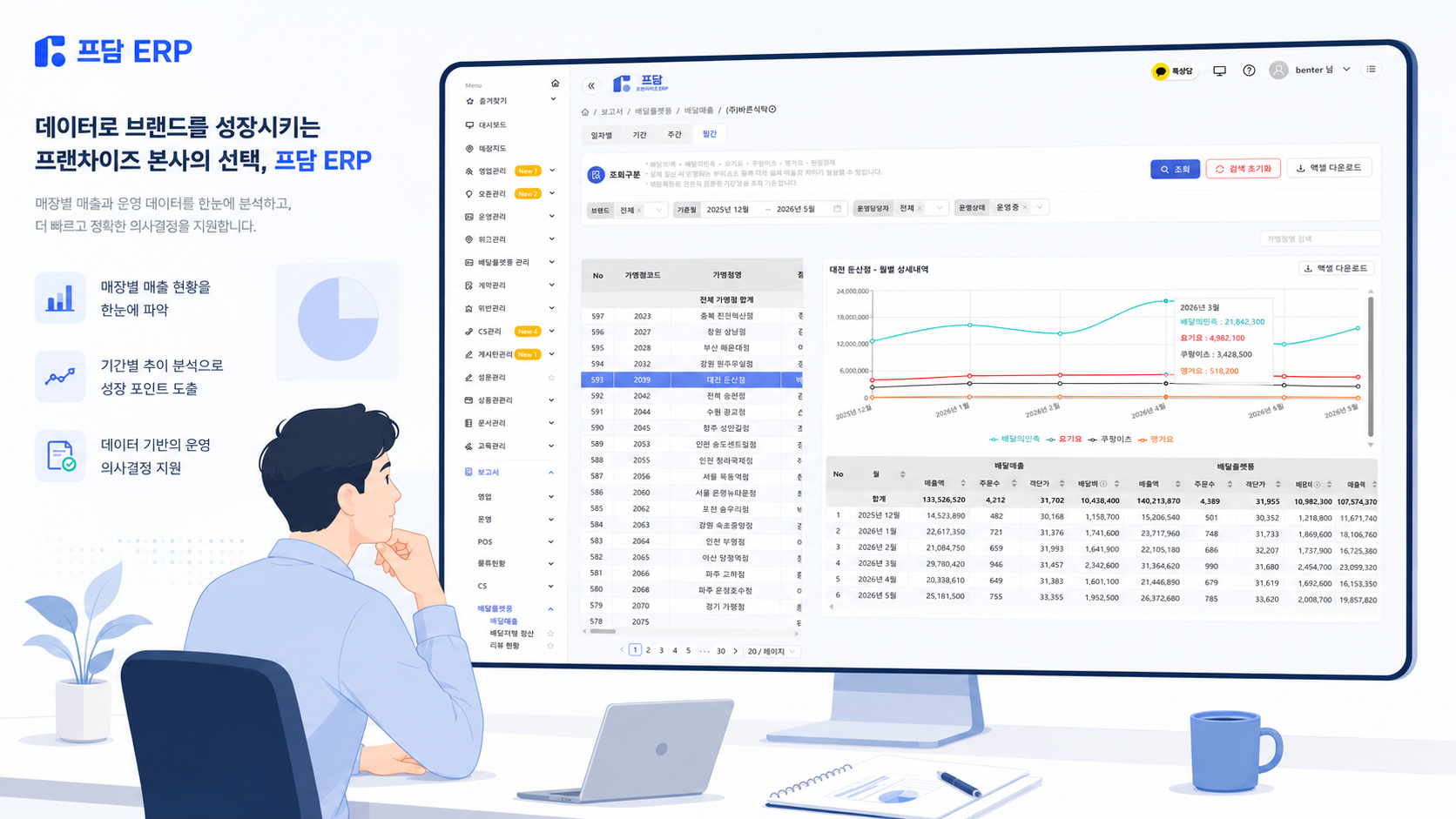
FDAM ERP dashboard analyzing sales trends and operating data by store
FDAM is an HQ ERP solution that helps franchisor headquarters manage store operating data systematically. Even when ingredient prices are volatile, FDAM helps HQ grasp each store's operating status faster. When sales, royalties, receivables, operating history, and per-store data aren't scattered, HQ can see more accurately how price changes affect store operations.
For example, when rising raw material prices erode the profitability of a particular menu item, HQ needs to review each store's sales trend and cost burden together. It has to decide whether a price adjustment is needed, whether promotions can continue, and whether specific stores need operational consulting. FDAM helps HQ manage stores with data, not gut feel.
Of course, FDAM doesn't control ingredient prices themselves. But by letting HQ view store operating data in one place and make decisions based on each store's situation, it can serve as the foundation for managing operations during price volatility.
| HQ's challenge | How FDAM changes management |
|---|---|
| Store operating status is scattered | See sales, royalties, receivables, and operating history in one place |
| Hard to see per-store impact after price changes | Review each store's sales trend and cost-burden signals together |
| Answers to store owner inquiries vary by staff member | Consistent explanations and responses based on HQ's standard data |
| Compiling data takes too long | Focus on operational decisions and store support instead of repetitive compiling |
5. A franchise system is not a cost but a safety net for HQ operations
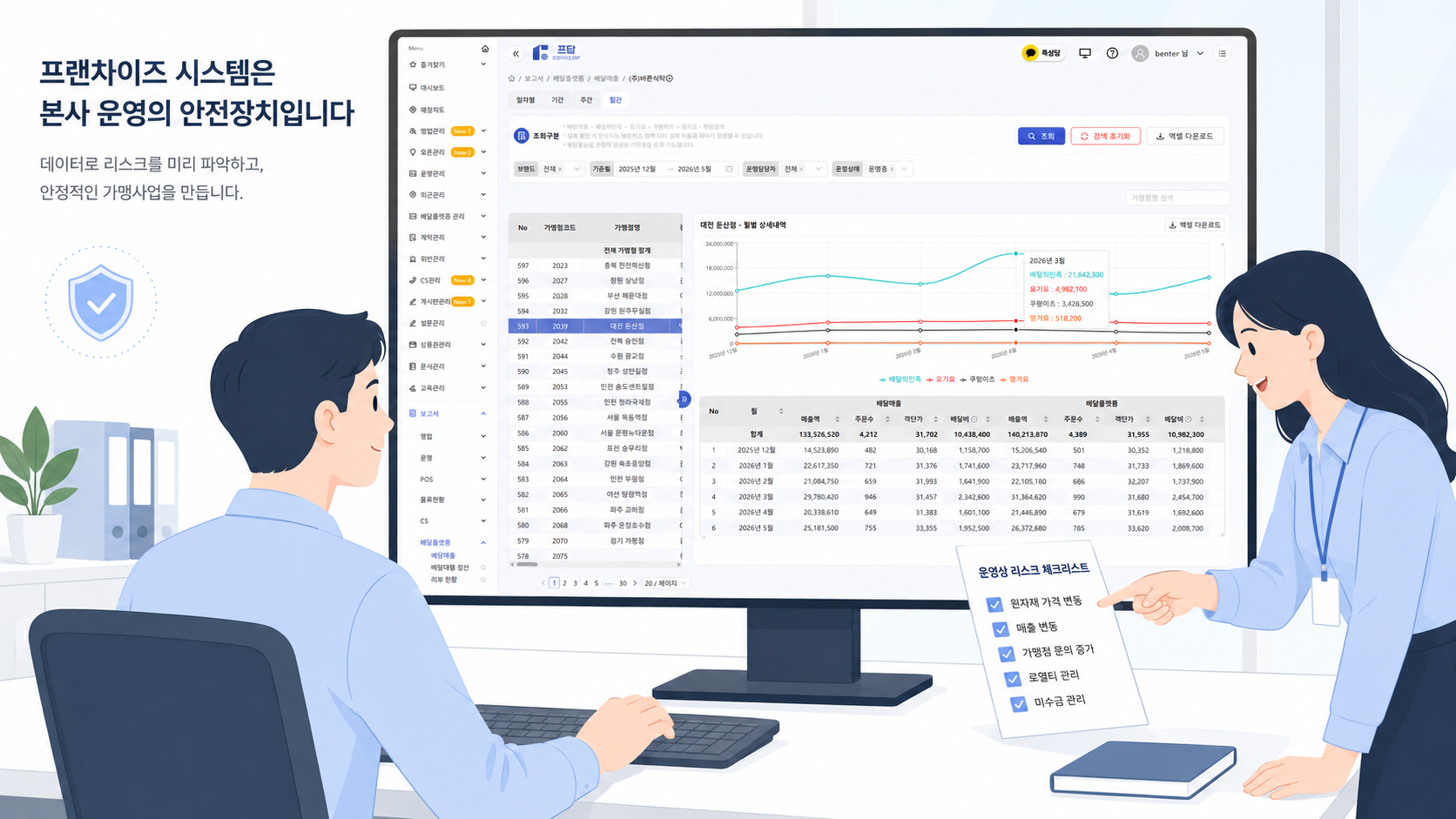
Franchisor HQ executives reviewing an operational risk checklist alongside an ERP dashboard
A franchise system isn't just a tool that makes work easier. It's a safety net that reduces recurring risks in HQ operations, such as price swings, sales changes, store inquiries, royalty management, and receivables management. When raw material prices are stable, the need for a system may not feel pressing.
But the moment prices start swinging, store inquiries increase, and HQ's responsibility to explain grows, the difference a data-driven system makes becomes clear. What franchisor headquarters need to watch going forward isn't sales alone. It's the costs, expenses, store profitability, and HQ response speed behind the sales.
HQ teams that are strong in volatile times check data quickly, identify the impact on each store, and respond by consistent standards. And underneath all of that is a franchise system.
6. A checklist HQ must review when prices swing
The checklist below helps franchisor headquarters assess how systematically they've set up operating standards for periods of ingredient price volatility. The key isn't simply whether you have a price list, but whether you can check change histories and the impact scope for each store.
| No. | Checklist question | Data to check |
|---|---|---|
| 01 | Do you keep a change history of purchase and supply prices by item? | Price change history |
| 02 | Can you see which menu items use a volatile item? | Menu-item mapping table |
| 03 | Can you identify affected stores based on each store's usage and order volume? | Usage by store |
| 04 | Can you review changes in store P&L before and after price adjustments? | Sales, cost, and margin trends |
| 05 | Are the reasons for change and the criteria applied documented for explaining to store owners? | Notices and review materials |
| 06 | Do you track changes in receivables, royalties, and operational inquiries after price changes? | Receivables, royalty, and consultation history |
| 07 | Are operations, purchasing, and supervisors looking at the same standard data? | Shared HQ dashboard |
7. A 30-day plan for building a price-volatility response system
Building a franchise system doesn't have to start as a massive project. The first step in responding to ingredient price swings is organizing the data HQ already has around a single standard. Once items, stores, prices, and operating history are connected, HQ can move faster even when prices are volatile.
1
Week 1: Organize key items and price history
Select the key items whose prices change often or that heavily affect menu costs, and organize their purchase and supply price change histories.
2
Week 2: Build menu-item mapping standards
Map each item to the menu items that use it, so you can immediately find which menu items are affected when prices change.
3
Week 3: Identify the impact scope by store
Classify the stores most affected by price changes based on each store's order volume, sales trend, and operating history.
4
Week 4: Apply HQ response criteria and a notification process
Define the criteria for price adjustments, continuing promotions, notifying stores, and operational consulting, and make sure every department looks at the same data.
As your store count grows, HQ operations must be run on a system
When you have only a few stores, staff experience and quick phone calls may seem enough to keep things running. But as the store count grows, things change. Even when the same item's price rises, usage and sales structures differ by store, and so does the burden each owner feels. It becomes increasingly difficult for HQ to manage every store's situation from staff memory.
A franchisor's competitiveness doesn't come simply from adding more stores. It comes from setting standards that help stores last in a volatile market, making decisions based on data, and responding consistently. Ingredient price swings are unavoidable, but how HQ responds is a choice.
If you find yourself reorganizing spreadsheets and manually checking each store's impact every time raw material prices move, it may be time to review how HQ operates. A franchise system is not a cost but a tool for setting HQ's operating standards.
Franchise System FAQ
Q. How does a franchise system relate to raw material price swings?
A. When raw material prices change, menu costs, menu prices, store margins, and HQ operating policies are all affected. A franchise system lets you view this data in one place and identify which items affect which menu items and stores, so you can respond.
Q. Isn't it fine to manage items and unit prices in spreadsheets?
A. It works early on. But as the number of stores and items grows, managing change histories, affected stores, and each staff member's files gets complicated. The more often prices change, the harder it is to tell which file is the latest and which standard applies to which store, so managing it in a system is safer.
Q. When ingredient prices rise, what should HQ check first?
A. Checking only the price increase isn't enough. HQ should also check which items went up, which menu items use them, which stores use them most, whether margins hold at current menu prices, and whether price or promotion adjustments are needed.
Q. Is FDAM a solution for managing ingredient prices themselves?
A. FDAM doesn't control market prices for raw materials. However, HQ can use it to view operating data such as each store's sales, royalties, receivables, and operating history in one place, as the basis for judging how price changes affect store operations.
Q. What kind of HQ is FDAM a good fit for?
A. It's a good fit for franchisor headquarters that, as their store count grows, need to manage sales, royalties, receivables, and operating history in an integrated way. HQ teams for whom ingredient price swings, changes in store P&L, rising store owner inquiries, and operating history management have become important especially need a data-driven system.
Q. What should HQ explain to stores during periods of price volatility?
A. Saying "costs went up, so we're adjusting prices" isn't enough. HQ needs to explain which items changed and by how much, which menu items and stores are affected, and by what criteria HQ is adjusting supply prices or operating policies. That requires change history and impact scope data.
FRANCHISE SYSTEM · FDAM
When raw material prices swing,
are your HQ operating standards swinging too?
If you're reorganizing spreadsheets and manually checking each store's impact every time prices move, it may be time to review how HQ operates.
Manage store operating data systematically with FDAM, and build HQ operations that hold steady even when prices swing.
Talk to salesLearn about FDAM Chat on KakaoTalk
※ This content is general information written from the perspective of franchisor HQ operations management. Ingredient prices, cost ratios, and criteria for adjusting supply prices may vary by industry, contract structure, supplier terms, and HQ operating policy.
franchise system, franchisor headquarters, ingredient price volatility, raw material price changes, rising costs, store P&L management, franchise ERP, FDAM, restaurant franchise, store operating data, royalty management, receivables management, HQ operations system, price volatility response, franchise cost management, store sales management, supervisor, restaurant cost ratio, supply price management, franchise operations