Lifting Store Sales: HQ Communication Strategy with the FDAM ERP
How franchisor HQ communication drives store sales, and how to use the franchise ERP FDAM to make it work
store sales, franchise ERP, FDAM, HQ communication, franchise store management, supervisor, brand consistency, Sodam, franchise operations, HQ operating system
Key takeaways · Store sales are decided where HQ's ability to execute strategy meets each store's operating know-how. · Supervisors' verbal coaching fades fast, and group-chat notices get buried in casual conversation instead of becoming assets. · An HQ ERP's notice board, app integration and read-tracking features create execution at the store level. · FDAM integrates with the Sodam store owner app, turning the flow of HQ know-how to the field into a system. |
Store sales are decided where HQ's ability to execute strategy meets each store's operating know-how. No matter how good HQ's marketing and menu strategies are, they rarely translate into sales unless they are delivered accurately to the field and applied consistently. That is ultimately why HQ staff say communicating with store owners is the hardest part of the job.
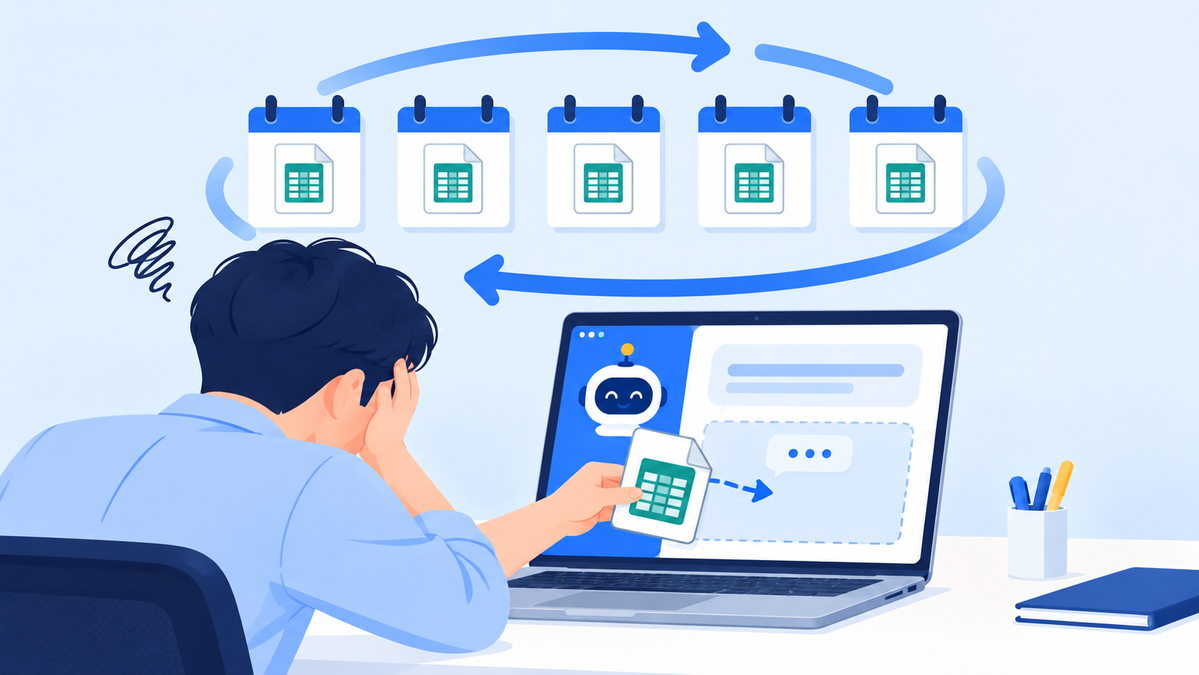
If you work at HQ, you've probably watched an owner's passion burn bright at opening, then cool off after a year or two. It's draining to face owners who blame HQ for poor sales yet can't be bothered with the marketing strategies HQ suggests.

The reality for HQ staff as store sales decline.
"The stores that do well figure it out on their own, but the ones that struggle stay stuck no matter how much we train them."
Verbal coaching during supervisor visits fades quickly. To raise the competitiveness of the whole brand, you need a system. This article lays out the strategies HQ needs to lift store sales and how to put them into practice with the franchise ERP FDAM, following real-world workflows.
1. A franchise ERP isn't an accounting program
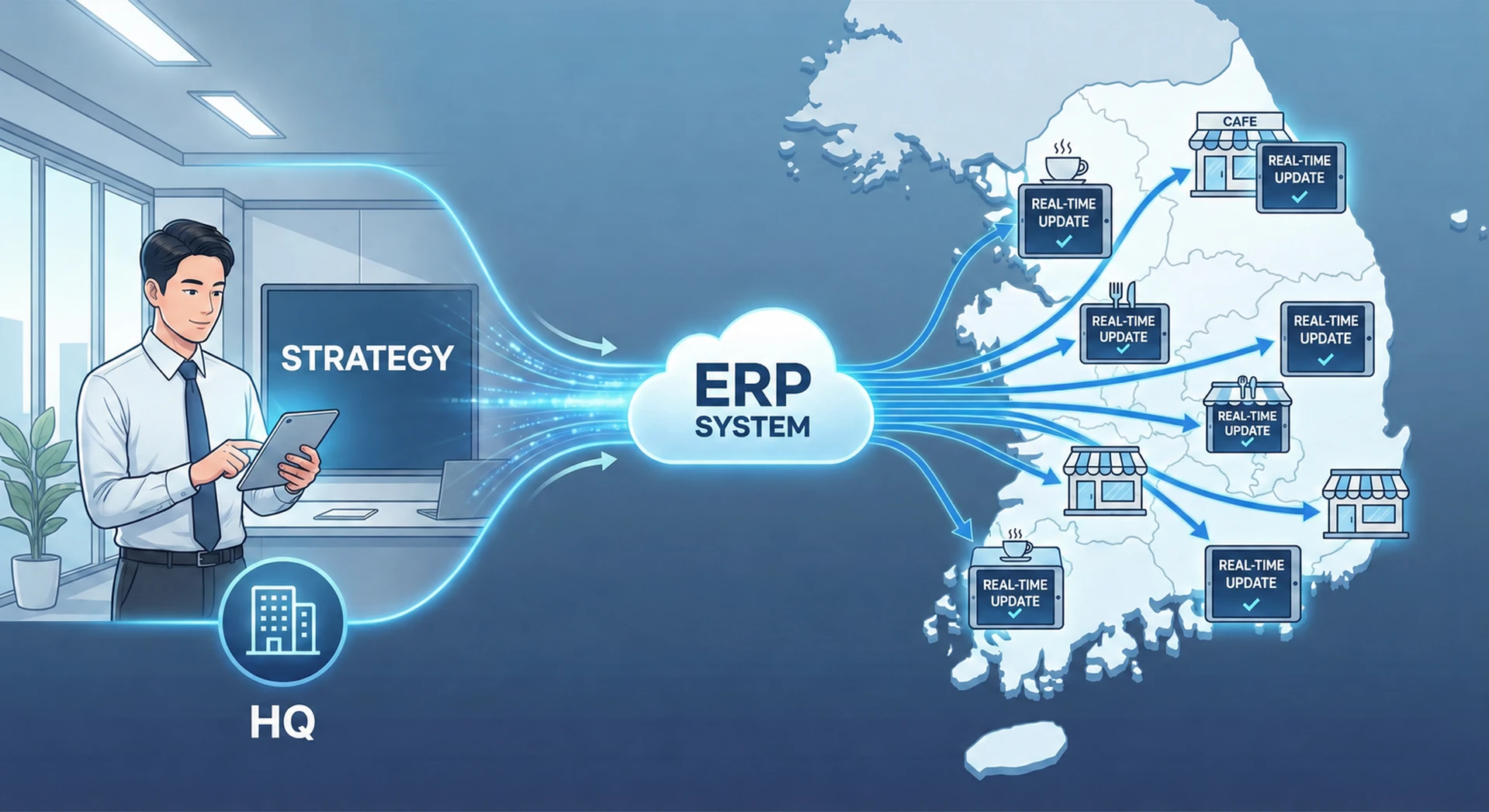
An integrated operations control tower that lets HQ strategy flow straight to the store floor.
When people hear "ERP," many first think of an accounting program for managing financial statements and issuing tax invoices. For an ordinary company, that might be enough.
But franchisor HQ work doesn't end on the accounting team's desk. It is a tangle of daily logistics reaching stores nationwide, supervisors' QSC inspections and real-time communication with store owners. So the ERP a franchisor needs has to be defined differently.
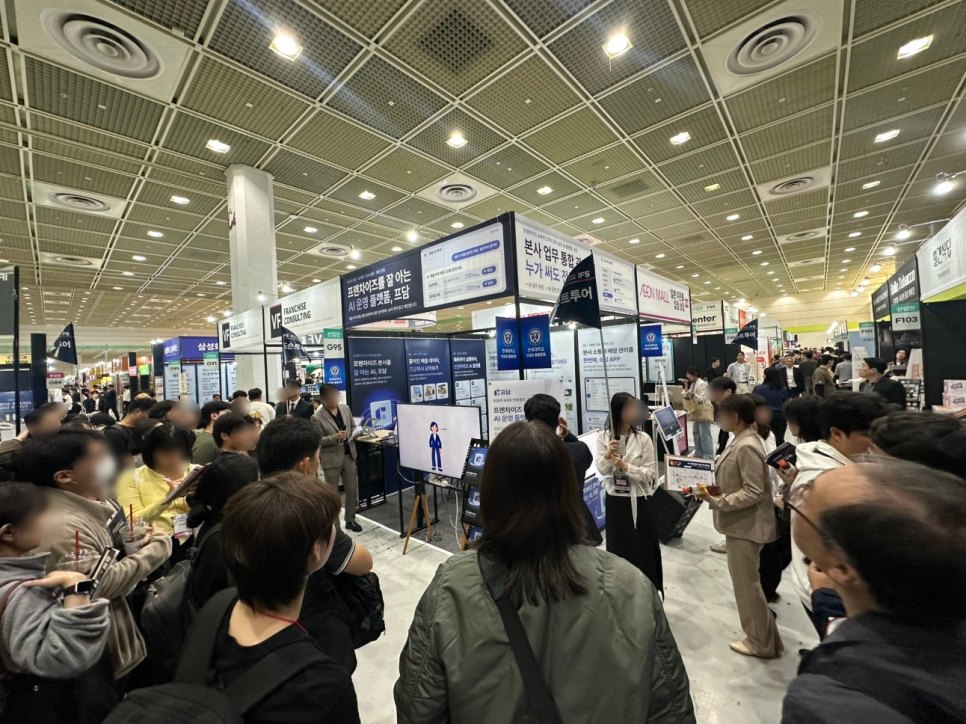
It shouldn't be a bookkeeping tool, but an "integrated operations control tower" that ties accounting, logistics, operations and communication together so HQ strategy flows straight to the store floor. That's why MS Benter, focused on franchise IT for nearly 25 years, designed FDAM around HQ workflows.
2. Why HQ should focus on ERP communication features
Many HQ staff ask why they should use communication features inside an ERP when messengers like group chats already exist. The answer lies in turning information into assets and measuring execution.
Why you need ERP communication features · Information that doesn't vanish: group-chat notices get buried in casual conversation, but an ERP notice board becomes a permanent manual. · Replicating success: it clears the "information bottleneck" that keeps top stores' know-how from reaching lower performers. · Data-driven management: you can track in data which stores have seen the strategies HQ shared. |
Capturing how successful stores operate in a system and spreading it across every store is the most realistic starting point for HQ to lift store sales.
3. Spreading HQ know-how with the FDAM notice board
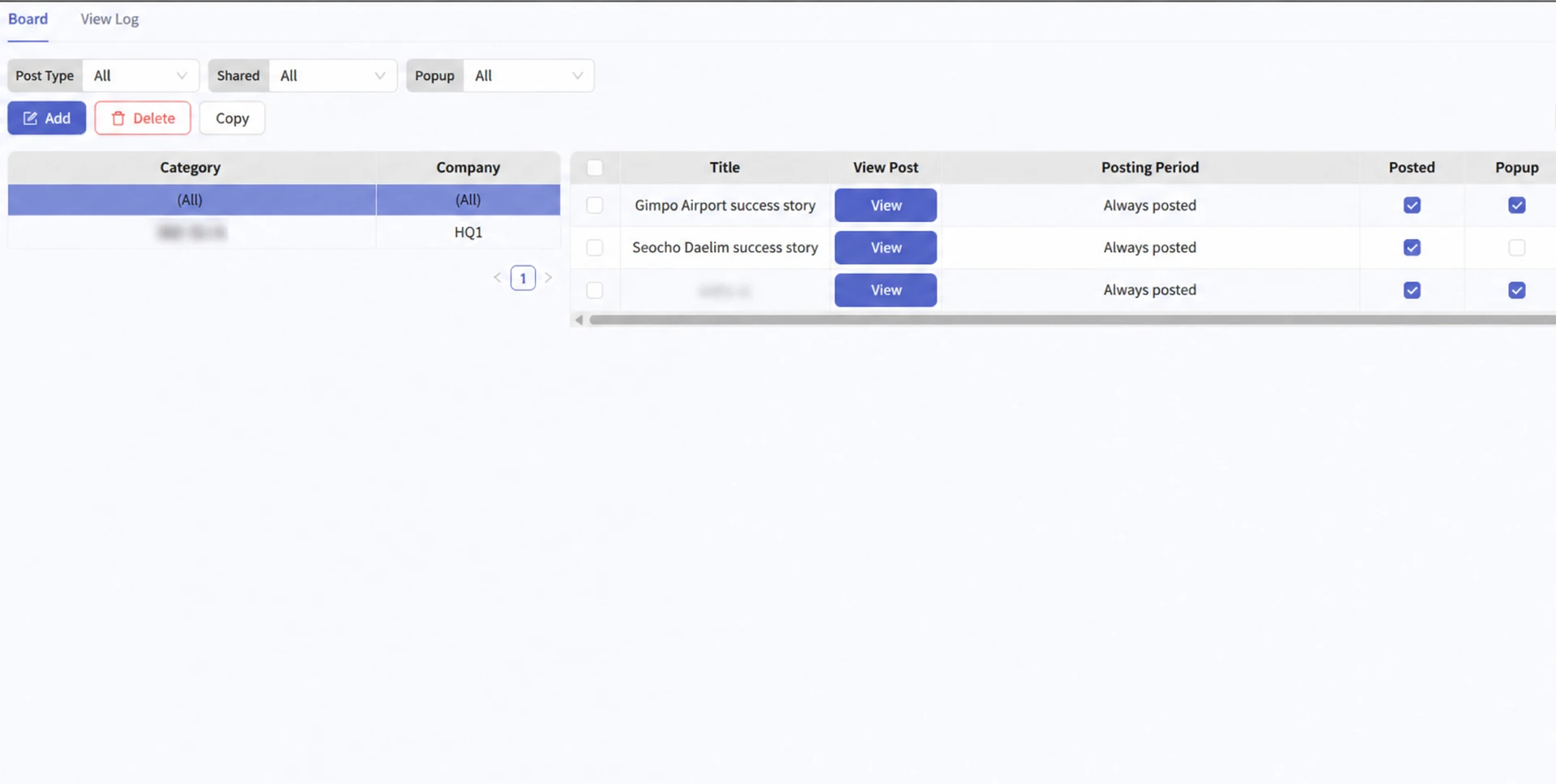
FDAM's notice board management feature shares successful stores' know-how with every location.
Built on MS Benter's experience working with about 500 brands, FDAM is designed so HQ can categorize what it sends to stores, not as simple notices but as material that genuinely helps operations.
- Sharing successful store cases: post specific examples, such as "how Store A ran its seasonal promotion and arranged in-store traffic flow"
- Key promotion points: this season's target customers, service scripts and POP display guides
- Average check strategy: ready-to-use operating materials like side menu lineups and set recommendation flows
4. The impact: an example scenario

An example of a store applying a proven seasonal menu strategy.
It's quicker to grasp as a flow than as theory. Here's an example of how a cafe franchise that actively shares success stories on its HQ notice board operates.
Example scenario: rolling out a seasonal menu "Seasonal strawberry latte + cheesecake" set strategy ① HQ: the marketing team uploads high-resolution styled photos of the seasonal set and a "discount on set orders" POP design file to the FDAM notice board. ② Share: Store A posts real display photos and its know-how on the same board: "Putting the POP next to the kiosk during the lunch peak increased the share of set orders." ③ Spread: without supervisors visiting one by one, other stores check the board and voluntarily put up the POP and adopt the set recommendation flow. |
When proven cases, not someone's hunch, stay in the system as assets, store owners start to move. You create an environment where stores adopt strategies on their own, without HQ staff pushing them.
5. What to check before adopting: field accessibility and read tracking
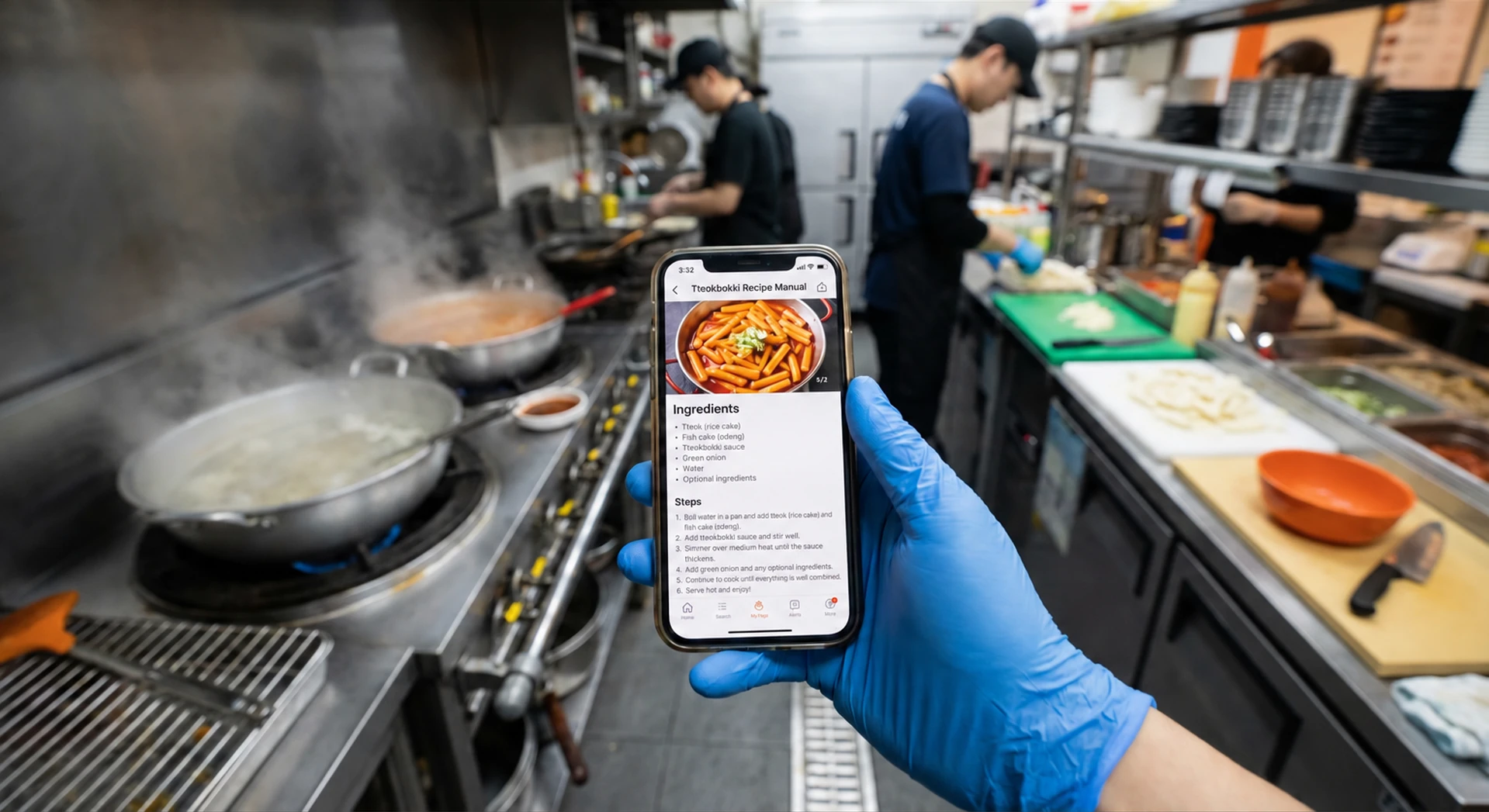
HQ operating materials arrive instantly on a smartphone, even in a busy store.
When evaluating a system, this is the question HQ managers ask most often:
"Even if the system is good, will busy owners sit down at a PC to look at it? And how do we know they actually read it?"
If notices go unread, strategy can't be executed at all. That's why you must check mobile accessibility and read tracking.
FDAM integrates with Sodam, the dedicated store app, so HQ notices reliably reach store owners' smartphones.
- Real-time push: when HQ posts, an alert goes straight to the owner's phone, so they can check it at the POS or on their commute.
- Read logs: see clearly which stores have read a notice and which haven't.
- Targeted follow-up: supervisors can pull a list of stores that haven't read a notice and follow up with them, without calling everyone. Just ask the FDAM AI assistant, the first built into a franchise ERP in Korea, "Which stores haven't read this week's notice?" and get a list organized by staff member and store.
6. Data-driven communication is now an operating basic
Data-driven store management isn't a passing trend; it has become a basic that supports a brand's sustainable growth. In the past, HQ competitiveness meant how many new stores you could open. Now, the real edge is how you help existing store owners succeed and stay.
MS Benter's FDAM provides a concrete flow that keeps HQ and the field working from the same data. You don't need to change everything at once. Start by posting one or two of your brand's most reliable success practices on the notice board. As small communications add up, you build your own operating formula.
Frequently asked questions
Q. How is a franchise ERP different from a general accounting ERP?
A general accounting ERP focuses on finance and tax. The key difference is that a franchise ERP is designed around operating work only franchisors need: HQ-to-store communication, store QSC inspections, logistics and pre-disclosure documents.
Q. We already communicate with stores through KakaoTalk group chats. Do we really need an ERP notice board?
Group chats are fast, but materials get buried in casual conversation and never become assets, and it's hard to track who saw what. An ERP notice board builds HQ materials into a permanent manual and keeps read history by store as data. That's the decisive difference.
Q. Can we see how well store owners check HQ notices?
FDAM records post read logs by store. Supervisors can separate stores that have read from those that haven't and focus follow-up on the latter, and you can ask the AI assistant about unread status in plain language and get an instant answer.
Q. What does the Sodam store owner app offer?
Sodam is the dedicated store app that integrates with FDAM, the HQ ERP. HQ notices, recipe materials, surveys, CS inquiries and QSCV field inspection results can all be viewed and handled on one screen, so owners can use HQ materials right in the store.
Q. How do we request a consultation?
You can reach FDAM through the sales consultation page (fdam.co.kr/register), our KakaoTalk channel or our main line (1544-7120, Korea). We'll walk you through use cases and a demo tailored to your HQ's operating environment.
Where store sales growth starts
FDAM, the franchise ERP that carries
HQ strategy all the way to the store floor
Book a free consultation and find your sales growth strategy
Learn more about FDAM Ask us on KakaoTalk