Store Settlement Automation Software: 3 Criteria Before You Compare
Before choosing franchise store settlement automation software, here are the criteria for reflecting contract terms and sharing the calculation basis.

As your store count grows, the burden of manual settlement grows faster than simple arithmetic
CORE SUMMARY
✓ The first criterion for store settlement automation software is not calculation speed but whether it accurately reflects each store's contract terms.
✓ If sales aggregation and settlement calculation are separate, you end up doing sales checks and settlement calculations twice.
✓ If the calculation basis is not shared with store owners, settlement inquiries and disputes keep coming back.
✓ When comparing automation software, the accurate way to confirm contract term handling, sales-to-settlement integration and calculation basis sharing is through a consultation.
Store settlement automation software connects each store's sales with its contract terms to automatically calculate settlement amounts such as royalties and deductions. Monthly settlement is not much of a burden when you have few stores, but as stores multiply and contract terms vary slightly from store to store, both the chance of manual errors and the time required go up. In this article, we cover the criteria for comparing settlement automation software and how manual and automated settlement actually differ.
Why settlement takes so long every month
At the end of every month, HQ staff check each store's sales, apply the royalty rate set in the contract, and factor in deductions to calculate the settlement amount. With only a few stores this takes half a day, but once you grow to 30 or 50 stores, settlement alone can take several days.
A bigger problem than the time it takes is that contract terms differ by store. Even within the same brand, royalty rates or deductions may differ slightly depending on when the contract was signed. In this situation, a single misapplied Excel formula means rechecking not only that store but every other store with similar terms. Settlement is a recurring burden not because of the sheer volume of calculation, but because people have to remember and apply each store's exceptions every time.
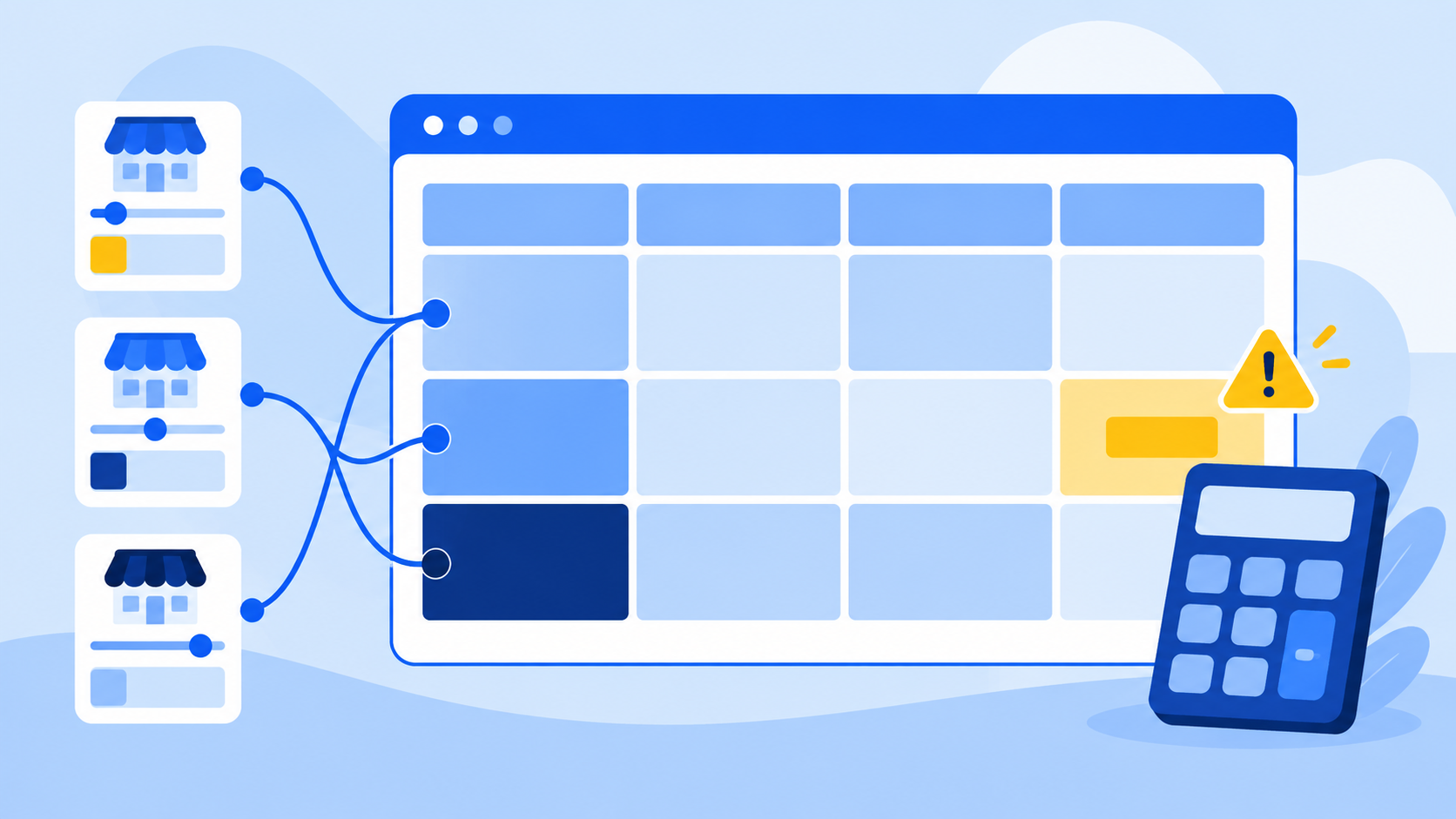
Variation in contract terms magnifies the settlement workload beyond simple arithmetic
What to compare when choosing automation software
When comparing settlement automation software, it helps to check three criteria first. They all stem from one question: "How accurately does it reflect our actual contract structure?"
1
POINT 01
Can contract terms be set differently for each store?
Software that applies the same formula to every store cannot handle stores with different contract terms from the outset. Even if most stores follow a standard contract, if some have exceptions, whether those exceptions can be reflected in the system becomes the real point of comparison.
2
POINT 02
Do sales aggregation results flow straight into settlement calculations?
If you have to check sales in one place and calculate settlement in another, the word "automation" loses its meaning. When sales data and settlement calculation are separate, staff are still left moving data back and forth between two systems.
3
POINT 03
Can the calculation basis be shared with store owners?
If you only notify owners of the settlement amount, questions about "why it came out this way" keep coming, but showing the calculation basis item by item reduces those questions in the first place. Since the purpose of automation is not only speed but also cutting unnecessary back-and-forth between HQ and store owners, this criterion matters as much as calculation accuracy.
| What to check | Problem if missing |
|---|---|
| Store-specific contract terms | Stores with different contracts need separate manual calculation |
| Sales-to-settlement integration | Sales checks and settlement calculations done twice |
| Sharing the calculation basis | Repeated owner inquiries and disputes |

If even one of the three criteria is missing, the benefit of automation is cut in half
How manual and automated settlement actually differ
In manual settlement, one staffer handles everything in sequence: checking sales, matching contract terms, calculating and reviewing. Because each step depends on human memory and manual work, the chance of mistakes rises as the store count grows. In particular, if a store's contract terms changed midway, staff may miss it and calculate using the old terms.
With automation software, sales aggregation results are already calculated against contract terms, so staff only need to review the results and check items that look off. The key point is that the software does not make judgments in place of people; it reduces the matching and calculation that used to be repeated every time. The staffer's role does not disappear but shifts from "the person who calculates" to "the person who reviews." Understanding this difference makes it easier to decide how to design the staff review process after adopting automation software.
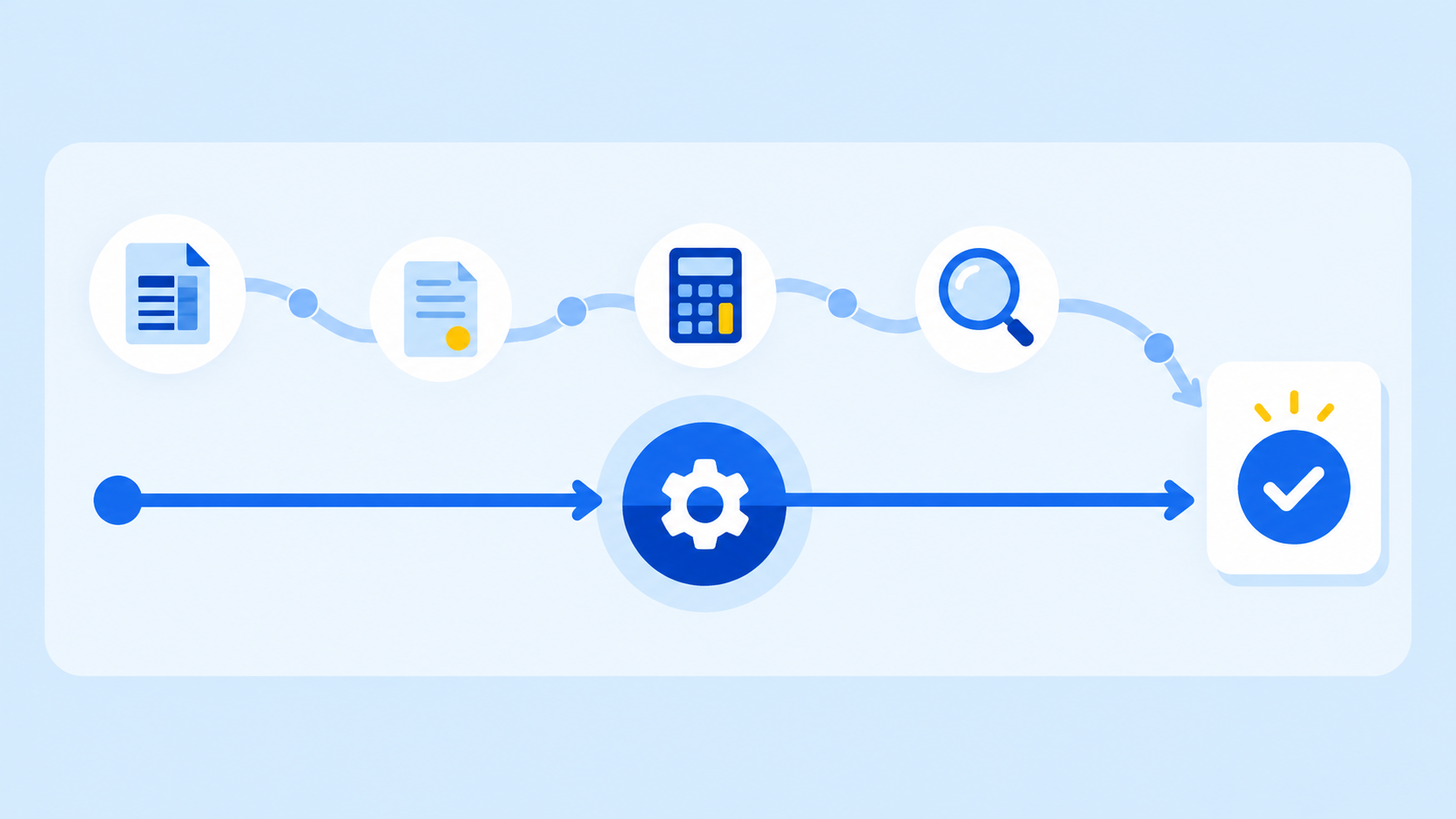
Automation does not eliminate calculation; it reduces the repeated matching work
How FDAM automates settlement
Drawing on long experience watching the settlement burden at franchisor headquarters, MS Benter provides a feature in FDAM that connects each store's aggregated sales data with its franchise agreement terms to calculate settlement amounts. The contract terms set at the electronic franchise agreement stage become the basis for settlement calculations, and POS sales aggregation results from the Operations module flow into settlement without being re-entered.
The calculation basis is kept item by item, so staff and store owners can check the same criteria. How cases where contract terms differ by store or change midway are handled can vary by contract type, so the accurate approach is to confirm directly through a consultation, using the three criteria outlined above (contract term handling, sales-to-settlement integration and calculation basis sharing). Settlement happens where FDAM's Sales module (electronic franchise agreements) and Operations module (POS sales aggregation) connect, so the biggest difference from manual settlement is that everything from the contract stage to settlement is managed as one flow.
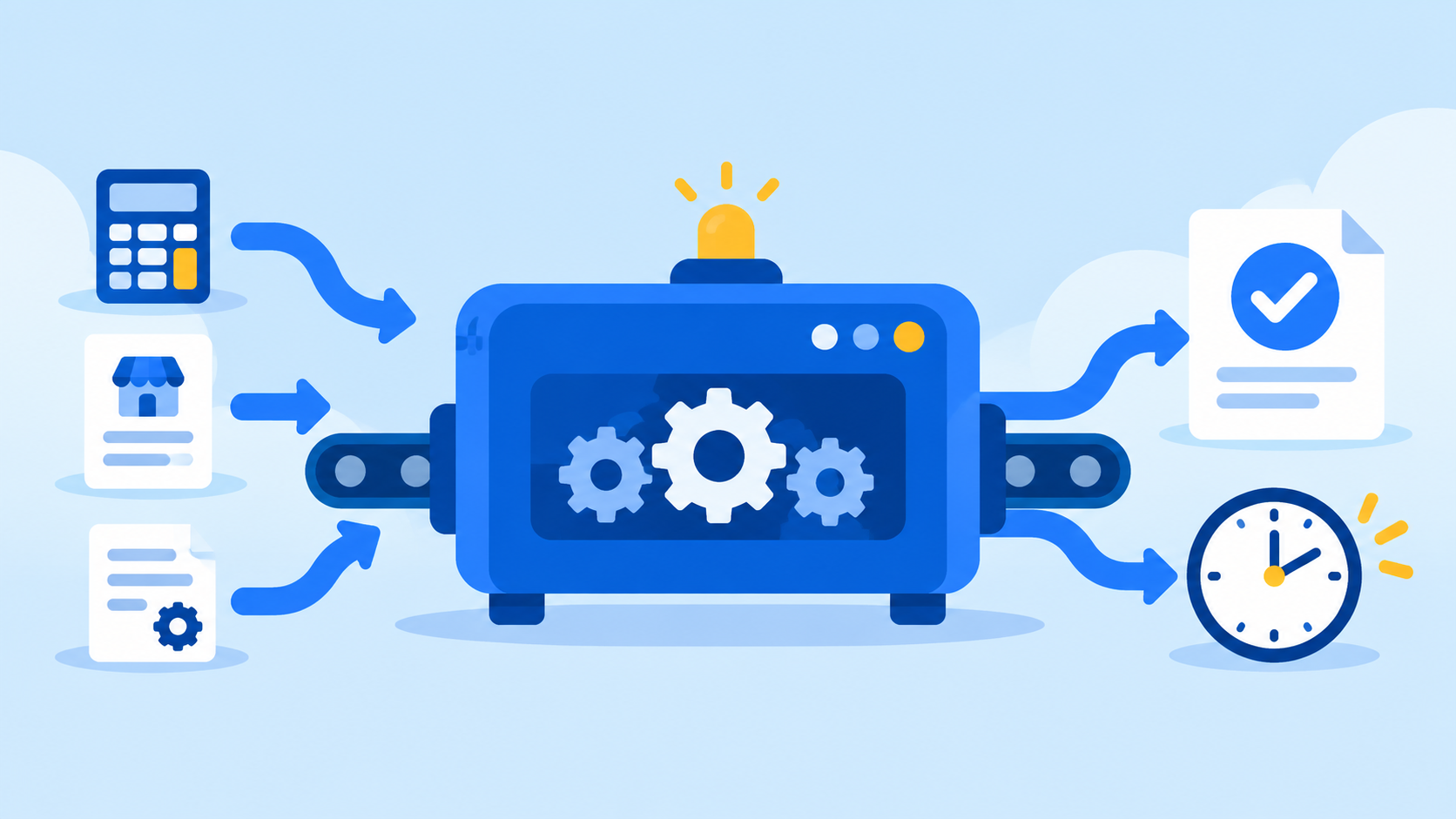
Settlement becomes automated when contract terms and sales data connect in one flow
Frequently asked questions
Q. Is automated settlement possible if royalty rates or contract terms differ by store?
Whether contract terms can be set differently by store is the key criterion to check before adoption. FDAM calculates settlement based on the terms set at the electronic franchise agreement stage.
Q. If we adopt settlement automation software, will our staff have nothing to do?
The calculation work shrinks, but reviewing results and checking anomalies remains the staffer's job. Automation does not replace calculation; it reduces repetitive matching work.
Q. Can we migrate settlement records we used to calculate by hand?
There is a process for migrating past settlement history, and the specific method can be confirmed through a consultation based on your HQ's situation.
Settlement is a monthly task, so the time saved through automation adds up to a noticeable difference. We recommend starting by checking how much time you spend on settlement each month and how you handle stores with different contract terms.
Curious how FDAM automates settlement?
A consultation will show you exactly how store-specific contract terms are handled and how the calculation basis is shared.
Talk to sales about settlement automationLearn more about FDAM Chat on KakaoTalk
Store settlement automation, settlement automation software, franchise settlement software, automatic royalty calculation, store settlement management, franchise ERP, store operations management, franchisor HQ solutions, MS Benter, FDAM, electronic franchise agreement