Franchise Sales Management: 4 Steps from Inquiry to E-Contract
From inquiry to e-contract: a 4-step guide to franchise sales management
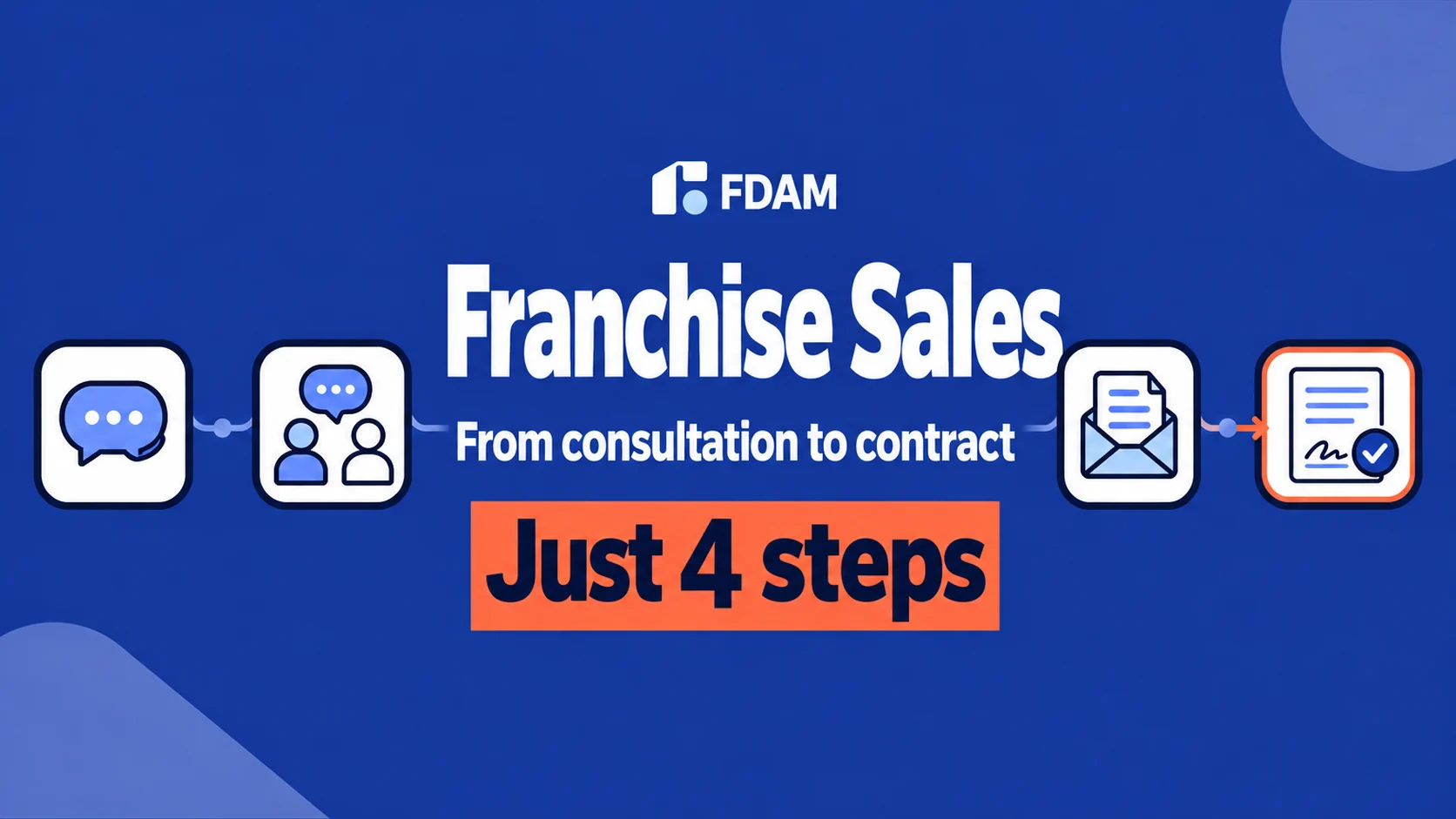
Organizing scattered consultation information into a single flow is where franchise sales management begins
CORE SUMMARY
✓ Franchise sales management means tracking the process from inquiry to contract through records, not through individual staff members' memories.
✓ When consultation information is scattered across Excel, messengers and email, missed inquiries, delayed follow-ups and broken handoffs keep happening.
✓ Structuring the sales process into four steps (inquiry intake, consultation, disclosure document delivery and e-contract) makes it clear where to manage.
✓ Managing when disclosure documents are delivered and when contracts expire goes beyond convenience; it ties directly to risk management under the Franchise Business Act.
Franchise sales management is the practice of managing the entire process, from the moment a startup inquiry comes in to the moment a franchise agreement is signed, as organizational records rather than individual staff members' memories or personal files.
Inquiries come in through many channels: the website, phone, ad channels, trade shows and referrals. The trouble starts after that. As an inquiry turns into a consultation, and a consultation turns into document delivery and a contract, the information often gets scattered across each staff member's own tools.
When inquiry volume is low, this isn't much of a problem. But as the brand grows and inquiries increase, the time spent compiling consultation history starts eating into time for actual sales. This post walks through why franchise sales management becomes structurally difficult, what criteria you can use to break it into steps, and how to safely manage the legal procedures of disclosure documents and electronic franchise agreements in practice.
Why franchise sales management becomes structurally difficult
The difficulty in franchise sales management lies not in sales skills but in where the information is stored.
Even for the same prospective franchisee, consultation notes end up in a staff member's personal notebook, quotes and materials in their inbox, documents in KakaoTalk chats, and progress in each person's Excel file. Bringing these four sources together ultimately requires someone to compile them by hand, and that compiling becomes a separate workload in itself.
In this structure, the difficulty of management grows not linearly but exponentially as the number of staff increases. When each person has a different consultation style and note-taking habit, the quality of management varies from prospect to prospect even within the same organization. And when a staff member is reassigned or leaves, much of the history for the leads they handled often disappears with them.
In the end, the core challenge of franchise sales management is less "how to sell better" and more "how to build a structure where sales information stays with the organization." This shift in perspective becomes the basis for designing the steps that follow.

When information is scattered, compiling it becomes a job in itself
Three problems that keep recurring when information is scattered
Leave information scattered, and three problems repeat in a cycle: missed inquiries, delayed responses and broken handoffs.
Missed inquiries
If inquiries from multiple channels can't be seen in one place, assigning a staff member gets delayed or the response is missed altogether. The more ad channels an HQ runs, the more likely incoming leads are managed separately by channel, making these misses more common.
Delayed follow-ups
A consultation doesn't end with one phone call; it continues with document reviews and follow-up meetings. If the next contact date lives only in a staff member's personal calendar, follow-ups slip or get missed the moment that person gets busy with other work, eroding the prospect's trust.
Broken handoffs
When the staff member changes, the new person has to piece together the earlier consultation context from scratch. They end up re-requesting materials already provided or repeating the same questions, which directly affects the contract close rate.
It's important to understand that these three aren't separate incidents but symptoms of the same cause: scattered information.

The three problems aren't the cause; they're the result of scattered information
How to structure the franchise sales process into 4 steps
The most practical way to improve franchise sales management is to break the entire process into four steps and define what to manage at each step first.
Franchise sales at a franchisor headquarters generally follow this order: inquiry intake, consultation, disclosure document delivery and franchise agreement signing. Splitting it into steps makes it clear what needs to be recorded at each one.
1Inquiry intake
Record the lead source, inquiry date and time, and whether a staff member has been assigned. Without this, you have no basis for comparing performance by channel.
2Consultation
Log contact history, consultation summaries, and next actions and dates. If this is thin, delayed follow-ups and broken handoffs repeat exactly as before.
3Disclosure document delivery
Record how and when documents were sent and whether the prospect confirmed or viewed them. This step ties directly to legal risk.
4Franchise agreement signing
Manage contract terms, contract period, and renewal and expiration dates.
Defining what to manage at each step in advance means every prospect is managed to the same standard, no matter who the staff member is. This turns individual differences in staff capability into an organizational standard.
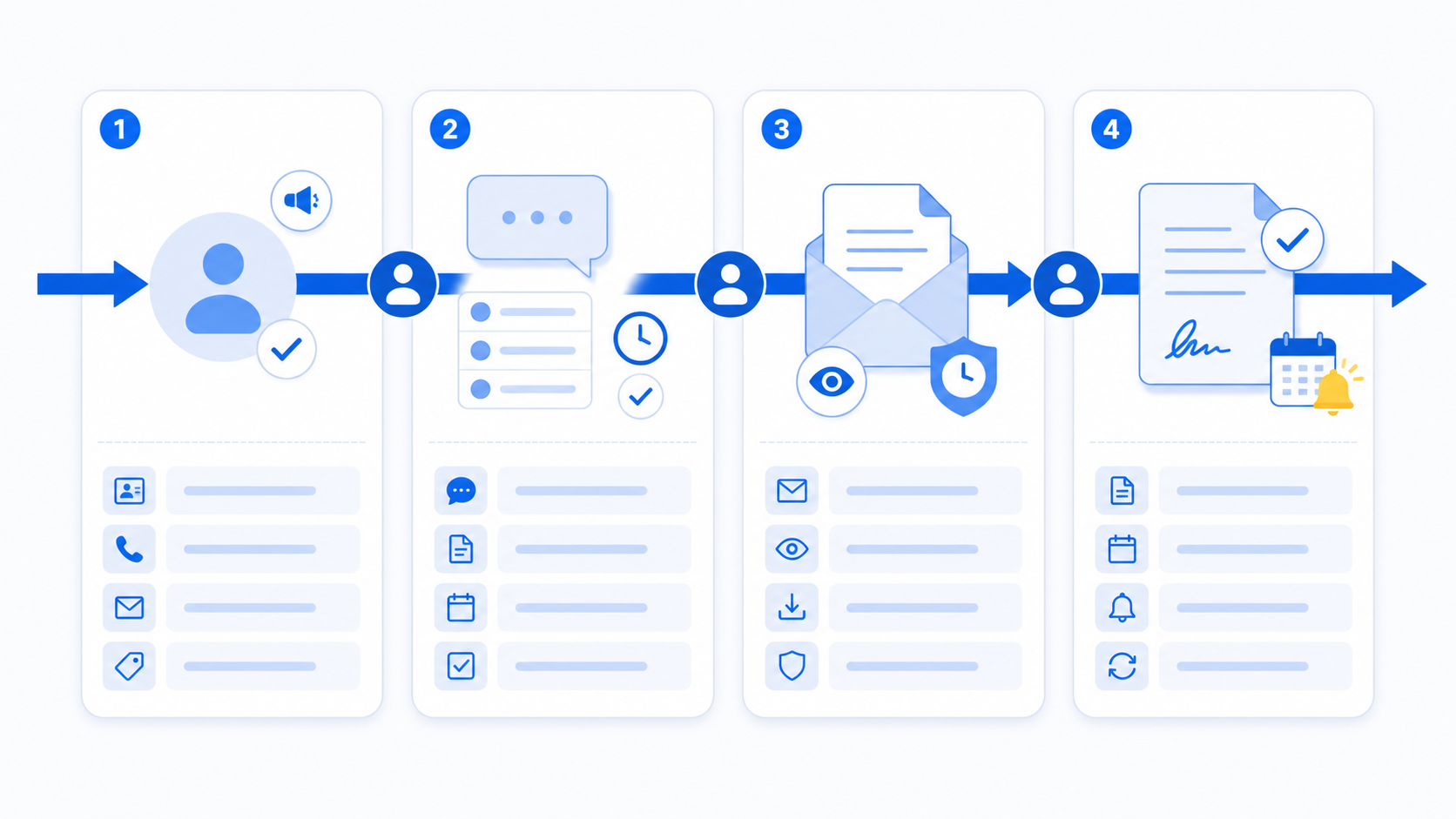
Breaking the process into steps clarifies what records to keep at each one
Disclosure documents and electronic franchise agreements: "records" are your legal safeguard
The most important element in disclosure document delivery and contract management isn't consultation skill but proof of timing.
Under Korea's Act on Fairness in Franchise Transactions (the Franchise Business Act), pre-contract documents such as the franchise disclosure document must be provided to prospective franchisees a set period before the franchise agreement is signed. Following this procedure itself isn't hard; the problem arises when you later need to prove that you did. For documents sent individually by email or messenger, you can confirm they were sent, but it's hard to prove when the prospect actually viewed them.
Post-contract management follows the same principle. As store count grows, contract expiration dates are spread out across the entire brand. Relying on staff to remember and track these dates personally hits its limit once the store count passes a certain size, and missing a renewal date can lead to unnecessary disputes between HQ and stores.
That's why having a structure that automatically records disclosure document sending and viewing history and alerts you ahead of contract expirations should be treated as a matter of risk management, not convenience. Whether this is in place is also a difference HQ actually feels when responding to legal reviews and audits.
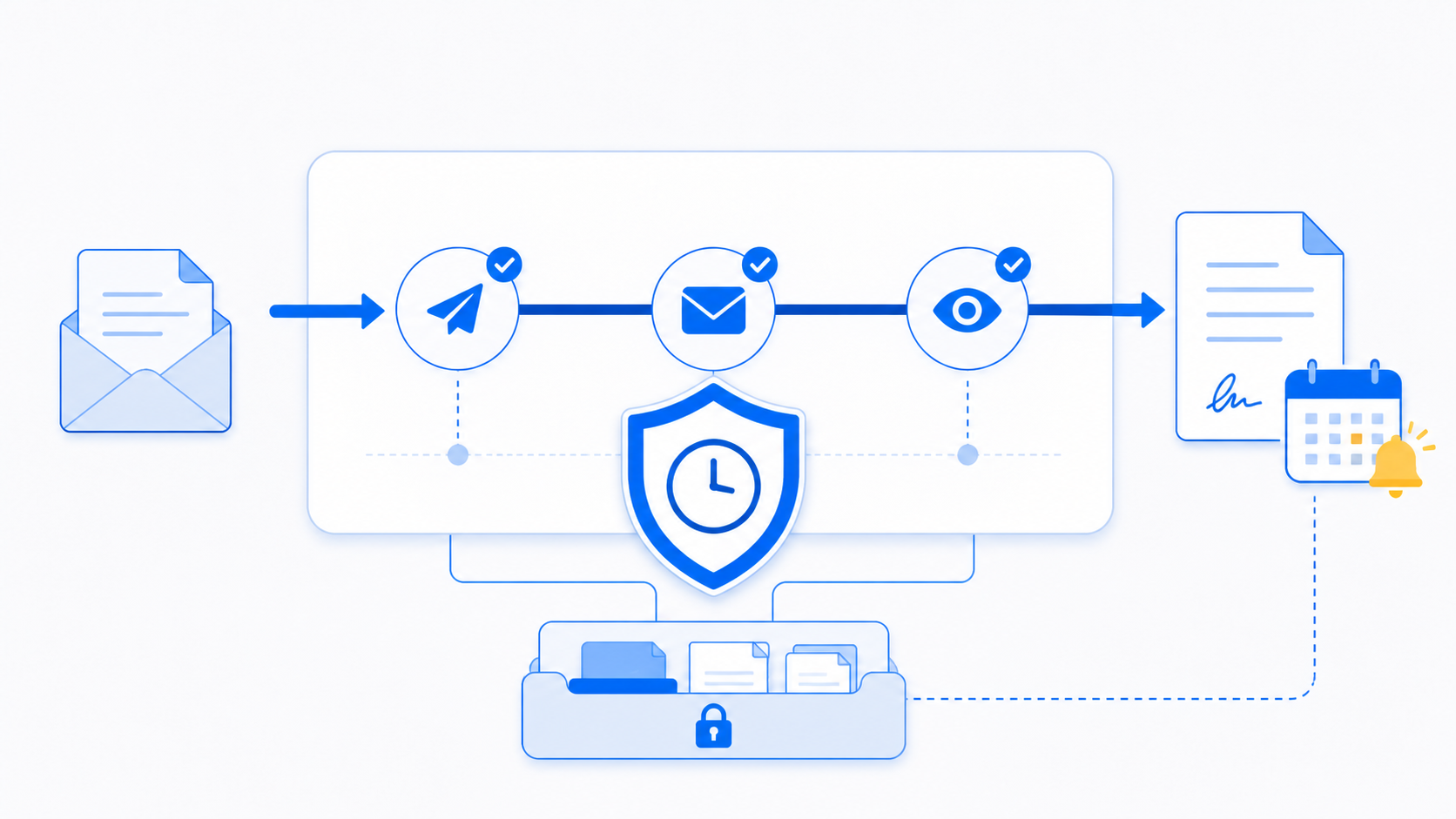
Sending and viewing times must be on record to serve as actual evidence
FDAM Sales Management connects these 4 steps into one flow
In practice, the Sales Management module of FDAM, an operations ERP for franchisor headquarters, connects these four steps into a single flow.
FDAM aims to organize and standardize franchisor headquarters' work in one place, and its workflow is designed to begin with Sales Management and continue into Store Opening Management and Operations Management. When a startup inquiry comes in, the person is registered as a prospective franchisee, and their consultation status and history keep building up underneath. Because each staff member's pipeline and consultation progress appear on one screen, you can see how many leads are at which step right away, without compiling anything.
POINT 01
Disclosure documents can be generated within the system and sent via KakaoTalk, email or text message, with view timestamps recorded so the delivery and viewing history stays on file.
POINT 02
This history carries naturally from the consultation stage to the contract stage, leading to the signing of an electronic franchise agreement, and after signing, an automatic alert goes out 30 days before the contract expires.
This flow is the core of FDAM Sales Management. The real difference between an ERP built for franchises and a generic sales management tool is that the features don't exist in isolation; the process from inquiry to contract is designed to continue as one connected record.
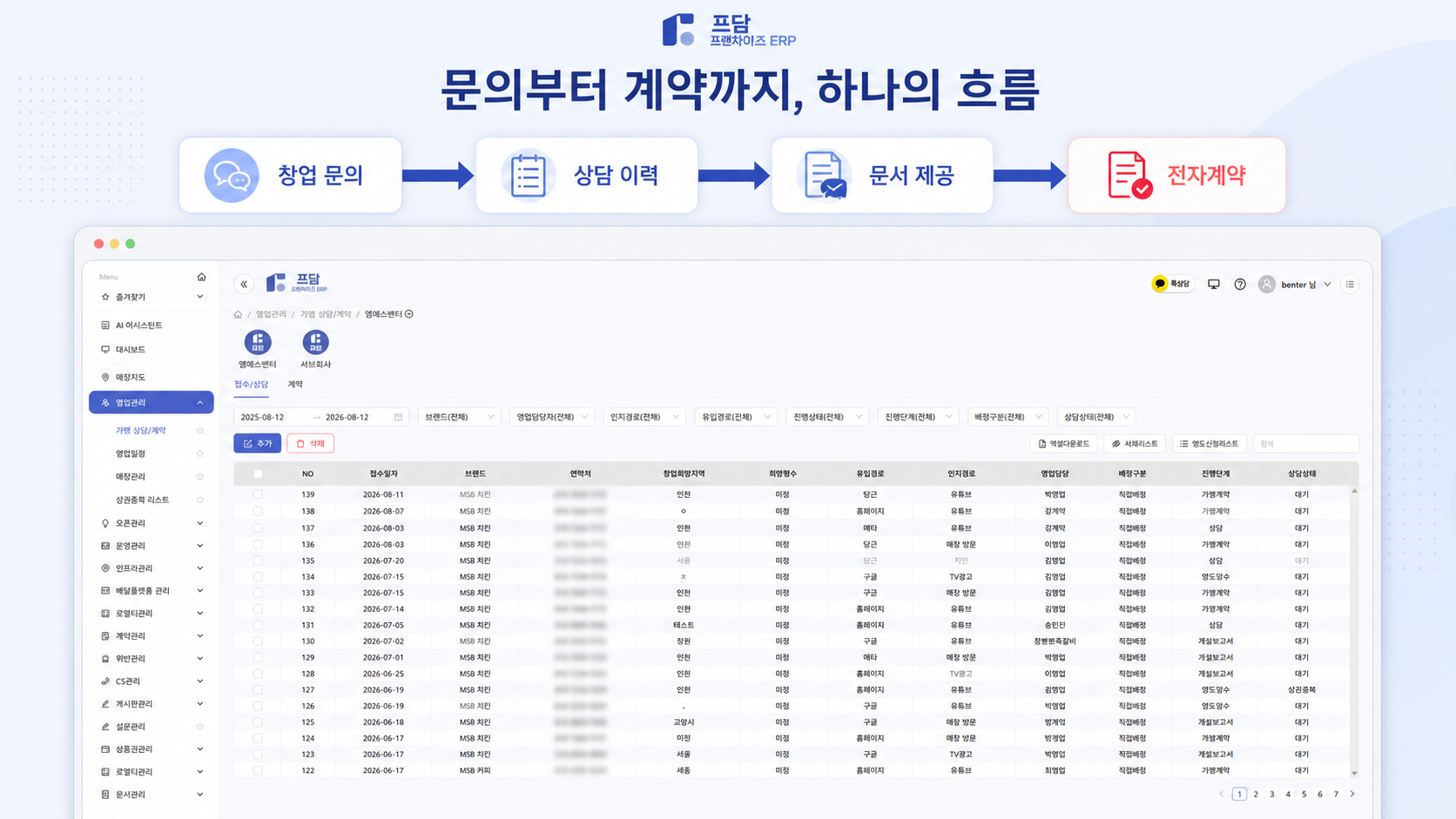
History from inquiry to contract continues on one screen
What changes in day-to-day work after adoption
The first change people notice after setting up a franchise sales management system is reaching a state where "no one has to ask again."
Instead of everyone compiling their own materials for weekly sales meetings, the team can look at the same screen and discuss it together, and consultation context carries on without interruption even when staff change or go on leave. Because document delivery and contract history are kept on record, there's less need to gather supporting evidence separately for audits or disputes.
FDAM is designed so that work continues from Sales Management into Store Opening Management and Operations Management, so even as a prospect who has signed moves on to opening preparations and store operations, the information built up along the way carries over without a break. Over years focused solely on developing software for franchises, MS Benter has built systems for more than 500 brands, and that experience is reflected in the design of this flow.
Franchise sales management is ultimately done by people, but outcomes depend on whether the process stays on record within the organization. The starting point for improvement is checking whether your HQ's consultation history is gathered in one place today.
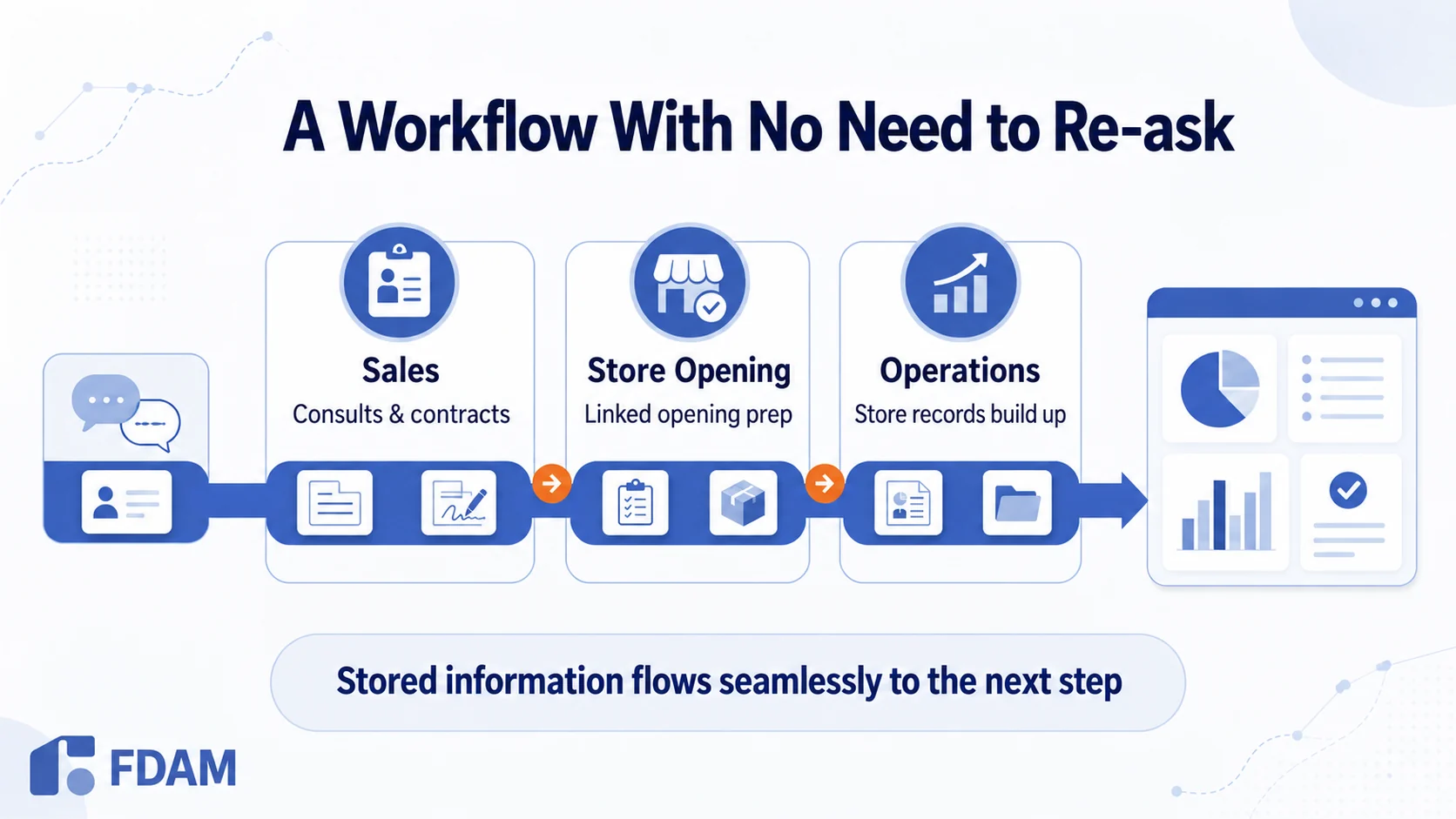
Sales Management connects seamlessly to Store Opening Management and Operations Management
Frequently asked questions
Q. Can a general CRM or sales management tool handle franchise sales management?
A. It can, up to the level of recording inquiries and consultation history. But procedures unique to franchising, such as disclosure document delivery history, electronic franchise agreements and contract expiration management, have to be set up separately in a general tool. An ERP built for franchises differs in that these procedures are part of the standard workflow.
Q. How do we move consultation data we've been managing in Excel?
A. You can migrate it by organizing your existing prospect information and registering it in the system. Since the field structure needs to be aligned first, it's a good idea to review the templates you currently use when you talk to sales.
Q. Are electronically delivered disclosure documents and electronic franchise agreements legally valid?
A. Documents and contracts delivered and signed electronically can be legally valid if they meet the requirements set by the relevant laws. However, whether specific requirements are met can vary by contract type and circumstances, so we recommend seeking legal advice before putting them into practice.
Q. Can we view and enter consultation details outside the HQ office?
A. Yes. With PC, tablet and mobile support, you can view and enter consultation details at off-site meetings or startup information sessions.
Start managing franchise sales with FDAM
Inquiries, consultations, disclosure documents and electronic franchise agreements connect in one flow.
Contact sales about FDAM Sales ManagementSee the FDAM product overview Chat on KakaoTalk
Phone 1544-7120 (Korea) · Email msb@benter.co.kr
franchise sales management, startup inquiry management, prospective franchisee management, disclosure documents, electronic franchise agreement, franchise HQ ERP, franchise sales process, franchise agreement management, FDAM, franchise management software, MS Benter, franchise ERP