How a Franchise ERP Is Changing HQ Operations in 2025
How a franchise ERP ties HQ sales, operations and inspection data together
franchise ERP, FDAM, franchise software, POS-ERP integration, automatic delivery sales aggregation, QSCV inspection, franchise DX, HQ operating system, Logidam, Balju.com
Key takeaways · What makes franchisor HQ operations hard isn't the data itself but a structure where data is scattered. · When POS, delivery, QSCV and ordering data come together by the same standard, you can trace the causes of sales swings as a flow. · The accuracy of AI analysis depends on the quality of the data flowing through the system. · FDAM, Logidam and Balju.com form an ERP package that ties every stage of HQ operations into one data flow. |
A franchise ERP is a system built for headquarters that links HQ sales, operations, inspection, ordering and logistics data by the same standard, so the whole of store management can be handled as one flow. As the store count grows, data scatters faster, and tools siloed by department make it hard for HQ to see the operating flow accurately.
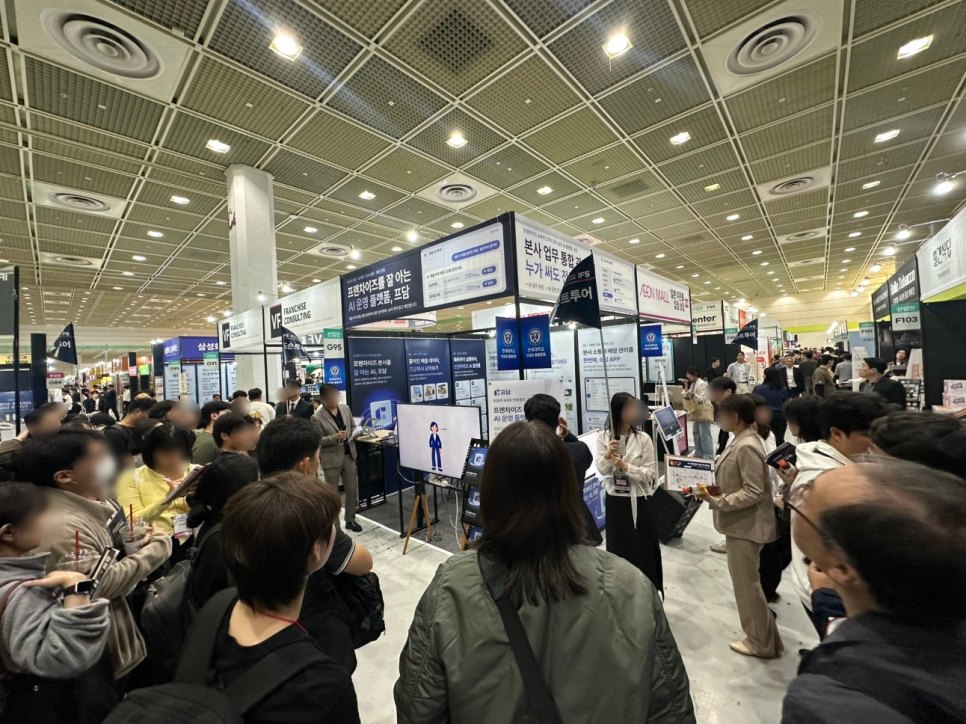
FDAM is the solution MS Benter built by capturing HQ workflows directly in a system, drawing on nearly 25 years focused on franchise IT. In this article, we look at why headquarters are investing in ERP-based digital transformation (DX) and how FDAM changes day-to-day HQ operations.
A franchise ERP ties HQ operations into "a single cycle."
1. The real reason HQ operations get harder
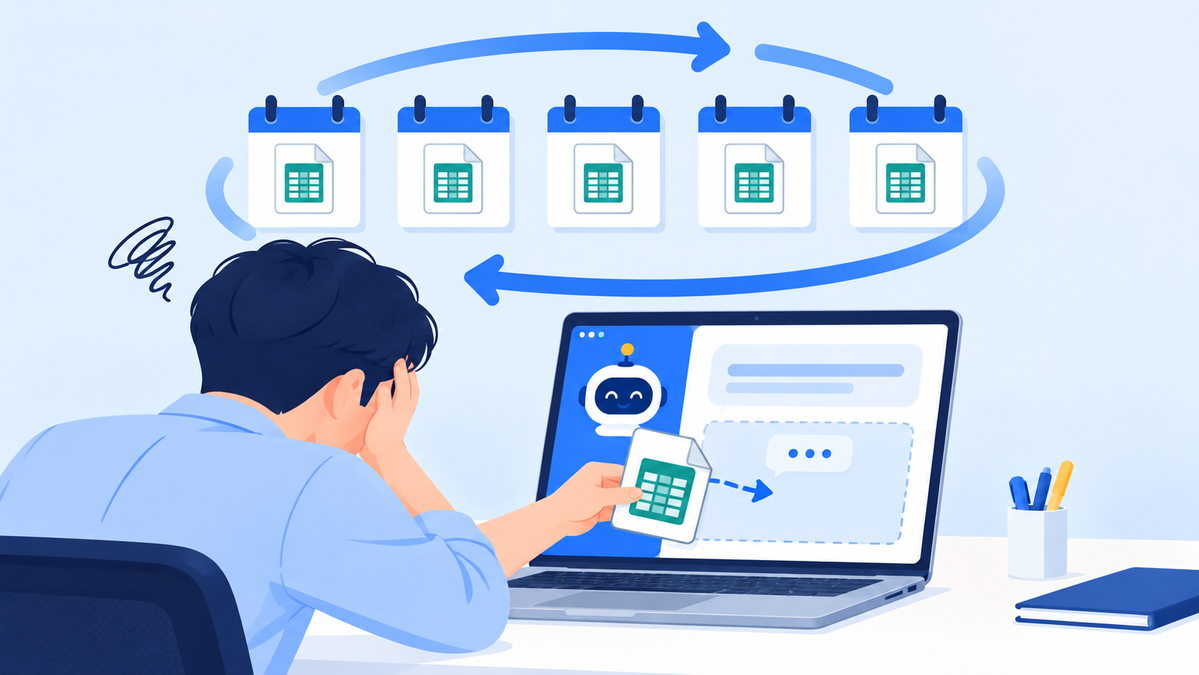
The problem franchisor HQ staff mention most is that "we can't see the data in time." POS sales are checked on the POS vendor's site, delivery sales have to be downloaded separately from each delivery app dashboard, and QSCV inspection records and training history are scattered across Excel and messengers, so it is hard to see them as one flow.
In this disconnected data environment, operations, franchisee support and sales teams all say the same thing: "It's so hard to figure out where the problem started."
That's why franchisors are investing in ERP-based DX. Only with a system connected by a single source of truth can HQ see sales, operations, logistics, training and inspections as one operating cycle rather than fragments of data.
2. POS-ERP integration: fixing late detection of sales drops
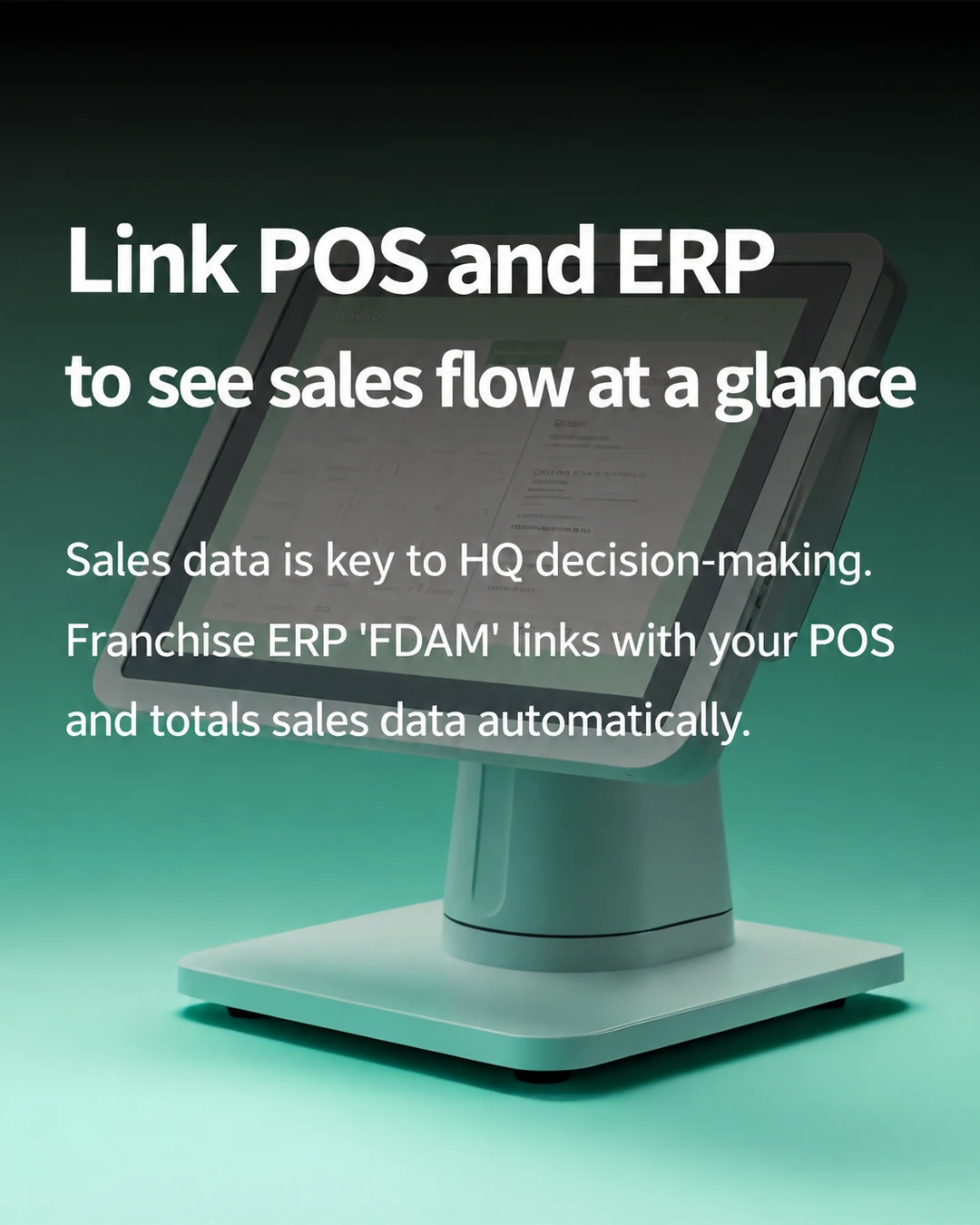
When POS sales are aggregated automatically in the ERP, you can see sales changes as a trend.
Many operations teams say: "We found out sales had dropped long after the fact. The owner was already unhappy by then."
When POS sales are separate from the ERP, someone has to check sales changes manually instead of seeing them in alerts or a dashboard. That's why warning signs get caught late and responses keep getting pushed back.
FDAM automatically aggregates POS sales on a next-day basis and shows sales changes by store in an organized view. If a store's sales drop sharply, the operations team can check its QSCV records, training history and recent opening records together to trace where the decline started.
For newly opened stores, sales patterns in the first two to four weeks are critical. With POS-ERP integration, HQ can monitor those early trends quickly and judge exactly which stores need which kind of support.
3. Automatic delivery sales aggregation: the foundation for seeing ad performance at a glance
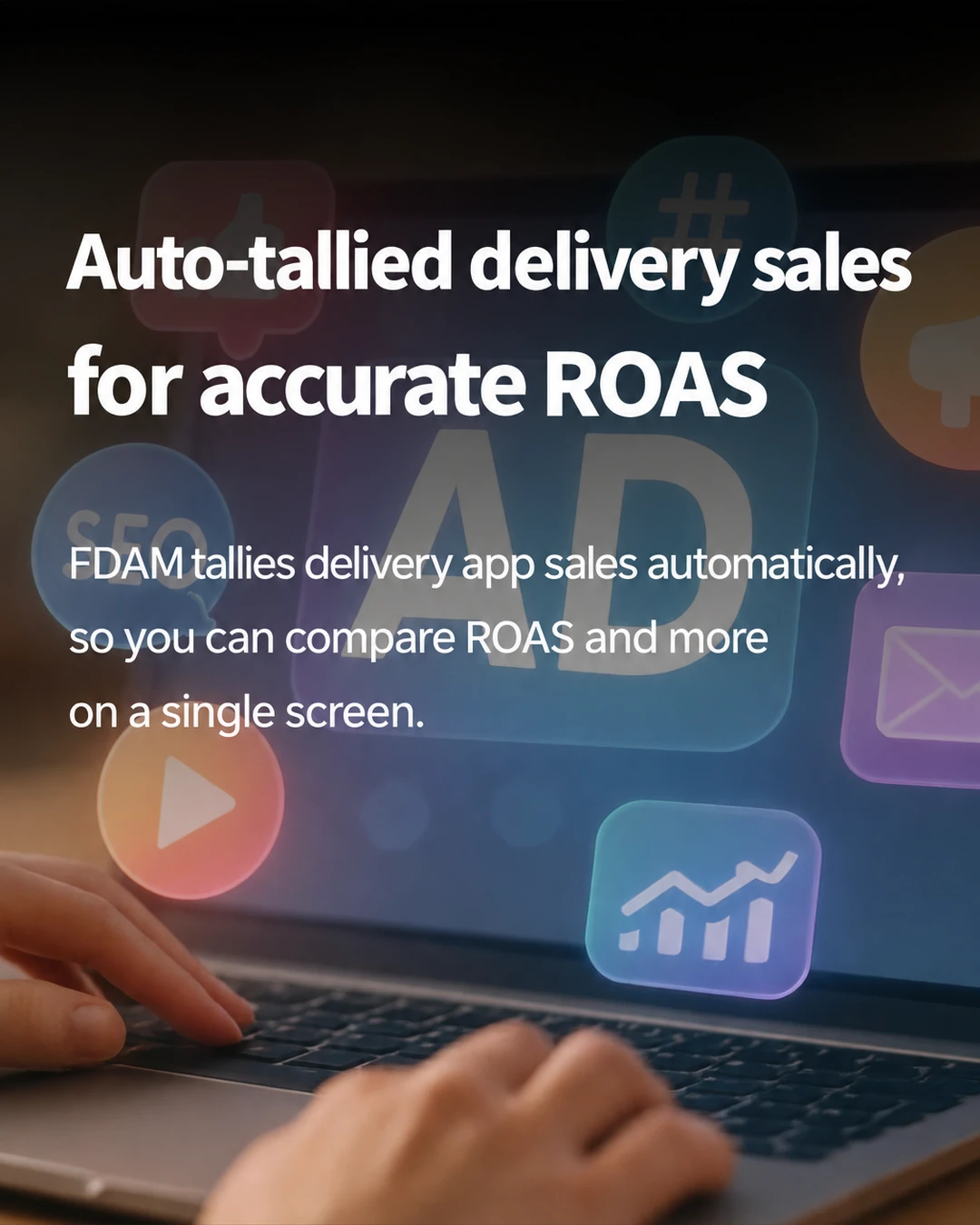
Ad performance becomes comparable only when delivery app sales are gathered on the ERP's terms.
Delivery app data is the area headquarters struggle with most these days. Ads run constantly and commissions keep rising, yet many can't properly analyze whether their ads work or whether delivery's share of total sales is healthy.
The reason is clear: delivery app sales don't land in one place the way POS sales do. Manually downloading and comparing data from each platform has obvious structural limits.
FDAM automatically aggregates delivery app sales in the ERP so you can compare delivery growth by store, return on ad spend (ROAS) and order performance by menu item on the same baseline data.
This is less a convenience feature and more about building foundational operating data that connects to future order volumes, logistics shipments and menu strategy. Delivery sales need to accumulate on a consistent basis before ad spending and menu decisions have a clear rationale.
4. Digitizing QSCV: inspections that don't end with a report
Operations change only when inspection, reporting, improvement and training connect in one flow.
One of the biggest pain points for operations teams is that QSCV inspections end as records and nothing more. Inspection reports get written, but it's never clear how corrective actions are progressing, whether things are improving compared to the last inspection or whether training followed. The same problem repeats.
FDAM's operations management module ties the flow of inspection records, reports, improvements and training into one system, so inspections lead to real operational improvement rather than just a checklist.
As a result, operations teams can instantly answer questions like "Was the item flagged in this inspection also flagged last month?" or "Was training scheduled in line with the inspection results?" right in the system. Our experience working with about 500 brands is built into this flow design, laying the groundwork for consistent operating quality across a brand.
5. Data-driven DX: AI accuracy comes from data quality
Before AI, you need a structure where data flows.
Headquarters are very interested in AI sales forecasting, order automation and sales pattern analysis. In practice, the biggest obstacle to applying AI is that data is scattered in inconsistent structures.
FDAM is the first franchise ERP in Korea with a built-in AI assistant, but what raises the quality of AI answers isn't the integration itself; it's how clean the data flowing through the system is. For HQ staff to get a reliable answer when they ask in everyday language, "Which store's sales fell the most this month?", the underlying data has to be built up on the same basis.
MS Benter's FDAM, Logidam and Balju.com refine POS, delivery, ordering and logistics data to the same standard, providing a data infrastructure through which AI can genuinely contribute to HQ decisions. AI analysis gets more accurate only when data flows, accumulates and can be compared.
6. A connected operating structure: seeing everything as one cycle
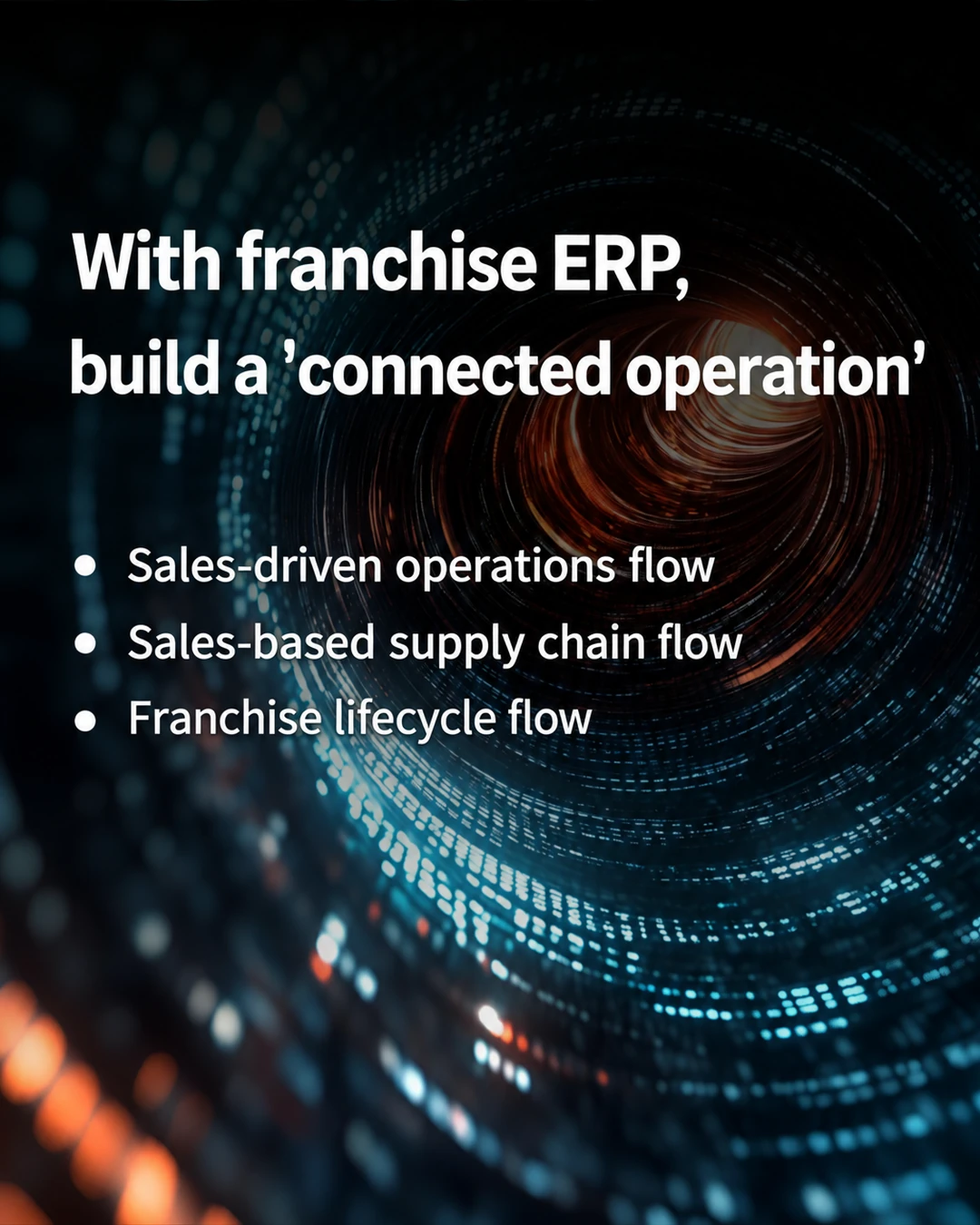
The operating cycle that was invisible across separate systems comes together in the ERP.
The key to ERP-based DX is flow, not features. Franchisor HQ operations are a structure in which sales, inspections, training, ordering, logistics and store openings all affect each other, but when systems are separate, that flow stays hidden.
When an ERP connects this flow, staff can see the entire cycle of "where a problem starts, how it unfolds, what results and how it's fixed" at a glance. Once a chain like falling sales → repeated inspection issues → missed training → shifting order volumes → inventory problems becomes visible in data, the operations team's responsiveness changes beyond comparison.
Frequently asked questions
Q. What changes first after adopting a franchise ERP?
POS sales, delivery sales, QSCV inspections and ordering/logistics data that were siloed come together in one place by the same standard. Because you can see the causes of sales changes and the operating flow on the same screen, HQ's response speed is the first thing to change.
Q. How does it connect to the POS we already use?
FDAM automatically aggregates POS sales on a next-day basis and organizes them by store and period. HQ can see sales trends right in the system without processing data separately.
Q. What does automatic delivery sales aggregation do for us?
It automatically organizes data that used to be downloaded by hand from each delivery platform's dashboard into the ERP. You can compare return on ad spend and order performance by menu item on the same basis, giving ad spending and menu decisions a clear rationale.
Q. Do we need an ERP before adopting AI analysis?
The accuracy of AI analysis depends on the quality of the data flowing through the system. FDAM is the first franchise ERP in Korea with a built-in AI assistant, but what raises the quality of AI answers is infrastructure where HQ operating data is refined and accumulated by the same standard.
Q. Can FDAM, Logidam and Balju.com be adopted separately?
FDAM, the HQ operations ERP, can be adopted on its own. Balju.com, the store ordering app, runs together with Logidam, the logistics ERP, so those two are usually considered as a pair.
HQ operations where data flows
FDAM, the Smart AI ERP
for franchisor headquarters