Required Items Under the Franchise Business Act: 3 Things HQ Misses
The difference between required and recommended items, and HQ checkpoints for the Franchise Business Act disclosure duty
Franchisor headquarters reviewing franchise agreements and disclosure documents: required items and recommended items
CORE SUMMARY
Required items are items store owners must buy from headquarters or a supplier designated by headquarters, while recommended items may be bought through other channels · Under the Franchise Business Act as amended in 2024, headquarters must state the types of required items and how their supply prices are calculated in the franchise agreement, and must consult store owners before changing trading terms to their disadvantage · Bundling general goods that are easy to find on the market as required items can be a violation as a forced-purchase practice
Required items are ingredients, supplies and similar goods that store owners must buy from the franchisor headquarters or a supplier it designates. The law calls them "forced-purchase items." Recommended items, by contrast, are items headquarters recommends but owners may buy through other channels. If the line between the two is blurry, it comes back to headquarters as unexpected legal risk. Because the 2024 amendment to Korea's Franchise Business Act made this distinction and how it must be documented considerably stricter, now is a good time for headquarters to review its own contracts.
Required items vs. recommended items: what's the difference?
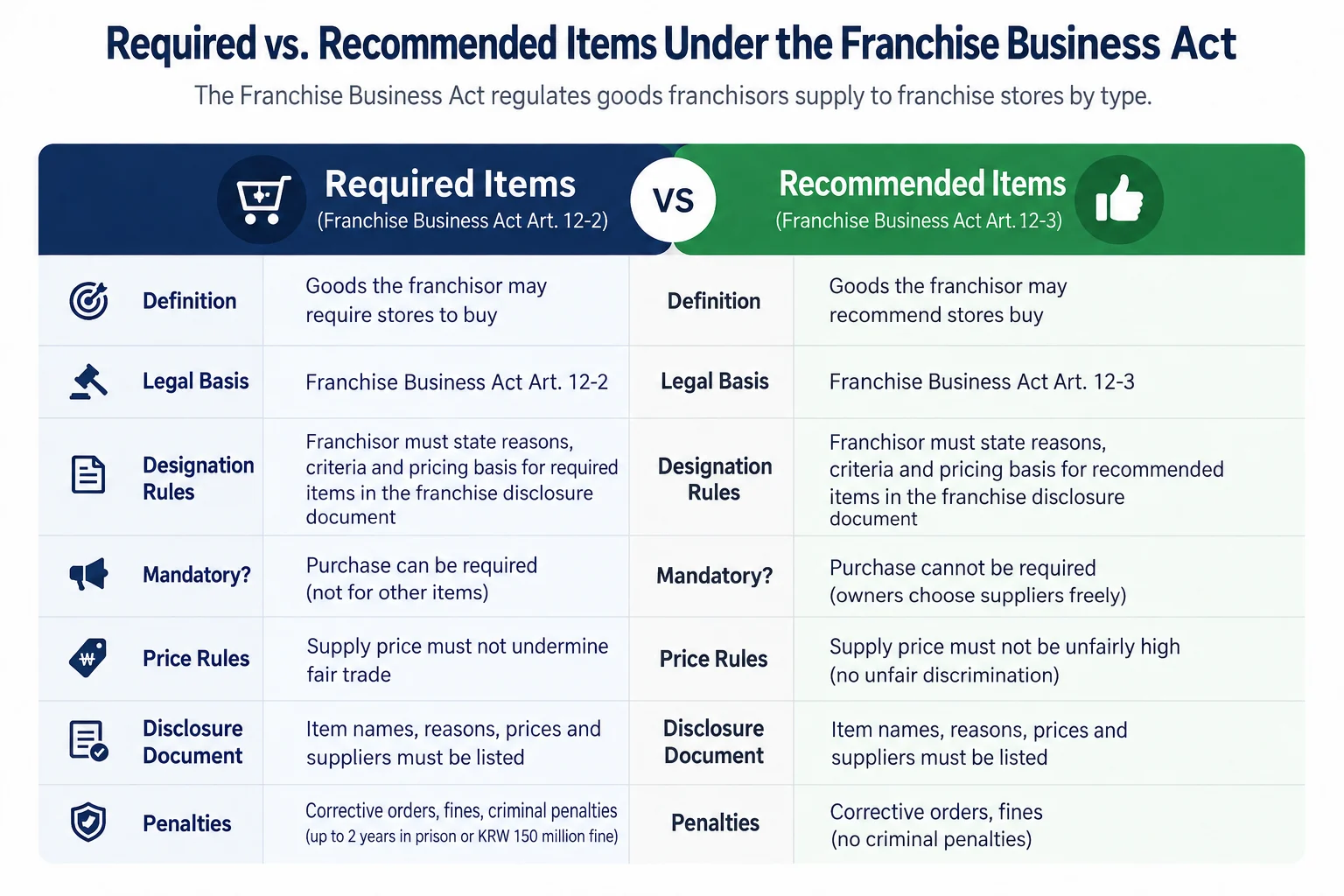
Whether the purchase is mandatory is the simplest way to tell them apart (concept image)
The simplest test is "Is the owner forced to buy it?" Required items must be bought from a designated supplier, while recommended items leave room for choice. Designating key ingredients as required items to protect a brand's taste, quality and consistency is, in itself, a legitimate business practice.
The trouble starts with the question, "Does this really need to be a required item?" Rulings by the Korea Fair Trade Commission show that designating general goods readily available on the market in the same specifications as required items can violate the Franchise Business Act as a "forced-purchase practice" that abuses a superior bargaining position. In fact, there have been cases where bundling containers available anywhere, such as side-dish and rice containers, as required items led to sanctions.
"This can't be a required item": where violations happen
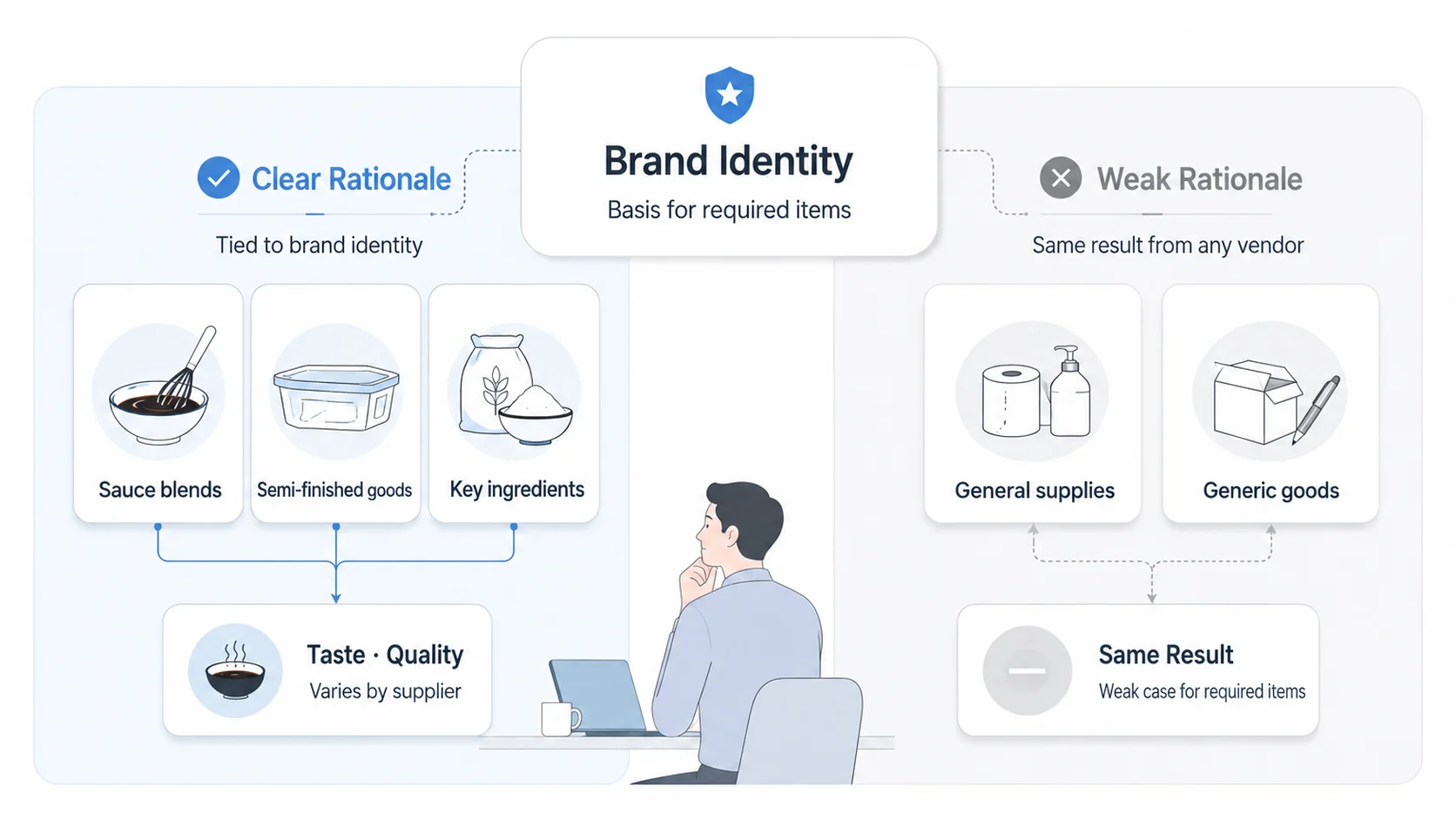
General-purpose goods unrelated to brand identity offer weak grounds for designation
The key is whether an item is directly tied to brand identity. Items whose taste and quality vary by supplier, such as sauce blends, semi-finished products and key ingredients, have a clear rationale for being designated as required. Conversely, general-purpose consumables, ordinary manufactured goods and items that turn out the same no matter where you buy them offer weak grounds for designation.
On top of that, if headquarters collects franchise markup fees (the margin above a fair wholesale price) on required items it supplies, that also has to be disclosed transparently. "That's how we've always done it" no longer works as an explanation.
What headquarters must handle after the 2024 amendment
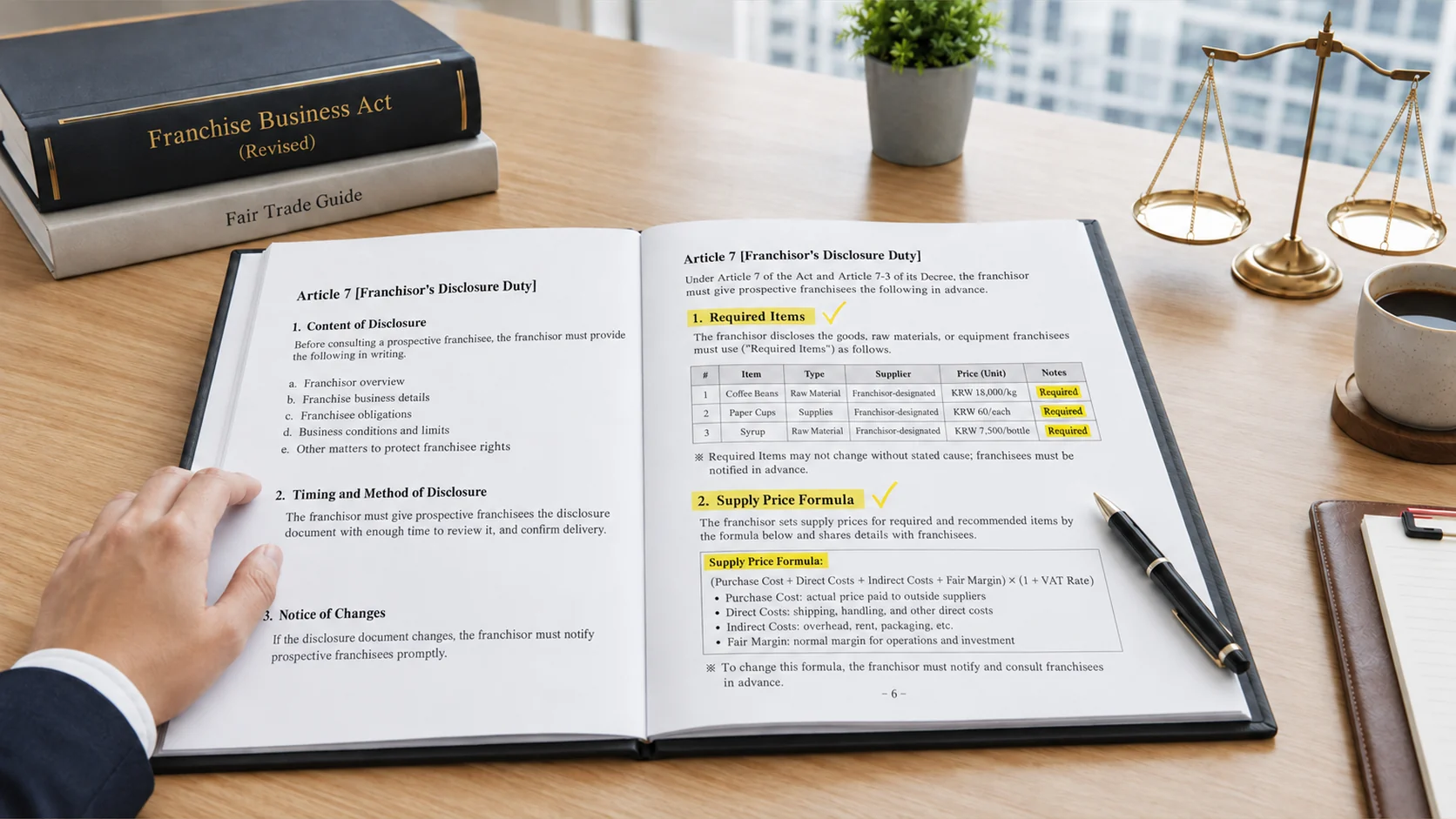
The core of the 2024 amendment is the duty to state items in the contract (concept image)
The core of this amendment is the "duty to state." Under the amended Franchise Business Act, effective July 3, 2024, franchisor headquarters must state the types of forced-purchase items and how their supply prices are calculated in the franchise agreement when signing new or renewed contracts. Existing contracts, not just new ones, also had to reflect this information by January 2, 2025.
KEY POINT
Failing to meet the duty to state can lead to sanctions such as corrective orders or fines. This isn't a mere administrative formality; it's a compliance task headquarters needs to handle directly.
The Korea Fair Trade Commission's moves make it clear this is more than an administrative formality. From July to October 2025, the Commission surveyed 200 franchisor headquarters across 21 industries to see whether the required-items rules had taken hold in practice, and it has recently begun directly inspecting how 100 major franchisors list required items in their franchise agreements.
Renewals and changes are even riskier
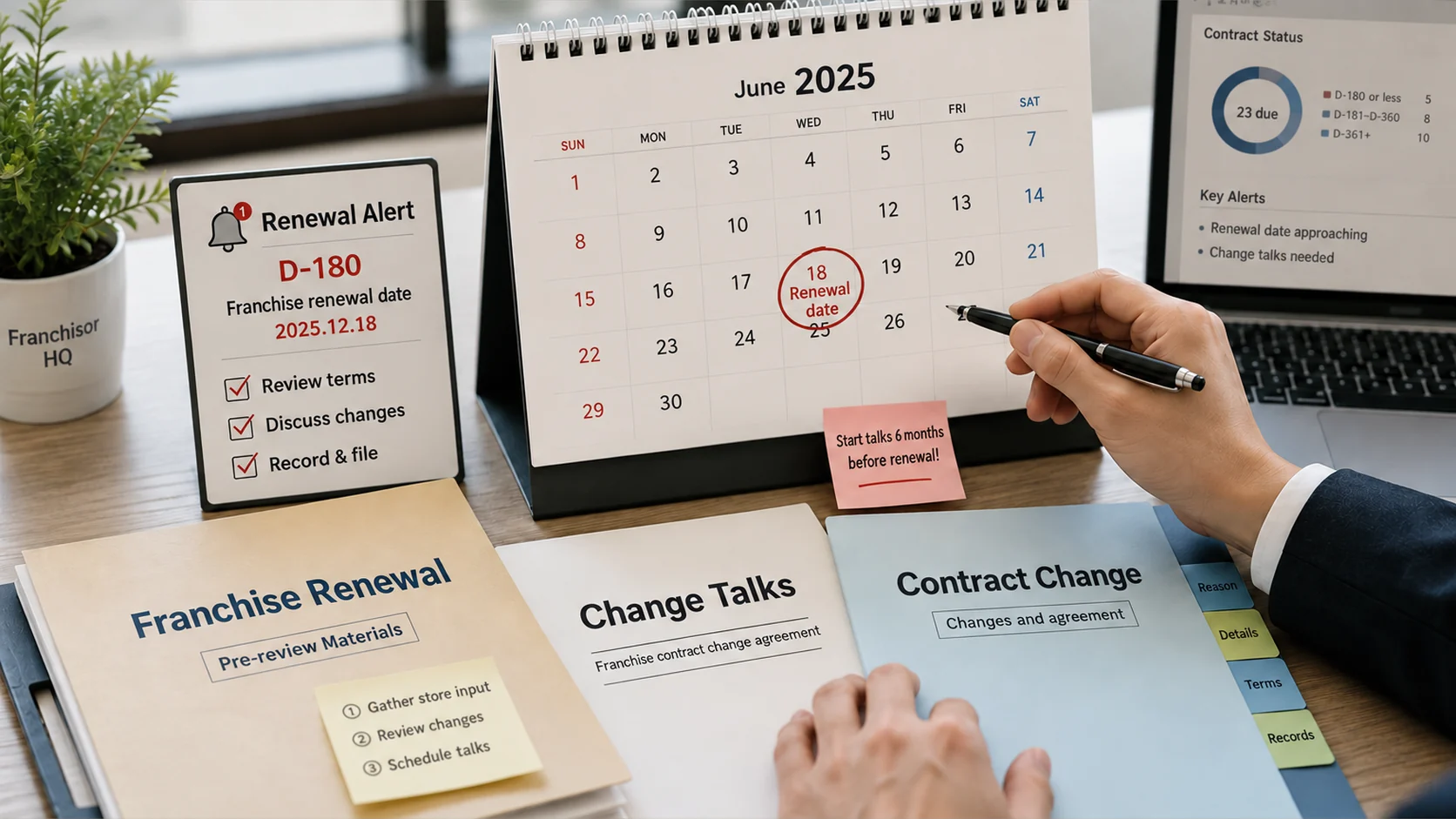
The same mistakes tend to repeat at the renewal and change stage (concept image)
Many headquarters have fixed their new contracts but repeat the same mistakes at the renewal and change stage. The consultation duty deserves special attention. When changing trading terms, such as required items, to the disadvantage of store owners, headquarters must consult with them first. You can't just notify owners unilaterally when raising supply prices or adding items, and keeping a record that the consultation process took place has become important in its own right.
With one or two contracts, you can keep track. But as the store count grows, it becomes hard for people to manually track which contracts renew when, and whether changes have been reflected consistently in every document.
Three things HQ often misses, at a glance
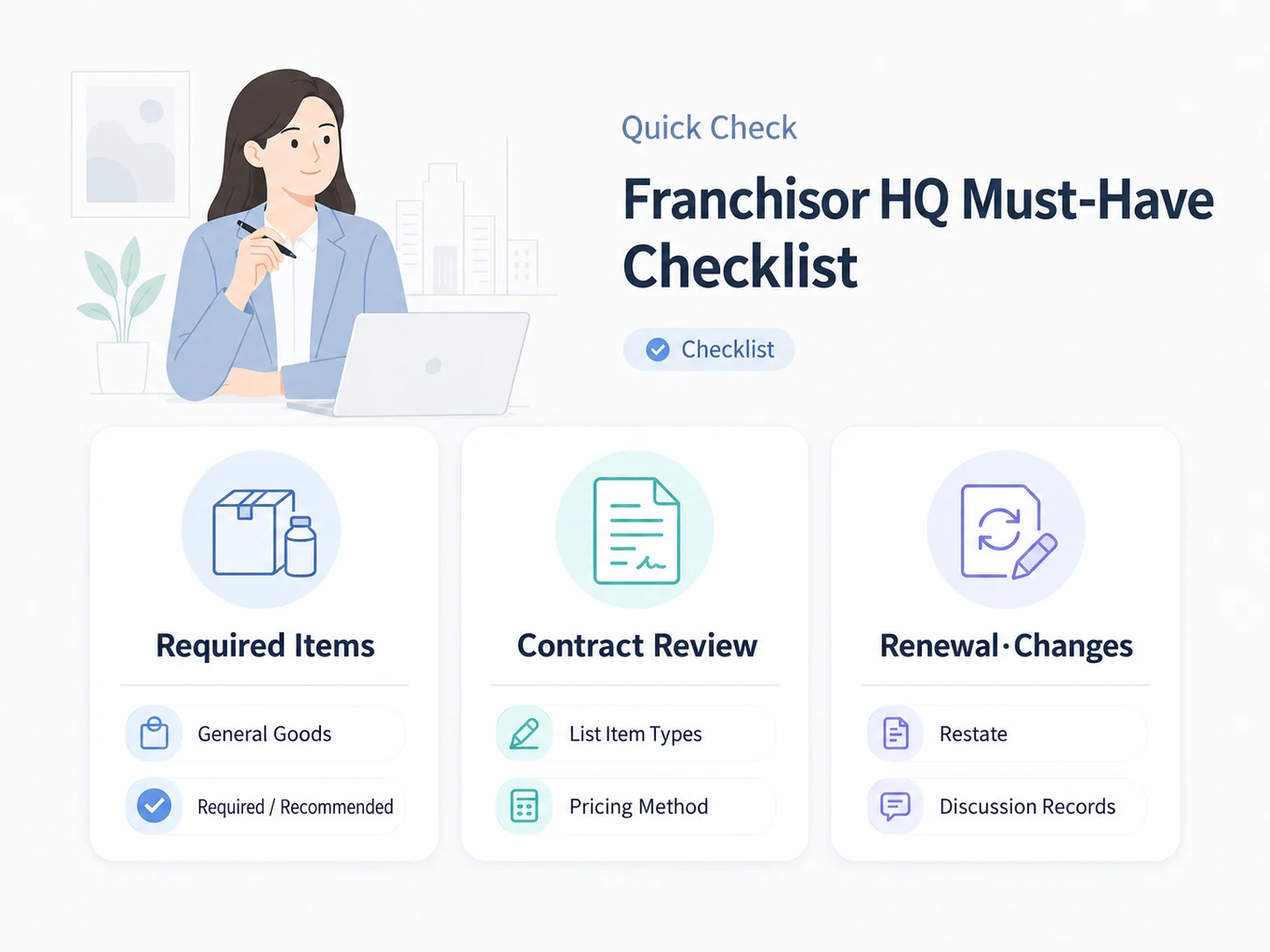
Before you reopen your contracts, check these three things first (concept image)
1
Are you bundling general goods as required items?
If you've designated general-purpose goods available anywhere and unrelated to brand identity as required items, it could be interpreted as a forced-purchase practice. It's worth re-examining the line between required and recommended.
2
Does the contract state the item types and how supply prices are calculated?
This is the key item made mandatory by the 2024 amendment. Since not only new and renewed contracts but also existing contracts were subject to it, check that no contract is missing it.
3
Did you restate items and keep a record of consultations at renewal or change?
Changing trading terms to an owner's disadvantage requires consultation, and the amended disclosures must be reflected again at every renewal. It's important to keep a record showing you consulted, rather than merely notified.
What ultimately matters is delivering what you've decided on time, without gaps
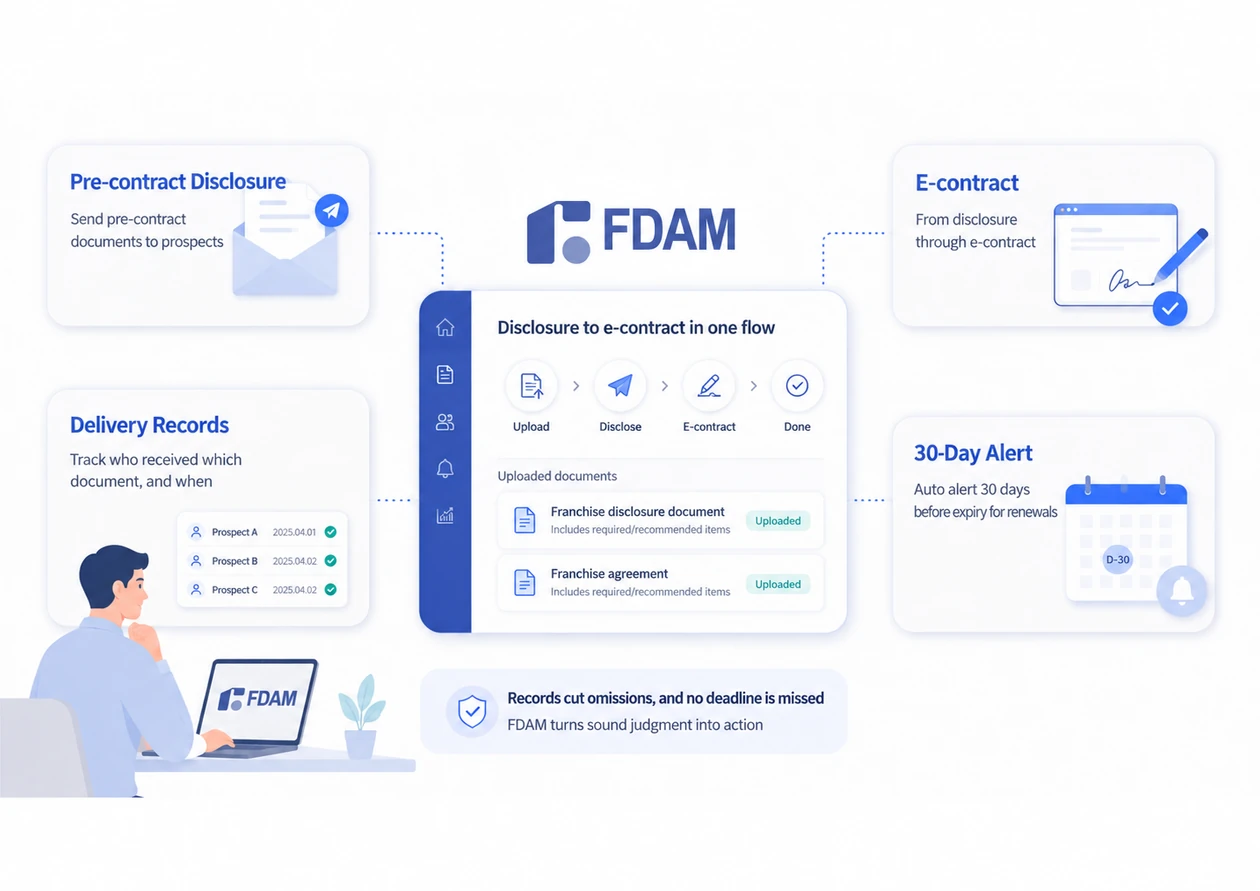
Judgment belongs to headquarters; the system helps with execution and timing
Of everything covered so far, the parts headquarters must decide are clear. What to designate as required items and how to state them in the contract are matters settled by headquarters' policy together with advice from franchise consultants and lawyers. No one can make that call for you.
But delivering those finalized documents to every franchise applicant without fail, and reflecting amended terms again at each renewal, is separate practical work. Even if your judgment is sound, a missed delivery or a missed renewal date undoes all the cleanup you've done.
The role of FDAM, an operations ERP for franchisor headquarters, lies precisely in this "execution and timing." You can upload franchise disclosure documents and franchise agreements listing required and recommended items, send them to franchise applicants as pre-disclosure documents, and carry on straight through to e-contracts in one flow. Because it records which documents were delivered to whom and when, it reduces gaps at the pre-disclosure stage. It also sends an automatic alert 30 days before a contract expires, so you can catch the point when amended terms need to be restated in a renewal without relying on anyone's memory.
The rules will keep being refined. What matters is having an operating foundation that lets headquarters keep up reliably whenever they change. Roughly 25 years of experience in franchise IT has gone into designing that foundation. If you'd like to review your headquarters' contract and document management during this period of regulatory change, start the conversation with an FDAM sales consultation.
Frequently asked questions
Q. What's the difference between required items and recommended items?
A. Required items ("forced-purchase items" under the law) must be bought by store owners from headquarters or a supplier headquarters designates, while recommended items are recommended by headquarters but may be bought through other channels. Whether the purchase is mandatory is the simplest way to tell them apart.
Q. Can general manufactured goods be designated as required items?
A. Key ingredients directly tied to a brand's taste, quality and consistency have a rationale for being designated as required items. But bundling general goods easily bought on the market in the same specifications as required items can violate the Franchise Business Act as a forced-purchase practice that abuses a superior bargaining position.
Q. What must headquarters state in contracts after the 2024 amendment?
A. Under the amended law effective July 3, 2024, the types of forced-purchase items and how their supply prices are calculated must be stated in the franchise agreement for new and renewed contracts. Existing contracts also had to reflect this by January 2, 2025, and non-compliance can lead to sanctions such as corrective orders or fines.
Q. How does FDAM help with managing required items?
A. How to distinguish required and recommended items and what to state are matters of headquarters policy and expert advice. FDAM sends the franchise disclosure documents and franchise agreements containing those finalized terms to franchise applicants as pre-disclosure documents, carries the process through to e-contracts in one flow, and keeps a history of which documents were delivered and when. Its automatic alert 30 days before contract expiry also helps you avoid missing the time to restate terms at renewal.
FRANCHISE ERP FDAM
In a time of regulatory change, review
your HQ contract and document management
Start with FDAM: roughly 25 years of franchise IT know-how
and an AI-powered operating system.
Discover FDAM Chat on KakaoTalk
Required items, recommended items, forced-purchase items, Franchise Business Act, franchise agreement, franchise markup fees, duty to state required items, e-contracts, franchise ERP, FDAM, Fdam, franchisor headquarters system