FDAM: Unified Delivery Sales Management for Franchise Stores
How to manage scattered store delivery sales in one place with FDAM, the franchise ERP
franchise ERP, FDAM, store sales management, unified delivery sales, franchisor HQ solution, royalty settlement, store management software, delivery platform integration, sales dashboard, franchise operations system
Key takeaways · As delivery platforms multiply, the number of sales reports HQ has to check for each store rises steeply. · Each platform aggregates sales and charges fees differently, so simply adding them up won't produce accurate royalty settlements. · FDAM unifies sales by store and by platform so you can compare them on one dashboard. · It lets the HQ operations team spend time on store management and strategy instead of processing data. |
Unified store delivery sales management is how franchisor headquarters gathers store sales data scattered across multiple delivery platforms under one standard and uses it for HQ operations and royalty settlement. As stores use more platforms, such as Baemin, Coupang Eats, and Yogiyo, the volume and variety of data HQ must manage grows with them. The key is going beyond collecting data to making it comparable on the same basis.
FDAM, built by MS Benter after nearly 25 years focused on franchise IT, is designed to handle this flow automatically inside the HQ ERP. This article walks through why HQs struggle with unified sales management, what FDAM provides, and what changes after adoption.
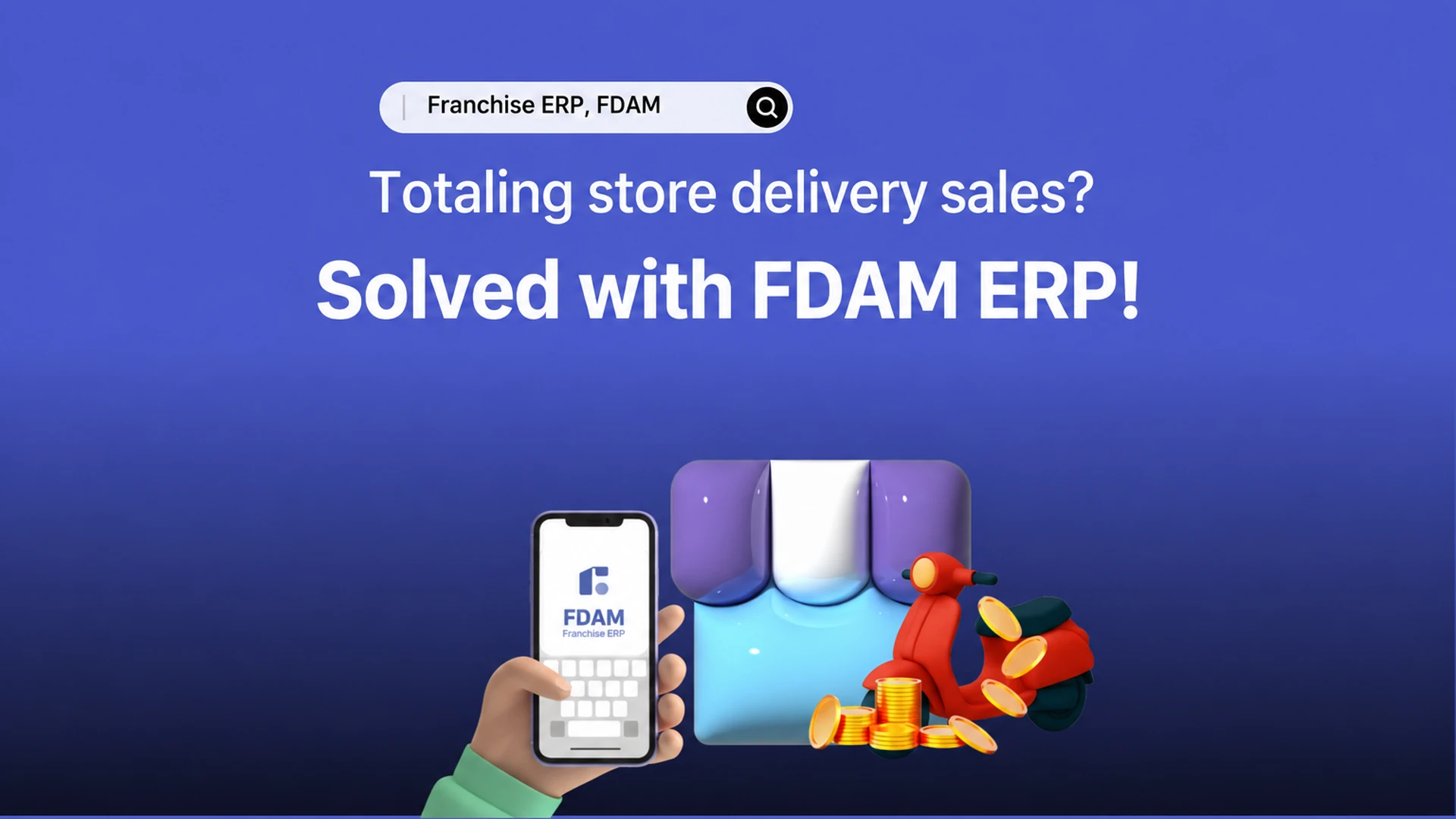
Manage scattered store delivery sales in a single system.
1. Why HQs struggle with unified sales management
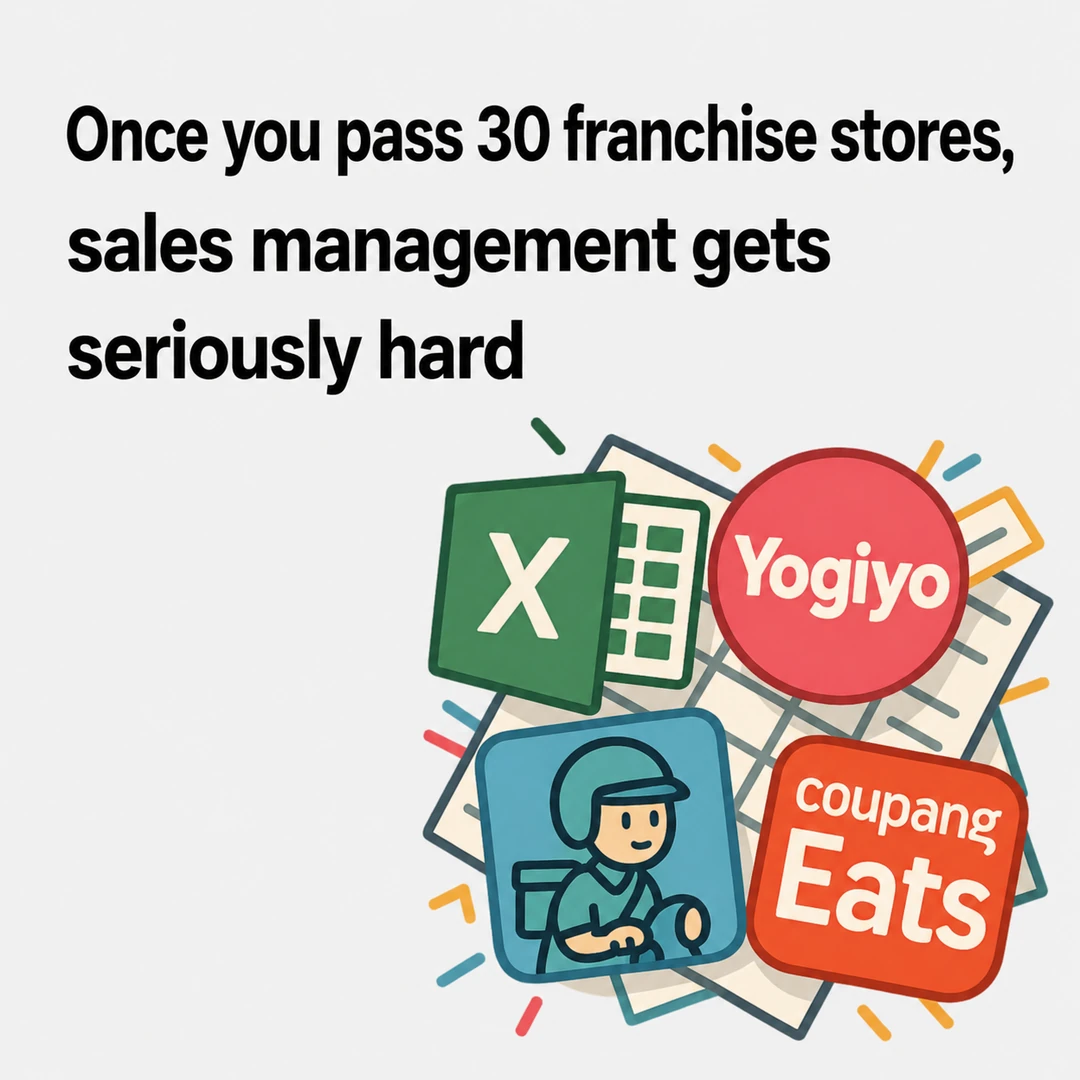
Sales data scattered by platform is the biggest burden in HQ settlement.
For franchisor headquarters, the burden of sales management grows quickly as the store count rises. Each delivery platform aggregates sales differently and has its own fee structure, so just collecting the data doesn't produce data HQ can use for decisions.
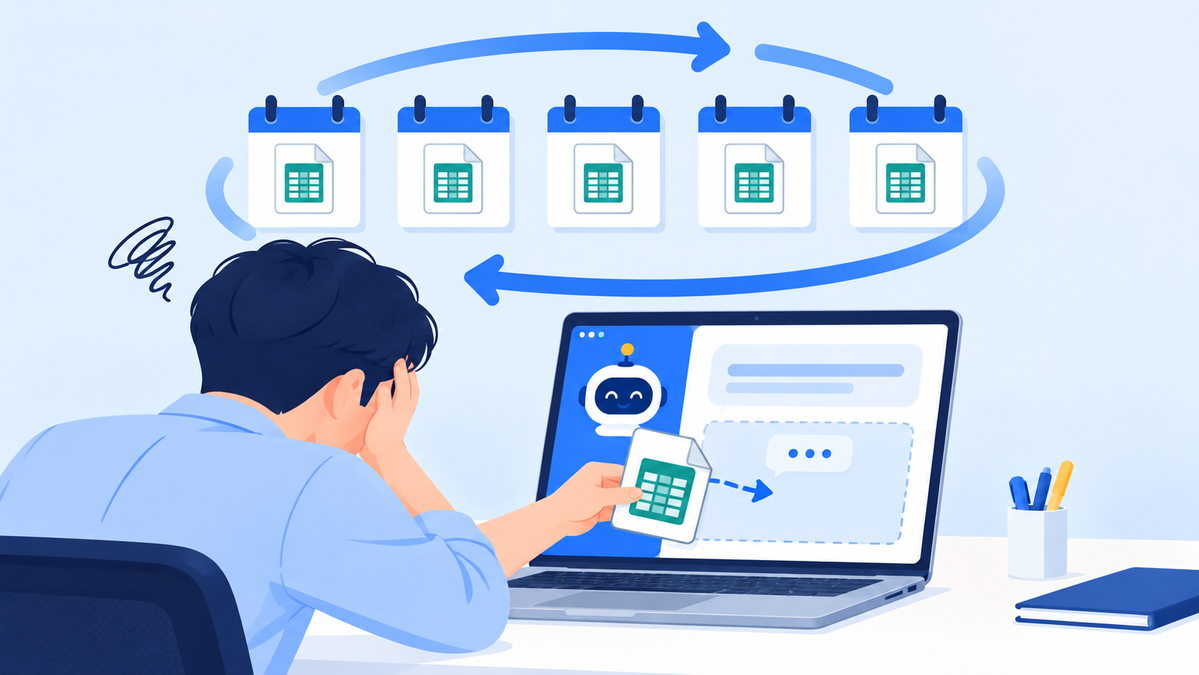
Effective business strategy depends on quickly understanding sales trends across the brand, yet it's common for compiling sales data alone to take several days. The burden grows as stores are added, creating a structure where the HQ operations team works late at every month-end.
When calculating actual settlement amounts with platform fees, promotional discounts, and card fees all factored in, the more manual handling involved, the greater the chance of errors. As errors accumulate, they affect trust with stores, so for HQ, accurate, fast, unified sales management is increasingly becoming operating infrastructure.
2. FDAM's unified sales management features
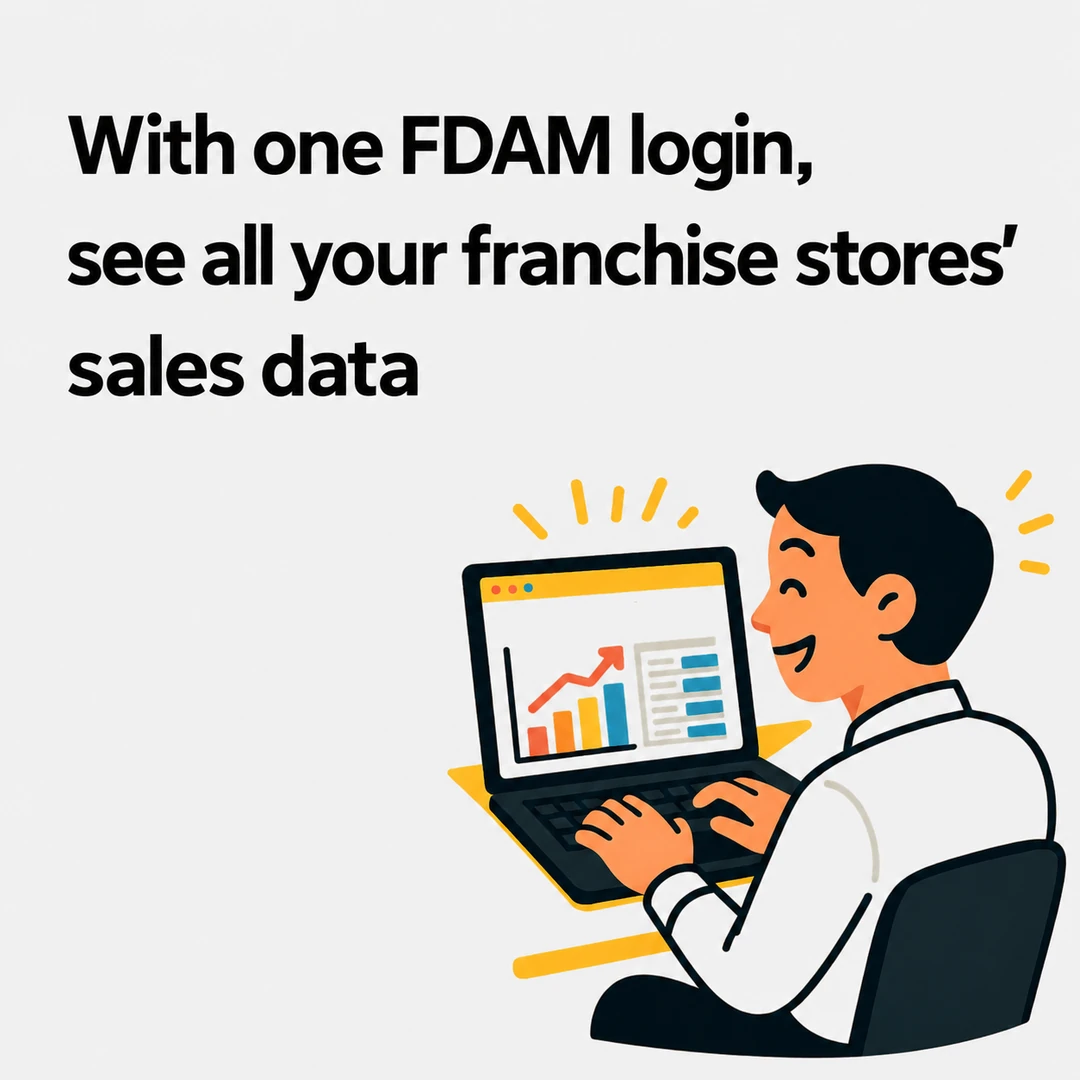
See sales by store and by platform together on one screen.
FDAM automatically collects sales data from each delivery platform and organizes it so you can view it on one screen. The settlement flow HQs deal with every day, drawn from experience working with about 500 brands, is built directly into the system logic, so with a single login each morning the HQ operations team can see every store's sales from the previous day in organized form.
With less of the manual work that repeated every month, the HQ operations team can spend more time on core work such as developing new stores and business analysis. The key is that processing sales data stops being the starting point of every HQ decision and settles into a natural part of daily work.
Workflow before and after FDAM
| Item | Before | After (FDAM) |
|---|---|---|
| Sales aggregation | Platform reports compiled by hand for each store | Unified, automatic aggregation on one screen |
| Settlement accuracy | Recurring errors from missed fees and discounts | Calculation logic applied automatically |
| How data is checked | Compiled in spreadsheets, then cross-checked manually | Instant lookup on the dashboard |
| How HQ uses its time | Spent processing data | Focused on strategy and store management |
3. How operations change: an adoption example
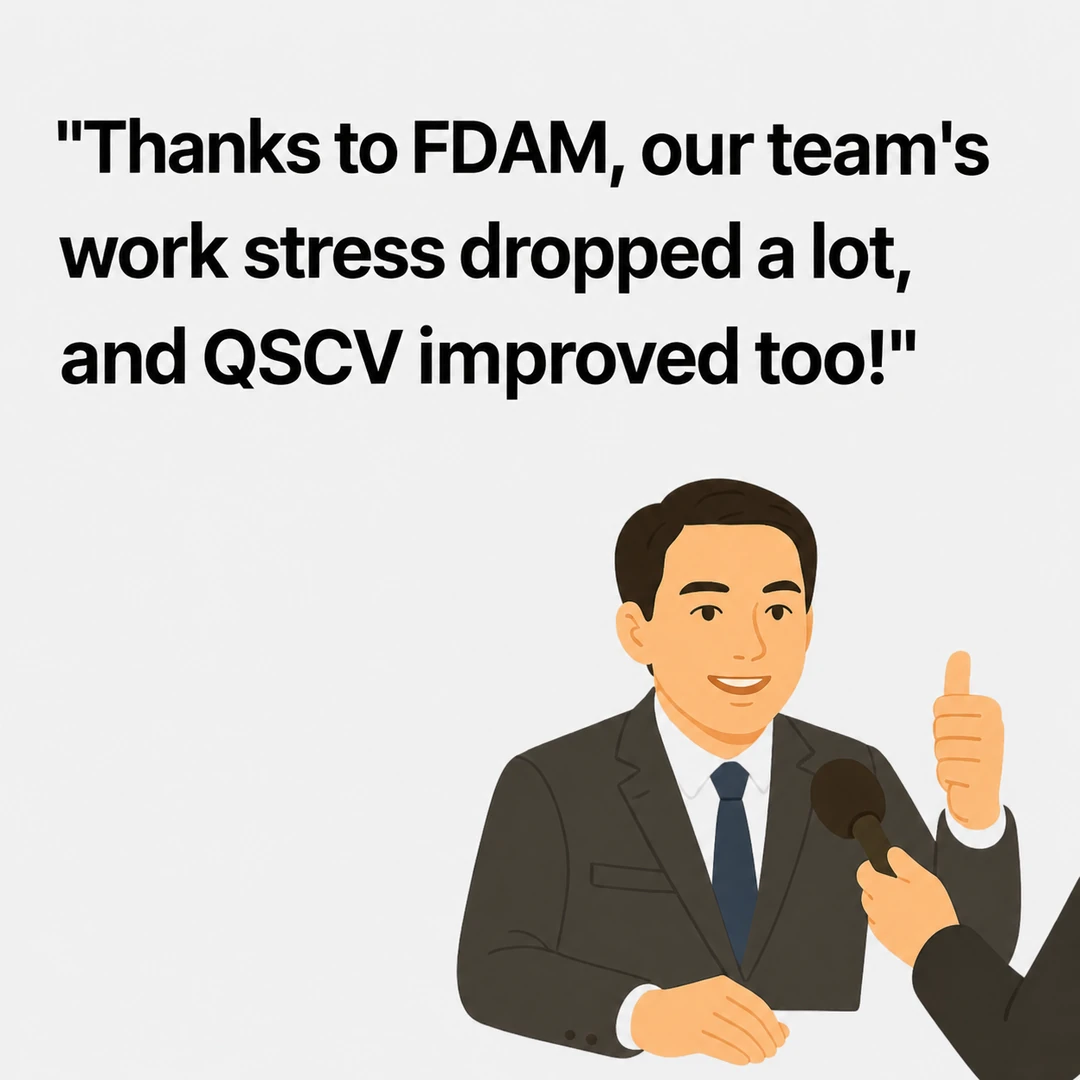
When repetitive settlement work shrinks, the operations team spends its time differently.
Take the example of a chicken franchise HQ whose operations team used to spend long hours on settlement every month, and the nature of the change after adoption becomes clear. Repetitive work, such as checking each store's delivery app settlement statements one by one, re-requesting missing data, and calculating mountains of data in spreadsheets, was replaced by automatic system collection, and the time spent on settlement dropped noticeably.
Sample interview: Operations Director, chicken franchise HQ "Thanks to FDAM, our team's work stress has gone down a lot, and maybe because we can pay more attention to field management, I can feel that store QSCV has gone up across the board." |
When the HQ operations team can step away from processing data and spend time on new menu planning and field management, the support HQ delivers to stores changes, too. System adoption doesn't stop at simple automation; it affects the value HQ provides to its stores.
4. Why headquarters choose FDAM
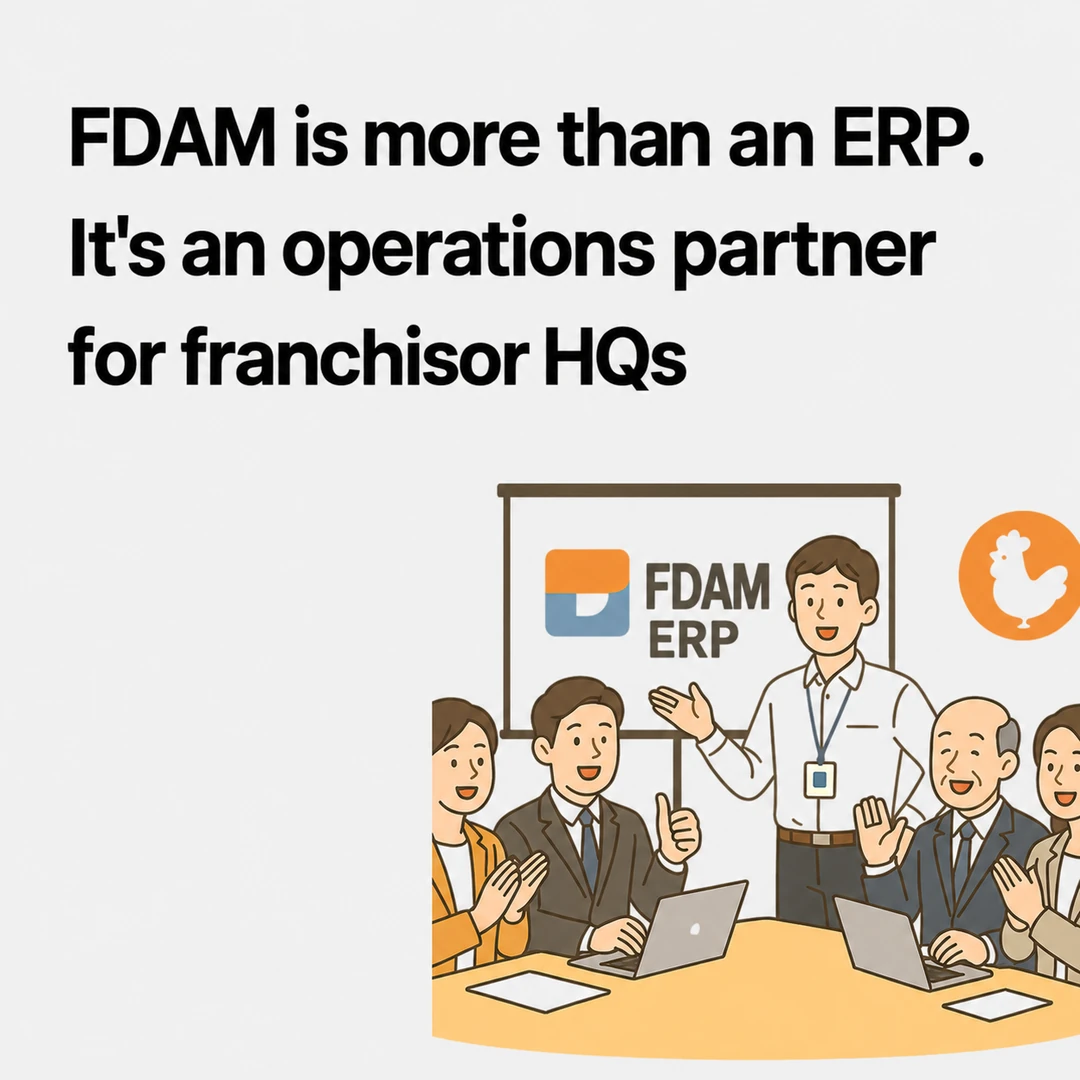
A system that becomes an HQ operations partner, beyond sales management.
FDAM is less a tool that collects sales and more an operations partner that helps franchisor headquarters grow together with their stores. Seeing each store's sales trends in organized form enables a quick response in a crisis, and daily and monthly sales patterns provide the basis for more refined marketing strategy.
FDAM also serves as a communication channel between HQ and stores. Linked with the store app Sodam, it delivers HQ notices and CS responses to stores, and the system keeps a record of which store has checked which materials.
Ask the AI assistant, the first integrated into a Korean franchise ERP, a question in plain language, such as "Show me the top 10 stores by delivery sales this month" or "List stores whose sales fell compared with last quarter," and answers come back instantly as tables and charts. In effect, HQ can use sales data for decisions right away without having to process it.
Frequently asked questions
Q. We use several delivery platforms. Are they all integrated?
FDAM is designed to manage sales data from the major delivery platforms stores use in one place. The scope of integration may vary with your HQ's operating environment, so we'll advise based on your store structure during a sales consultation.
Q. Can we see POS sales and delivery app sales together?
Yes. FDAM shows POS sales and delivery app sales together on one screen. POS sales are aggregated as of the next day, so you can see sales trends by store and by channel in organized form.
Q. Can royalties be calculated automatically, including fees and discounts?
Once you register each platform's fee structure and discount items in the system, settlement calculations can be processed automatically according to HQ's standards. We'll design the detailed setup to match your HQ's settlement rules during the consultation.
Q. How does the AI assistant use sales data?
Ask a question about your HQ operations data in plain language, and results come back as tables, charts, or reports. Information that would normally take checking several screens, such as top- and bottom-performing stores, sales trends by time of day, or changes in channel mix, can be pulled together with one question.
Q. How do we request a sales consultation?
You can contact FDAM through the consultation page (fdam.co.kr/register), our KakaoTalk channel, or our main line (1544-7120, Korea). We'll explain how to put it to work based on your store structure and settlement rules.
Make sales settlement an HQ asset
Scattered delivery sales,
on one screen in FDAM
Learn more about FDAM Contact us on KakaoTalk