Manage Franchise Sales to Operations in One Flow with FDAM ERP
How FDAM franchise ERP brings sales, store opening, and operations together in one integrated management flow
franchise ERP, FDAM, HQ operations system, sales management, store opening management, operations management, store management, data-driven operations, ERP adoption, franchisor headquarters
Key takeaways · HQ work gets complicated not because of the volume of information, but because data is siloed by department. · In FDAM, the sales management, store opening management, and operations management modules are connected in one flow, so information entered once automatically carries over to the next stage. · You can see "contract → interior → training" progress on one screen, which sharply reduces back-and-forth between departments. · Sales, inspection, and contract data accumulate in one place, so HQ decisions can be grounded in data. |
A franchise ERP is a system built for headquarters that ties HQ's sales, store opening, and operations work into a single standardized flow. When data scattered across departments is connected in one system, HQ staff no longer waste time entering the same information twice or making repeated calls between departments to check status.
FDAM by MS Benter is an integrated system designed to carry franchisor HQ sales, store openings, and operations through a single screen. Nearly 25 years of focus on franchise IT have shaped a module design that mirrors how HQ actually works. In this post, we look at how efficiency and management practices change at the HQ teams that have adopted it.
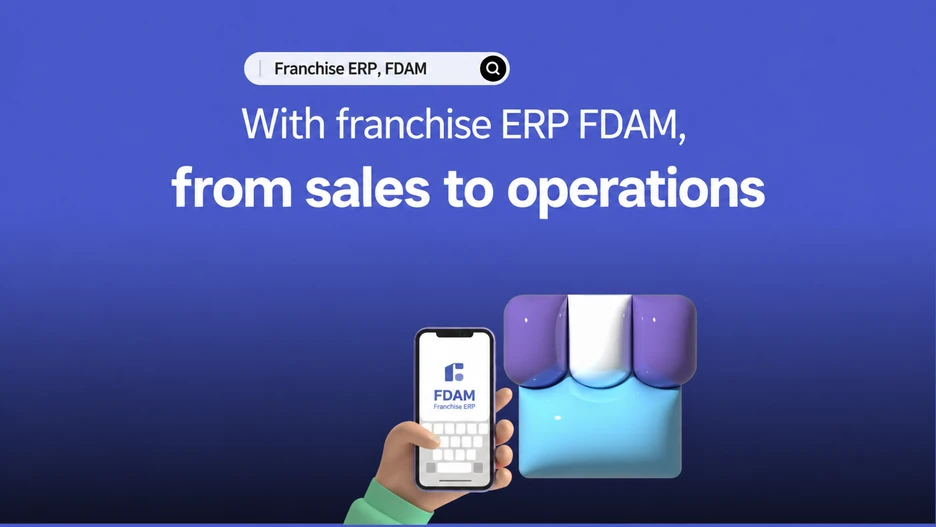
FDAM franchise ERP brings sales, store opening, and operations together in one system.
1. Why day-to-day work at franchisor headquarters gets complicated
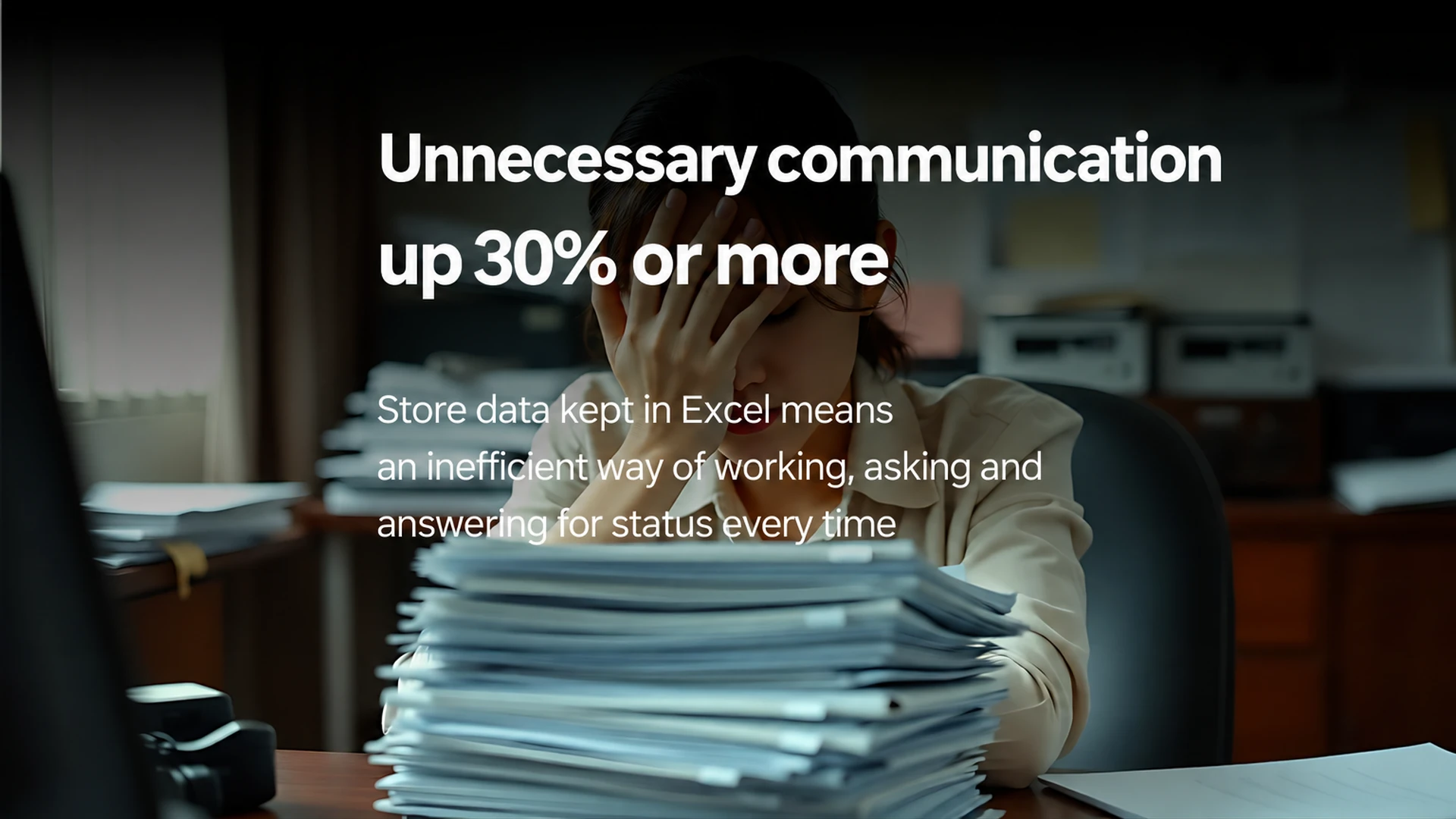
Data scattered across spreadsheets and messenger apps slows HQ down.
Franchisor headquarters manage data for many stores every day. The range of information is wide: prospective franchisee consultations, contract progress, interior construction schedules, store training, and the sales and inspection results of operating stores.
The problem is that all of this information is managed separately by each department and shared slowly. Especially when everything runs on spreadsheets, the same status-check conversations repeat every day: the sales team asks, "Has this store signed yet?" and the operations team asks back, "Is training done?"
Because work is fragmented, multiple departments often re-enter the same data, and the back-and-forth between departments keeps piling up before a single franchise contract is completed.
2. Connecting sales → opening → operations in one flow
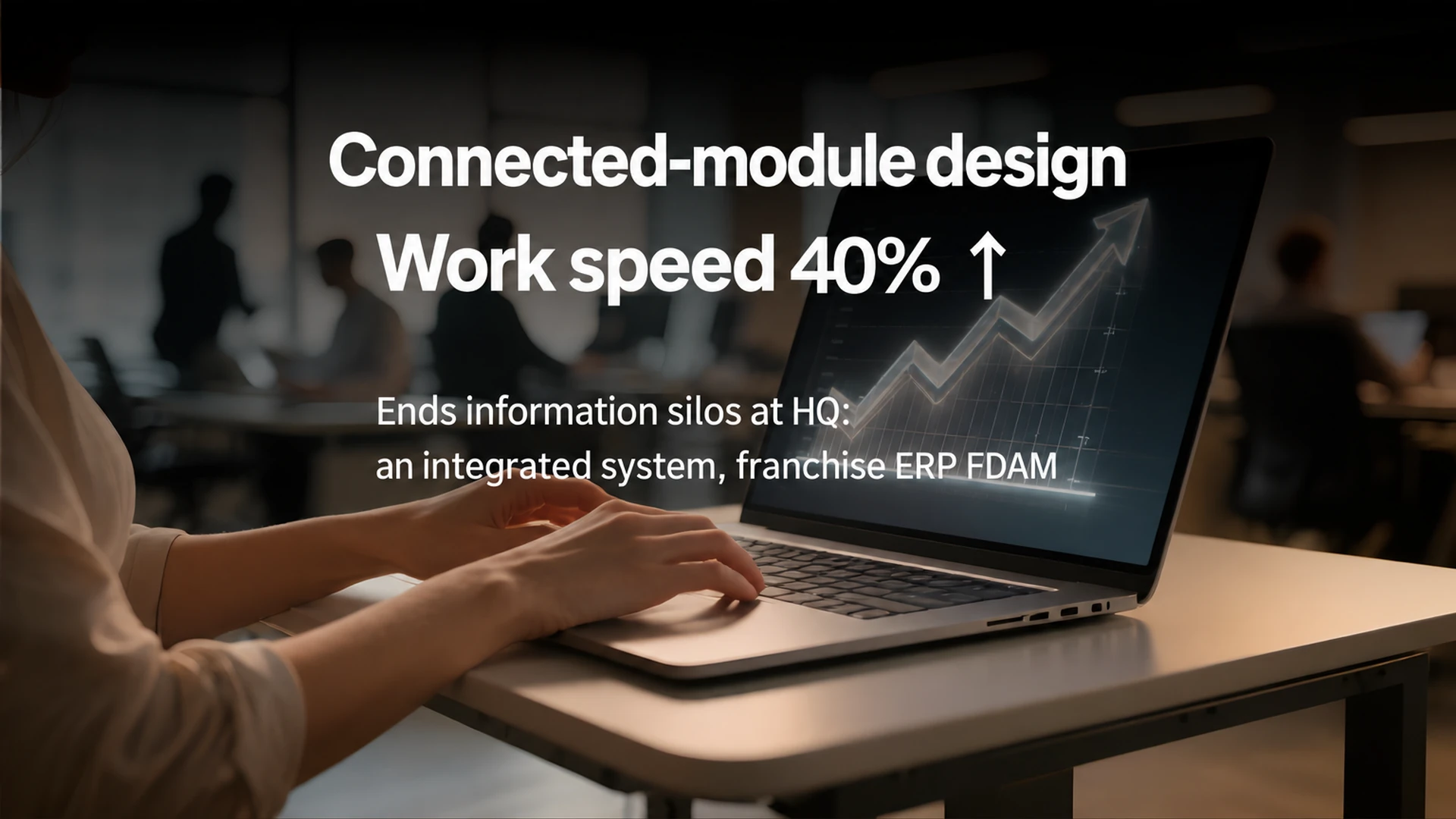
An integrated flow where information entered once automatically connects to the next stage.
FDAM is an integrated system designed to solve information silos within HQ. The sales management, store opening management, and operations management modules are linked, so information registered once automatically carries over to the next stage. HQ workflows distilled from working with about 500 brands are built directly into the logic connecting the modules.
Automatic flow between modules · Contract confirmed in sales management → automatically synced to store opening management · Opening schedule registered → notification sent to the assigned opening manager · Opening completed → store-creation notification automatically sent to the operations team |
Thanks to this structure built around connections between modules, HQ teams that adopt FDAM see work move noticeably faster and far less rework caused by miscommunication.
3. How transparency speeds up work

Every department works from the same data on one screen.
Consider a franchise café HQ that, before FDAM, exchanged contracts, opening checklists, and inspection sheets entirely via messenger and spreadsheets; its experience shows what changes after adoption. The team reports that once a contract is confirmed, an opening schedule is created automatically and tasks are assigned to each staff member in real time, cutting confusion between departments.
Sample interview: Opening supervisor at a café franchise HQ "We used to have to dig through the staff group chat to figure out where a store opening stood. Now we can see 'contract, interior, training' progress at a glance in FDAM, which makes things so much easier." |
Reports that each department used to put together separately at the end of every month are also automated with the ERP's reporting feature, which significantly cuts the time spent preparing monthly reports.
How work changes before and after FDAM
| Area | Before FDAM | After FDAM |
|---|---|---|
| Checking contract progress | Messenger and phone | Real-time in the ERP |
| Opening schedule management | Handwritten calendar | Automatic schedule sync |
| Report writing | Manual spreadsheet work | Automated report output |
| Cross-team collaboration | Siloed by department | Unified on one screen |
4. Shifting HQ operations onto a data foundation
HQ decisions change when sales, inspection, and contract data come together in one place.
FDAM doesn't stop at being a data collection tool. It works as a data-driven operations system centered on HQ work. Because each store's sales data, inspection results, and contract information all accumulate in one place, HQ has the environment it needs to make decisions on solid evidence.
- Analyze sales growth or decline relative to inspection frequency
- Track training completion rates at newly opened stores
- Compare operating performance by store type (street-front, delivery-focused, etc.)
Through this kind of analysis, HQ gains a basis for setting policy and can manage its relationships with stores by "data" rather than "gut feel." Ask the AI assistant, the first built into a franchise ERP in Korea, a question in plain language like "Show me the stores with the biggest sales drop this month," and it instantly answers with tables and charts.
Frequently asked questions
Q. Can the sales, opening, and operations modules be adopted separately?
FDAM is designed so that the sales management, store opening management, and operations management modules connect automatically within a single system. The efficiency gains are clearest when you use them as one flow rather than adopting modules separately.
Q. How do we migrate our existing spreadsheet data?
Prospective franchisee information, store information, and other data organized in your existing spreadsheets can be migrated into the system during initial setup. During the sales consultation, we review your HQ's data structure together and recommend the best migration approach.
Q. How are reports automated?
Regular reports are generated automatically from the sales, opening, and operations data accumulated in the ERP. The monthly work of gathering and processing materials from each department shrinks, and HQ staff can spend their time on interpretation and judgment rather than data processing.
Q. How do we use the AI assistant?
Ask a question about your HQ operating data in plain language, and you get answers as tables, charts, or reports. Status updates that staff normally had to check across several screens, such as sales, store opening progress, CS response status, and missing pre-contract disclosure documents, can be pulled together with a single question.
Q. How does the sales consultation work?
You can contact FDAM through the sales inquiry page (fdam.co.kr/register), our KakaoTalk channel, or our main number (1544-7120, Korea). We'll walk you through a demo and usage ideas tailored to your HQ workflows.
Transform how HQ works
From sales to operations,
in one flow with FDAM
Learn more about FDAM Contact us on KakaoTalk