How to Aggregate Delivery Sales Under Standard Menu Names
How to Aggregate Sales Accurately Under Standard Menu Names, Even When Delivery App Menu Names Differ
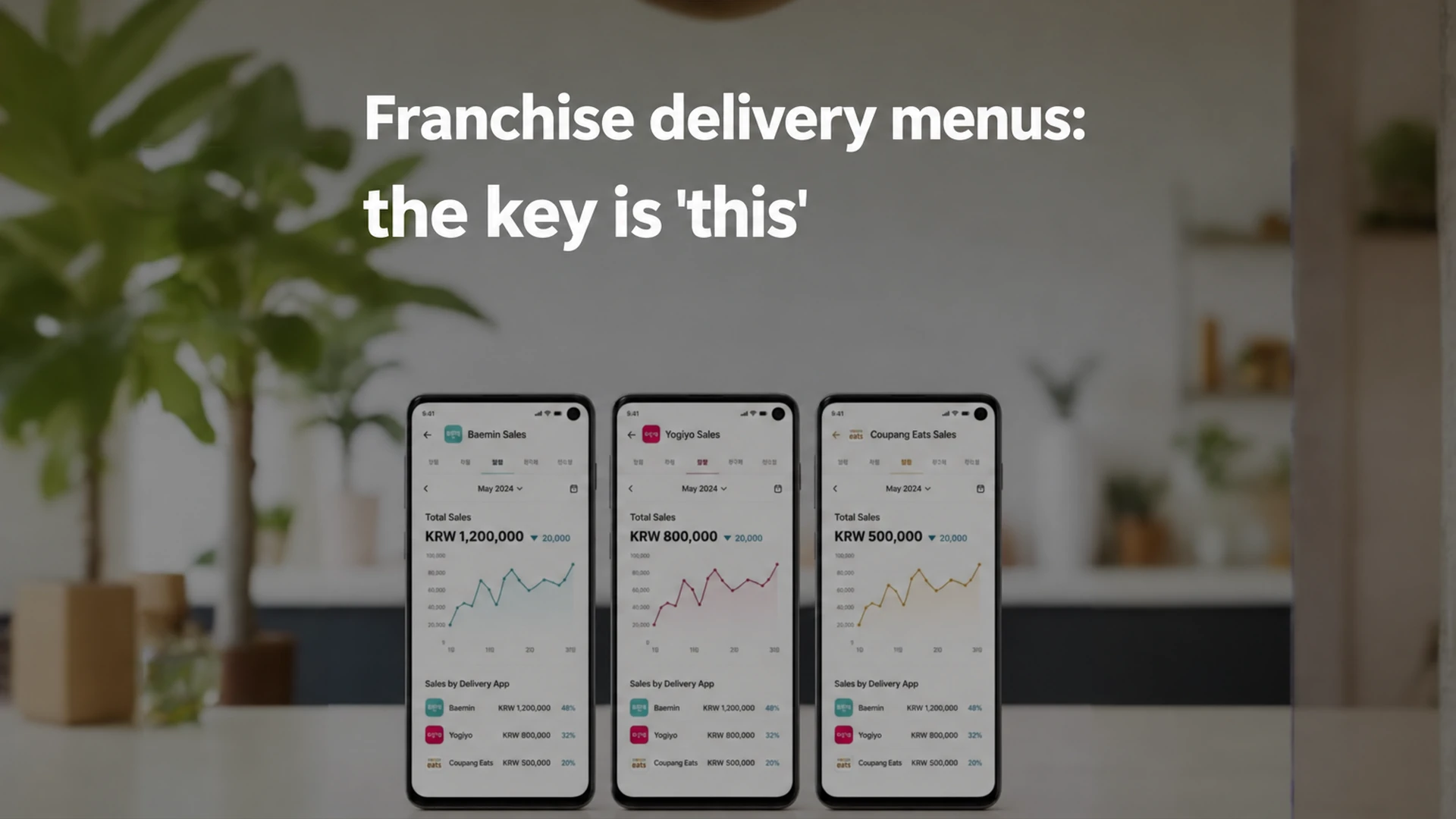
Even when delivery app menu names differ, you can consolidate sales under standard menu names
CORE SUMMARY
· Franchise delivery menu consolidation is the HQ data management task of unifying the delivery app menu names that each franchise store registers differently under a single HQ standard menu name, so that sales by menu item can be aggregated accurately across the entire brand.
· Without standard menu names, the same item gets split into several entries, which can distort menu sales rankings and promotion performance analysis.
· FDAM lets HQ aggregate POS sales and delivery app sales together based on its standard menu names, helping cut both HQ workload and aggregation errors.
Franchise delivery menu consolidation is the HQ data management task of unifying the delivery app menu names that each franchise store registers differently under a single HQ standard menu name, so that sales by menu item can be seen accurately across the entire brand. On the surface, it looks like you could simply download menu sales from each delivery app and add them up. In practice, it is rarely that simple.
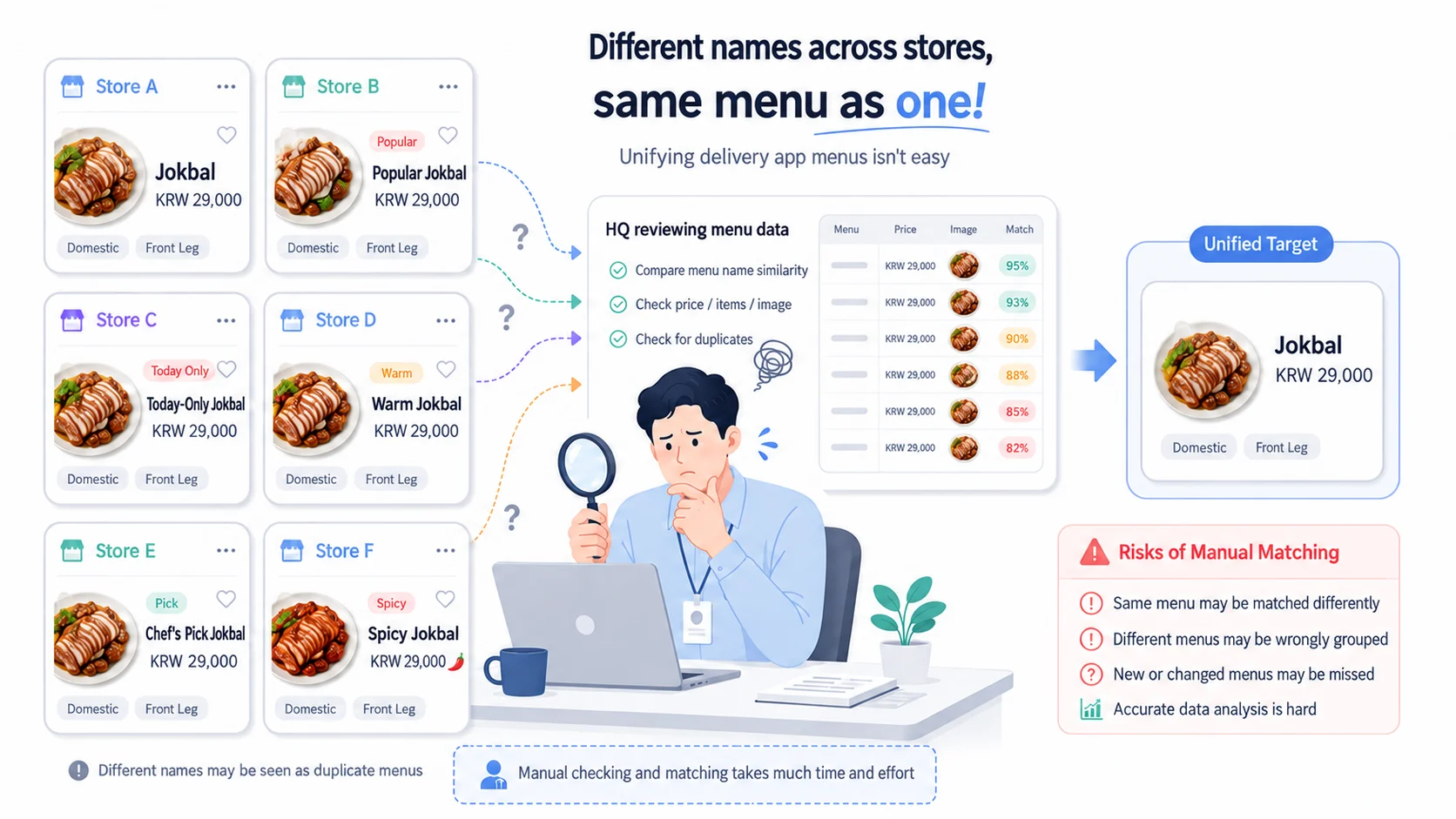
The problem is that franchise stores can register the very same item under completely different names on delivery apps. HQ's standard menu name might be "Jokbal" (braised pork trotters), but stores give it their own names to make it more appealing to customers, such as "Best-Selling Warm Jokbal," "Store Pick Jokbal," or "Tender Front-Leg Jokbal." For customers, these may be effective marketing lines. For HQ, they mean the same item gets counted as if it were several different items.
The larger delivery's share of total store sales becomes, the heavier this problem weighs. Offline sales can keep a relatively consistent standard through POS sales aggregation, but with delivery, stores run several delivery apps at once and menu names shift from one moment to the next. For HQ to build a menu strategy for the whole brand, it needs a single standard that covers both offline and delivery.
In this article, we walk through why franchise delivery menu consolidation is hard, what goes wrong without standard menu names, why typical consolidation methods keep producing errors, and how FDAM handles the problem.
Why Is Franchise Delivery Menu Consolidation So Hard?
Delivery app menu names that vary by store lead to errors in HQ's numbers
Franchisor headquarters need to see menu sales at the brand level. Brand-level decisions depend on knowing which items sell well, which regions have higher sales, and how sales by item changed after a promotion.
Delivery app menu names, however, are often managed freely by each store. Stores add words like "Popular," "Recommended," "Warm," or "Today Only" to make items stand out. From a store operations and marketing standpoint, this is a natural choice, but from an HQ aggregation standpoint, it translates directly into errors.
The HQ staff member needs to group every jokbal item into one, but in the actual data they look like different items. In the end, someone has to rename the items or manually find similar ones and group them. This takes a long time and also raises the risk of missing or double-counted figures.
The problem doesn't stop at one staff member's effort. The marketing team has to decide which items to promote, product managers have to review which items to keep and which to retire, and executives need reports on menu sales trends across the brand. If the menu sales data at the starting point of all these decisions is inaccurate, every decision that follows carries the same error.
What makes it even harder is that the error shows up differently every time. One month, Store A adds a new promotional phrase; the next month, Store B uses different wording. That means the matching rules a staff member set up last month may no longer fit this month. You end up repeating similar work every month while still having to check a fresh set of cases each time.
Recurring Problems Without Standard Menu Names
· The same item is split into several entries
· Menu sales rankings get distorted
· Promotion performance analysis becomes inaccurate
· HQ reports don't match actual field data
· Staff have to clean up menu names by hand every time
Without Standard Menu Names, Menu Sales Analysis Falls Apart
What matters is not the name shown on delivery apps, but the standard menu name HQ manages
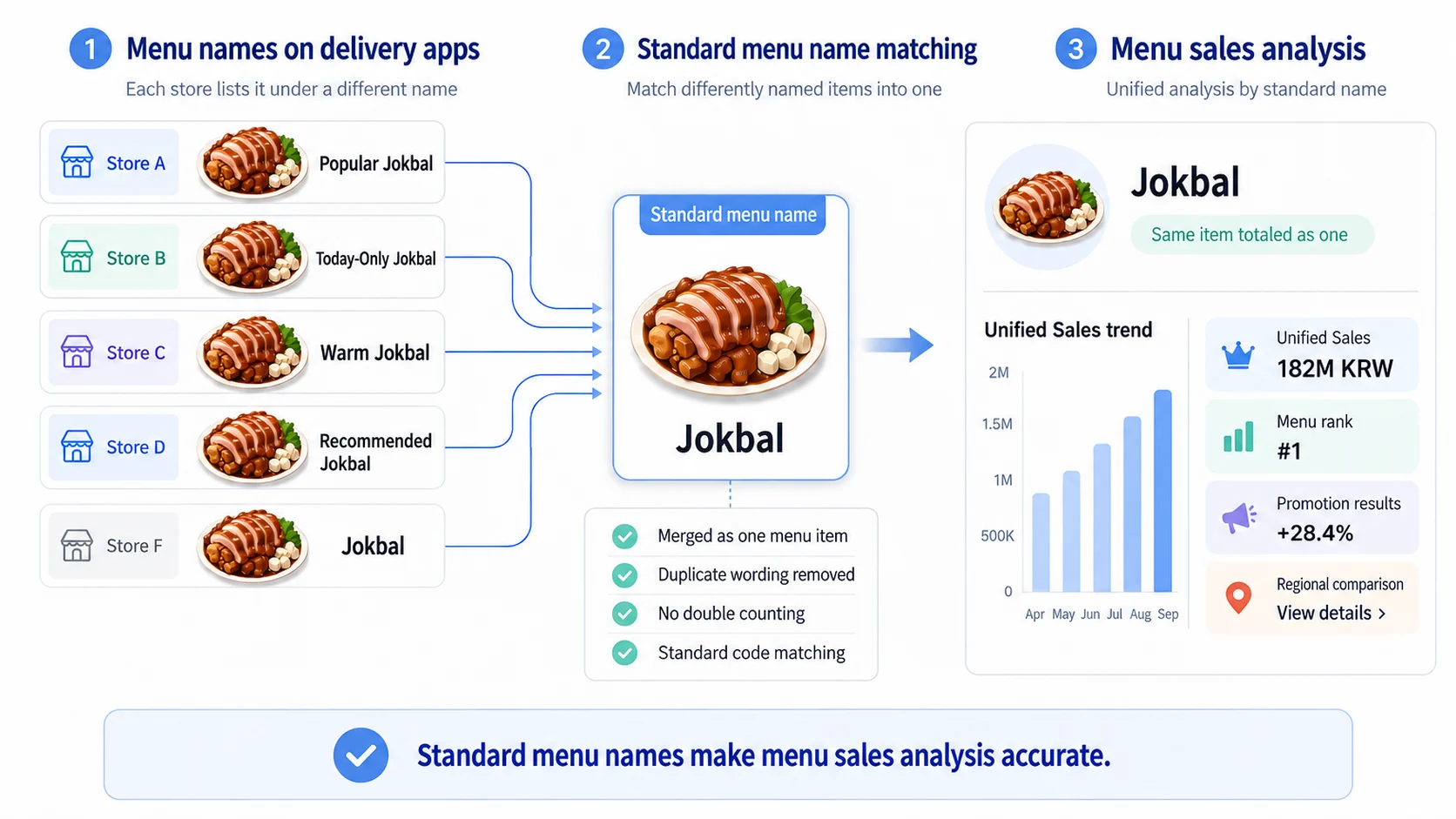
In menu sales analysis, what matters is not "the name shown on delivery apps" but "the standard menu name managed by HQ." If HQ's standard menu name is "Jokbal," then whatever promotional phrase appears on a delivery app, the final tally must roll it up into jokbal sales. Only then can you see sales by menu item accurately across the brand.
Once standard menu names are in place, four things get solved together.
1Unification regardless of store labels — Items are grouped as one even when their delivery app names differ.
2Brand-wide menu rankings — You can see exactly which items actually sell well.
3Before-and-after promotion comparisons — Performance changes can only be judged on the same standard.
4Reports that match field data — HQ report numbers stay in line with what's happening in stores.
Without standard menu names, on the other hand, menu sales rankings wobble, promotion analysis becomes inaccurate, and HQ reports repeatedly fail to match field data. Franchise delivery menu consolidation is not a simple cleanup task. It is an important data management function that feeds into menu strategy, promotion decisions, new menu launches, and reviews of underperforming items.
When the Standard Wavers, So Does the Strategy
Say you've just launched a new menu item. To judge whether early response is good, you need to see that item's sales trend accurately. But if it's registered under slightly different names on each delivery app, the early response data is distorted from the start. A strong reception might show up as weak, or the numbers might look inflated. If investment in the new item and marketing budget allocation are decided on these distorted numbers, the impact goes beyond a single sales report and carries into next season's menu strategy.
Why Do Typical Consolidation Methods Keep Producing Errors?
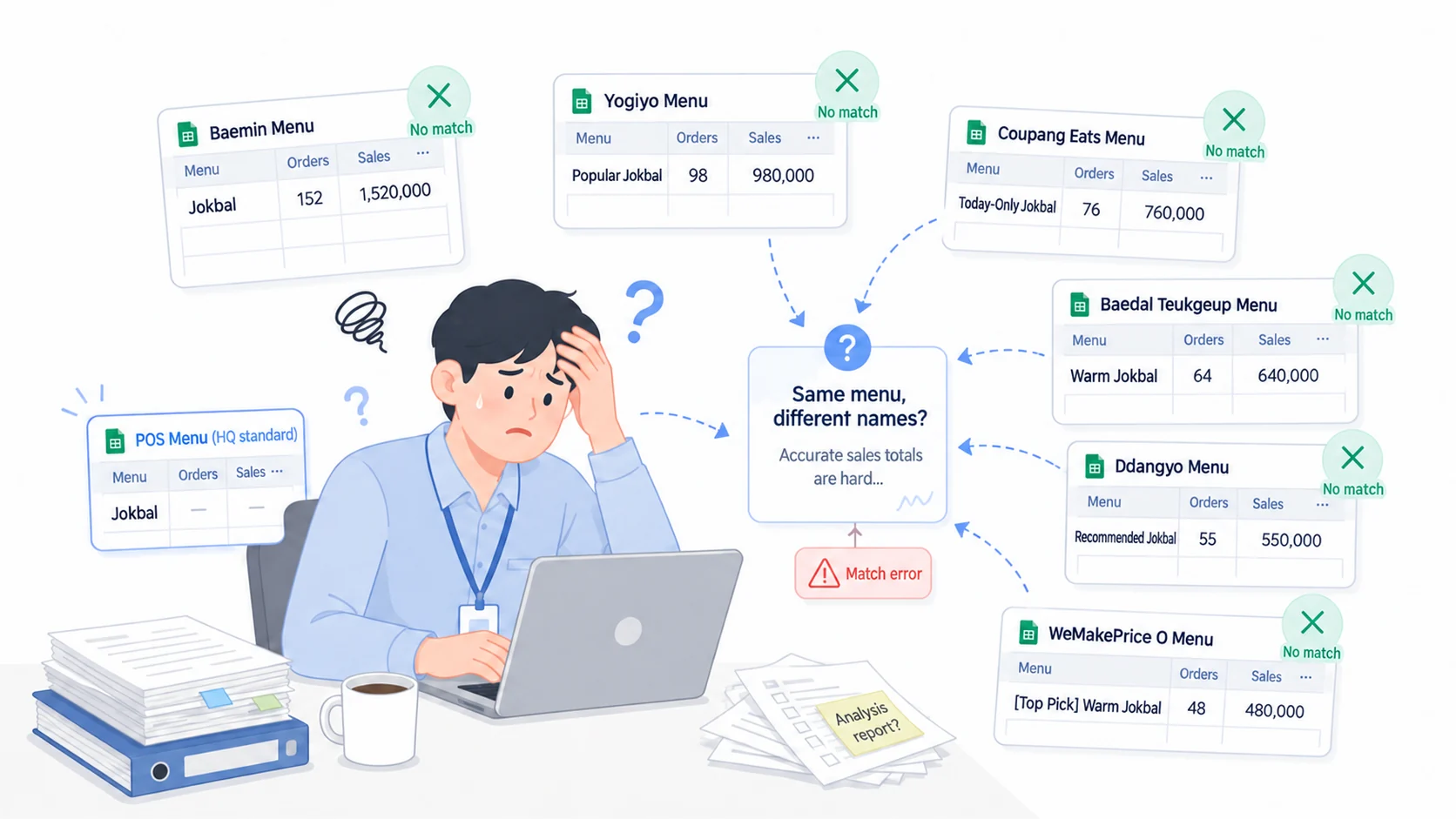
Managing data in separate files makes errors grow as stores and menu items increase
Many headquarters consolidate data downloaded from delivery apps as separate files. Even when some sales data comes in through a system, menu names often don't line up exactly, so manual cleanup is needed again at the final analysis stage.
Menu name matching becomes even more important when POS sales and delivery app sales come in together. If an item is registered as "Jokbal" in the POS and as "Best-Selling Warm Jokbal" on a delivery app, the two data sets must be grouped under the same standard to see total brand sales. Otherwise, POS sales and delivery app sales are tallied separately, and HQ ends up making decisions from fragmented data rather than a view of total menu sales.
This approach places a heavy burden on franchisor headquarters that need accurate sales analysis by menu item. As the number of stores and items grows, errors don't naturally shrink. If anything, they can grow as the number of combinations to manage increases, because the data volume keeps expanding without a standard.
More Data Means More Cleanup
If a store used just one delivery app, matching menu names might not be so hard. In reality, though, most stores run several delivery apps at once, and each store registers slightly different menu names. Across the brand, you get as many combinations as "menu items × stores × delivery apps," and each of those combinations can exist under a different name.
Picture a staff member sorting these combinations by hand every month, and it's easy to see why errors keep repeating. Even if they reopen last month's matching sheet, there are always new menu names or changed labels that require checking again from scratch. Changing the person in charge doesn't fix it either. When the standard lives in someone's memory or personal files, it wavers the moment that person changes.
FDAM Aggregates Delivery Menu Sales by Standard Menu Name
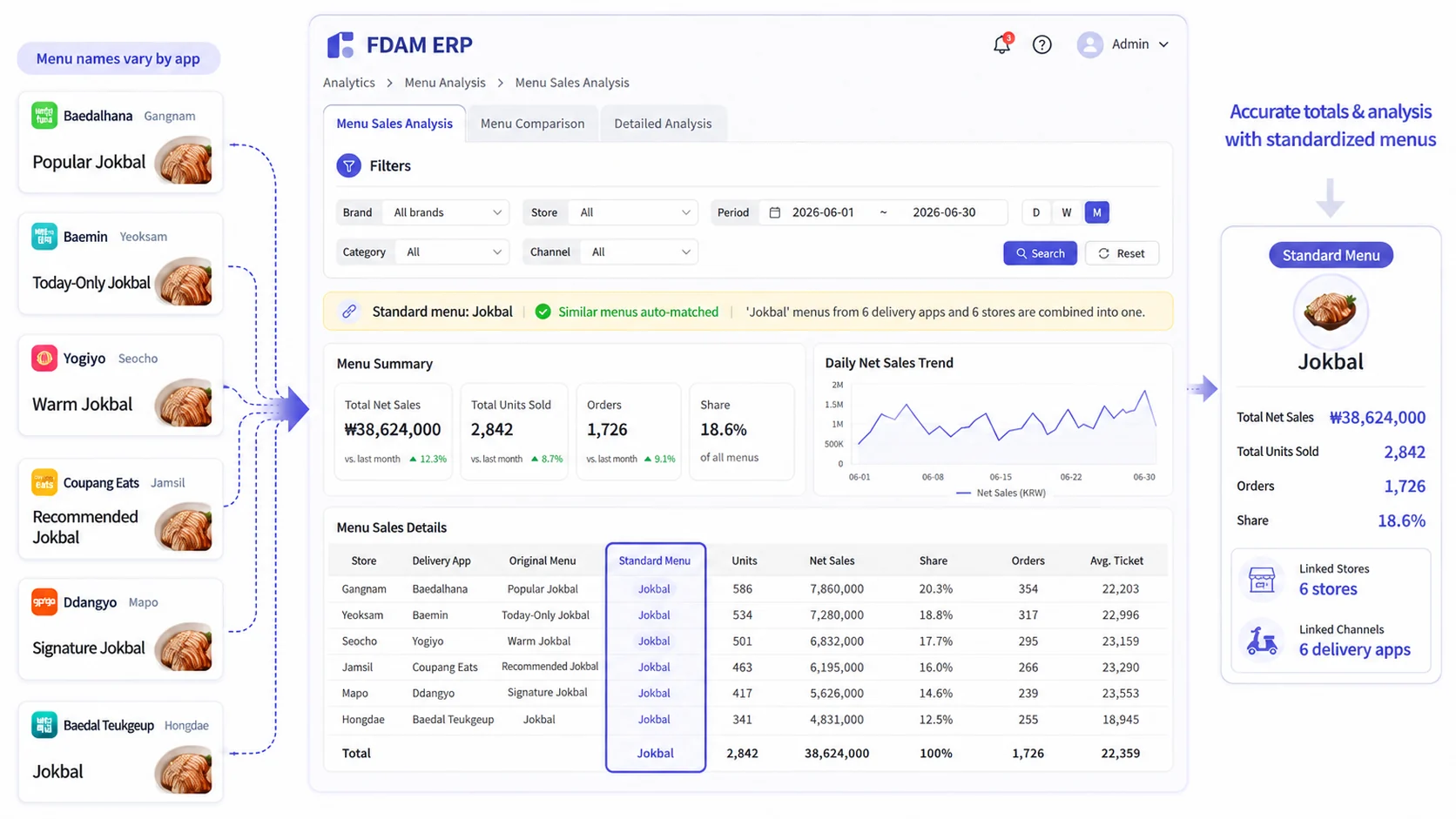
FDAM helps HQ aggregate delivery app and POS sales together based on its standard menu names
FDAM is an operations ERP for headquarters that supports standard-menu-name aggregation, a key part of franchisor menu sales analysis. Even when delivery app menu names differ by store, HQ can consolidate them based on its standard menu names, helping reduce mistakes and errors in menu sales aggregation. For example, a jokbal item registered under various names on delivery apps can be grouped under HQ's standard menu name, "Jokbal," to review its sales.
The changes this brings to HQ operations come down to three main points.
Change 01
Standard Menu Name Matching
Even when delivery app names differ by store, items can be grouped as the same item based on HQ's standard menu names to review sales.
Change 02
Unified POS and Delivery App View
POS sales and delivery app sales can be reviewed together under the same standard menu names, easing the burden of looking at fragmented data separately.
Change 03
Combined Table and Dashboard Reports
Staff can check figures by menu item in tables while viewing sales trends and sales mix on dashboards.
This approach makes work much easier for HQ staff, because it reduces the need to rename items one by one or manually hunt down and group similar items. FDAM is available on PC, tablet, and mobile, so staff can review data on the same standard wherever they are.
Once standard menu names are in place, the benefits look different for each department. The marketing team sees the actual response to promoted items in accurate numbers, and product managers compare menu performance by region and period to make calls on new and underperforming items. Operations staff can see which items are strong in delivery at each store and prioritize field support accordingly. Each department looks at the data for a different purpose, but the key is that the data behind every decision is tied to a single standard menu name.
One more point worth noting: FDAM manages and applies the standard menu names, while strategic decisions such as actual menu lineup, pricing, and promotion planning remain with HQ. The tool makes the data accurate; what to do with that data is still up to HQ. And the more accurate the numbers behind a decision, the more confidence you can have in the result.
Side by Side, the Difference Shows Up in Accuracy and Time Spent
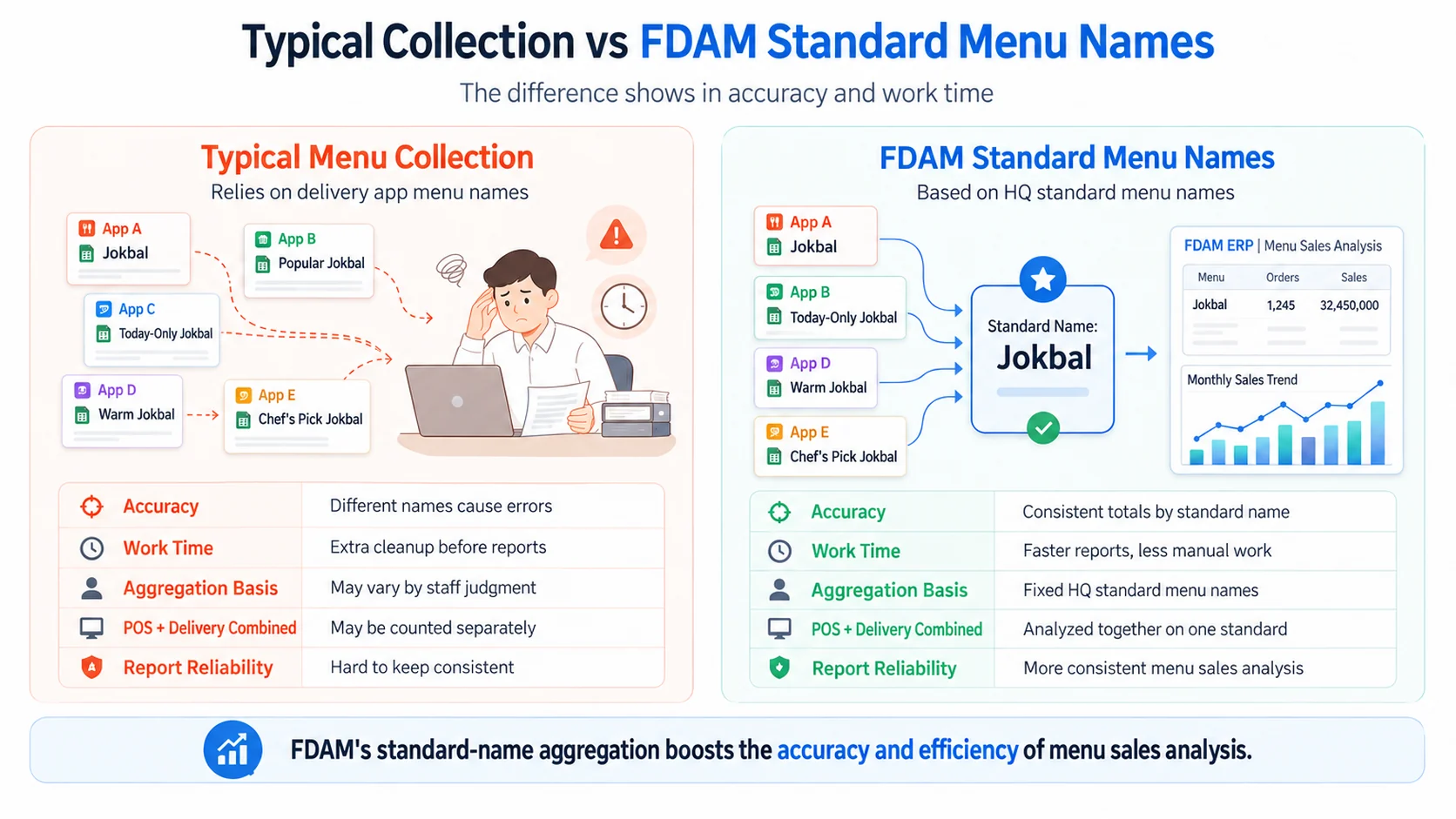
Whether you use standard menu names makes a clear difference in accuracy and time spent
Typical menu consolidation methods often rely on the menu names registered on delivery apps. In that case, even a slight difference in a name can make an item look like a different one, and staff have to clean up the data again. FDAM, by contrast, aggregates menu sales around standard menu names, so you can see sales by menu item according to HQ's standard even when delivery app names differ.
Same Situation, Different Outcome
Imagine preparing the month-end menu sales report. At an HQ without standard menu names, the first step is downloading sales files from each delivery app separately. Next, someone eyeballs the menu names and groups similar ones one by one. As stores increase, so do the names to check, and ambiguous labels are categorized by the staff member's personal judgment. By the time the report is done, a lot of time has passed, and other work has been pushed back.
At an HQ that aggregates by standard menu name, the sequence is different. Sales from each delivery app are already organized by standard menu name, so staff go straight to menu rankings and trends without any matching work. They check detailed figures in the table, scan the overall flow on the dashboard, and spend the time saved thinking about "why this item sold well" and "what to run for the next promotion." It's the same day, but one team spends it reconciling data and the other spends it interpreting data.
| Category | Typical consolidation | FDAM standard menu name aggregation |
|---|---|---|
| Menu name standard | Uses delivery app names as-is | Unified under HQ standard menu names |
| POS and delivery app data | Often tallied separately | Reviewed together by standard menu name |
| Error risk | Errors occur when names differ | Fewer errors even when names differ |
| Staff workload | Manual cleanup every time | Less time spent on cleanup |
| Report format | Compiled separately after individual cleanup | Tables and dashboards provided together |
Because FDAM aggregates based on standard menu names, sales analysis by menu item becomes more consistent. The standard holds even when you view POS sales and delivery app sales together, raising the reliability of HQ reports. For headquarters that have struggled to manage POS sales aggregation and delivery app menu consolidation separately, FDAM's standard menu name approach can be a real point of operational improvement.
Franchisor Headquarters Should Manage Standard Data, Not Just Menu Names
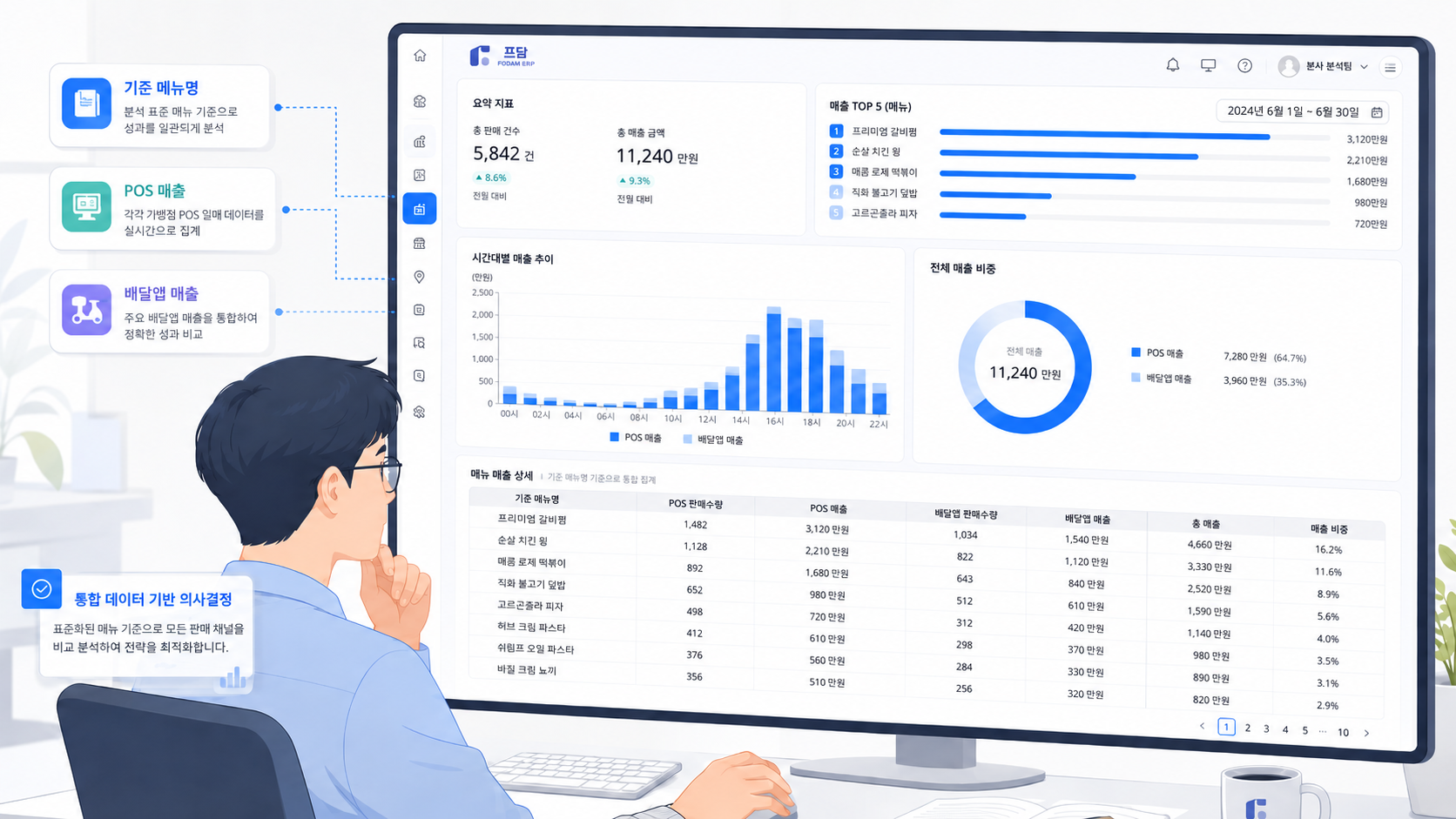
Accurate menu sales analysis starts with standard data
Franchisor headquarters analyze menu sales for more than just seeing "what sold the most." Accurate sales by menu item are needed to judge new menu performance, identify popular items by region, and analyze promotion effectiveness. They also make it possible to spot quickly when a particular item's sales start declining and adjust operating strategy. All of these decisions ultimately start from accurate standard data.
Menu names on delivery apps can vary freely for the sake of store operations and marketing. In HQ reports, however, they need to be organized under standard menu names. This is the core of franchise delivery menu consolidation, and it is also where an operations ERP built specifically for franchises takes a different approach from general-purpose management tools.
MS Benter has been developing software specifically for franchises since 2007, and its field experience is reflected in how this standard data is designed. In practice, the team has seen again and again that a single menu name can determine the reliability of an entire HQ report. That is why FDAM handles standard menu name aggregation within the operations management workflow.
Check Your HQ's Delivery Menu Data With These Questions
1Can you see brand-wide sales rankings by menu item on a single screen right now?
2Are you viewing POS sales and delivery app sales together on the same menu standard?
3Do your menu matching rules stay intact when the person in charge changes?
4When judging new menu performance, can you trust the numbers as they are?
The more of these you answer "no," the more likely there's a gap between how your menu sales data looks and what's really happening. Conversely, an HQ that can confidently answer "yes" has decision criteria that hold steady no matter how many different names its menu items are registered under.
In short, the principle HQ should follow in franchise delivery menu consolidation is simple: leave the names shown on delivery apps to the stores, and always start HQ decisions from standard menu names. Once this principle is in place, every decision, from menu strategy and promotion planning to new menu reviews, is made on the same data.
Frequently Asked Questions
Q. Why is franchise delivery menu consolidation difficult?
Because each franchise store may register different menu names on delivery apps. Once a promotional phrase is added, even the same item can be counted as a different one, causing errors in HQ analysis.
Q. Why do standard menu names matter?
Standard menu names let you group items as one and aggregate sales even when their delivery app names differ. That's what makes accurate analysis of menu rankings, promotion performance, and new menu performance possible.
Q. How does FDAM solve this problem?
FDAM helps HQ aggregate delivery app menu sales based on its standard menu names. It also provides combined table and dashboard reports so you can see both detailed data and the overall picture.
Q. Can we aggregate by standard menu name even when using several delivery apps?
Yes. Even when names differ across delivery apps, items can be grouped and reviewed under HQ's standard menu names, so it works for headquarters running several delivery platforms at once.
Q. Do standard menu names need ongoing management as stores grow or new items are added?
Yes. It's best to keep the standard menu name structure organized whenever items are added or stores expand. FDAM supports ongoing management of these standards within HQ operations management.
FDAM
Delivery sales analysis thrown off by menu names?
Start by resetting the standard
If delivery app menu names are registered differently at every store, it's time to manage around standard menu names. Instead of spending time reconciling menu names every month, use FDAM to see menu sales accurately and put that time into menu strategy.
Talk to sales about FDAM · fdam.co.kr
FDAM website Chat on KakaoTalk Call 1544-7120
Franchise delivery menu consolidation, standard menu names, FDAM, franchise ERP, delivery app menu sales, menu sales analysis, POS sales aggregation, franchisor headquarters, delivery sales management, menu sales rankings, promotion performance analysis, unified store sales