Franchise Inventory Before Chuseok: Ordering and Logistics Checks
Here are our checkpoints for franchise inventory, ordering, and logistics data ahead of Chuseok.
Franchise inventory management over a holiday break needs a different design, starting from when you order
CORE SUMMARY
✔ Over major holidays, store operating days diverge and supplier lead times stretch, so reusing normal ordering patterns causes stockouts and overstock at the same time.
✔ Franchise inventory management should start by securing last year's sales data and each store's operating schedule, then reset safety stock item by item.
✔ Ordering, inventory, and shipping data must connect in one flow so you can quickly detect exceptions like delays or stockouts.
✔ Recording the gap between actual sales and forecasts after the holiday determines forecast accuracy for the next one.
Franchise inventory management covers all the work of adjusting order quantities, safety stock, and logistics shipping schedules based on each store's sales forecast. The 2026 Chuseok holiday (Korea's autumn harvest festival) runs from September 24 to 26, and store operating days fall differently around Chuseok Day itself, September 25. Because this temporarily breaks normal ordering patterns, HQ needs to review its data at least 2–3 weeks ahead to avoid both stockouts right before the holiday and overstock right after.
This article walks in order through the structural reasons inventory rhythms falter over holidays, the data to secure before ordering, criteria for resetting safety stock by item, why the ordering-inventory-shipping flow must not break, and the data to organize after the holiday. The more stores and the more complex the item mix, the greater the payoff from standardizing this flow.
Structural reasons inventory rhythms falter over the holidays
Holiday inventory management is hard because store operating days scatter. Some stores stay open until the day before the holiday and see demand spike, while others close for the entire break. When both types are processed in a single ordering system at once, an order plan built on averages fails to reflect actual demand.
On top of that, supplier closures and reduced carrier dispatching make lead times longer than usual. Because the number of days deliveries are possible shrinks, missing an order deadline by even one day leaves a gap until the next available delivery date. Franchise inventory management, then, isn't simply about ordering more; it's about aligning two different timetables: each store's operating schedule and the supply chain's schedule.
Understanding these structural causes makes it clear what to prioritize in the data review that follows. The starting point is identifying stores with irregular operating days and items with long lead times.
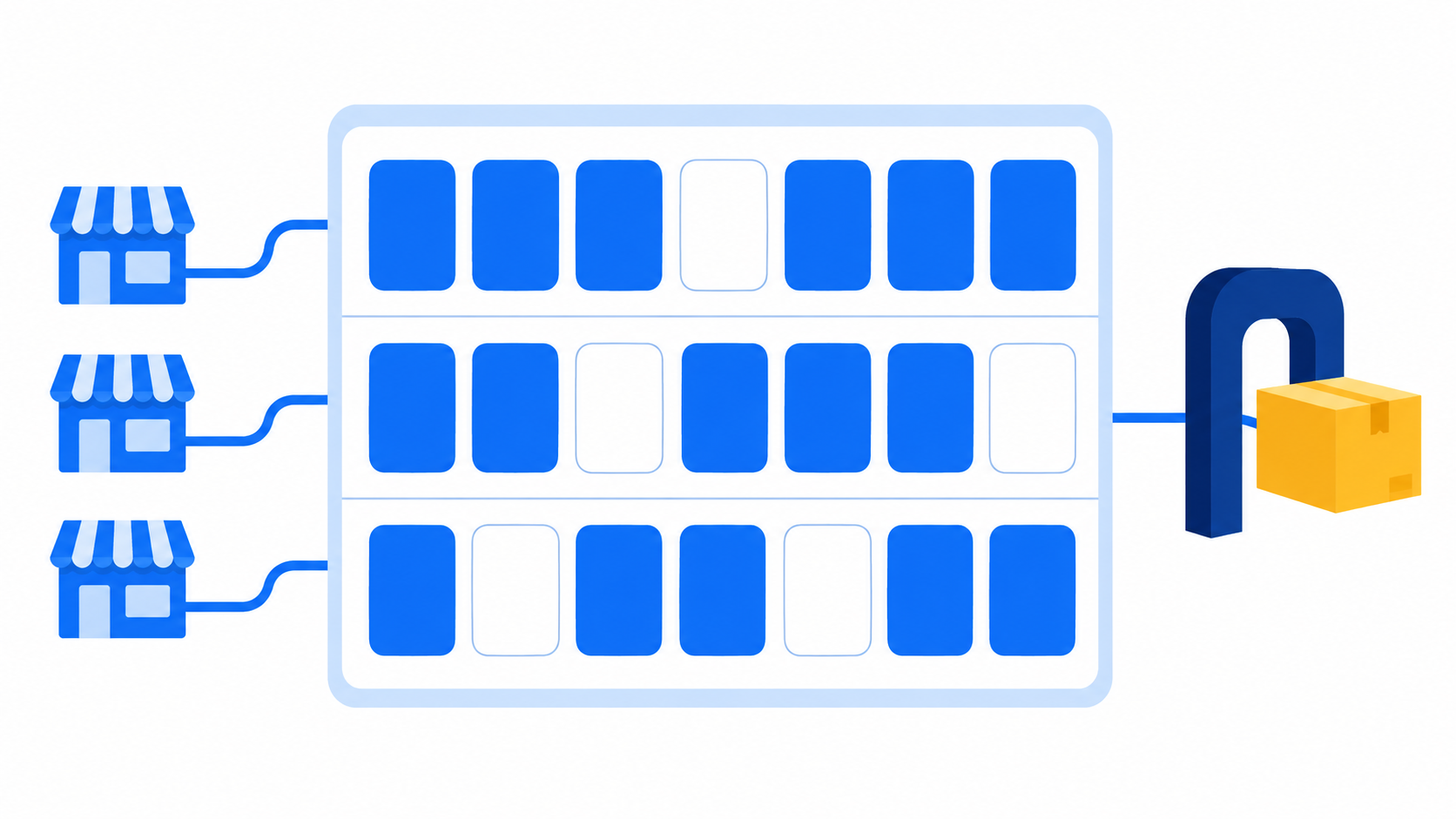
Uneven operating days and supply chain schedules collide, throwing off the ordering rhythm
Data to secure before ordering: last year's results and each store's schedule
The first data to secure before planning orders is sales for the same period last year. You need to base this year's expected demand on which items sold out and which were left over, item by item, to keep it realistic. If staff set order quantities by gut feel without this data, orders follow HQ averages without reflecting differences between stores.
The second piece of data is each store's operating and closed days. Linking this information to order deadline settings reduces mistakes such as setting an order deadline earlier than needed for a store that stays open until the day before the holiday. In practice, it works well to enter each store's operating schedule into the ordering system in advance and set alerts to go out first to stores whose deadlines are closest.
The right time to secure both data sets is at least 1–2 weeks before orders are placed. That leaves time to compare last year's results with this year's store situation and adjust, and room to double-check stores whose operating days have changed.
Criteria for resetting safety stock and lead times by item
Safety stock should be set separately for three storage conditions: refrigerated, frozen, and ambient. Lumping all items under one standard means short-shelf-life items end up overstocked and discarded, while shelf-stable items are exposed to stockout risk. For short-shelf-life items in particular, it's safer to move order cycles earlier or order more often to keep inventory turning quickly.
Lead times should also be rechecked at this stage. Applying normal lead times fails to account for delivery gaps created by supplier closures. The basic rule is to reconfirm the actual possible delivery dates for each item and raise the safety stock level for items with long lead times.
Receivables and credit limits must also be checked. If a store heads into the holiday over its credit limit, the ordering system may automatically block orders, making it impossible to order exactly when it's needed. That's why you need a step to check each store's credit status before orders go out.

Items with different storage conditions shouldn't share a single standard
Why data must flow unbroken from order to shipment
The core of food supply logistics is that the flow after ordering doesn't break. Store sales data leads to expected demand, which connects to store orders and HQ order intake, which in turn leads to inventory checks and shipping. Only when this structure is visible on one screen can you catch exceptions like delays or stockouts early.
POINT
Organizing sales data: FDAM POS sales aggregation
Connecting orders and intake: Balju.com
Managing inventory and shipping: Logidam
In this flow, sales data is organized in FDAM's POS sales aggregation. That sales data becomes the basis for expected demand and then feeds into ordering. Balju.com connects store orders with HQ order intake, and Logidam handles inventory checks and shipping. In other words, the three stages, organizing sales data, connecting orders and intake, and managing inventory and shipping, each have their own role while connecting in a single flow.
The reason data at these three points must connect without breaks is clear. When a particular item is delayed or out of stock, that fact must be confirmed immediately at the inventory and shipping stage and passed quickly through ordering to a notice to stores, so store disruptions are kept to a minimum. If instead each part of the flow is managed in separate spreadsheets or messenger threads, HQ will inevitably find out about delays later.
HQs that want to standardize their logistics, inventory, and ordering flow often consider Logidam and Balju.com together. Balju.com is used in connection with Logidam, and FDAM's POS sales aggregation connects by organizing the upstream sales data.
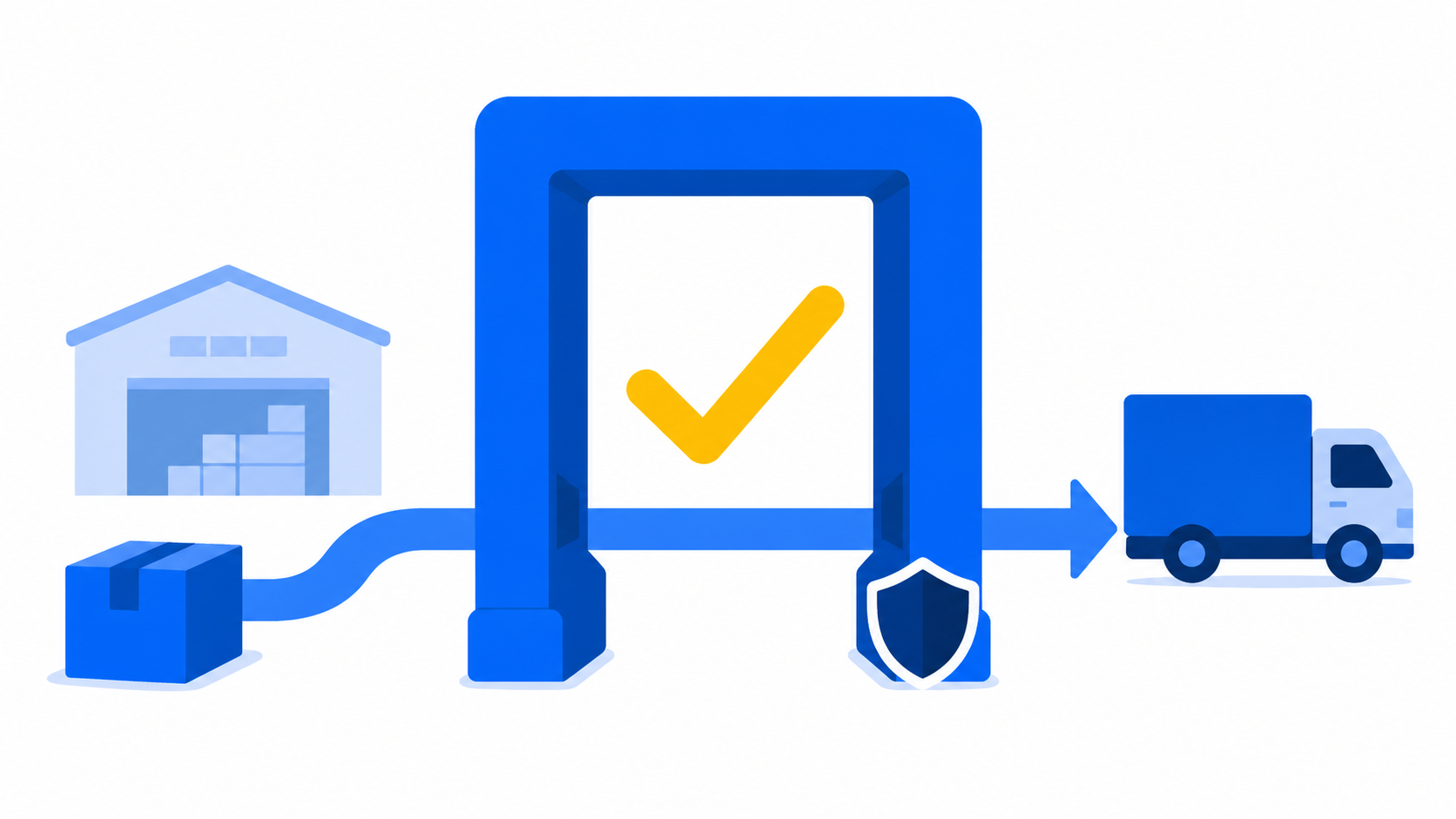
Data must flow unbroken through all three stages to detect exceptions quickly
A practical checklist for before and after Chuseok
Splitting everything covered so far into pre-order preparation and post-holiday wrap-up gives the following.
Before ordering
- Compare sales from last year's Chuseok season
- Collect each store's operating and closed days
- Confirm each store's order deadline
- Recheck lead times by item
- Reset safety stock by item
- Forecast refrigerated, frozen, and ambient items separately
- Check supplier holiday closures
- Line up alternative suppliers in advance
- Check stock nearing its expiration date
- Identify stores with receivables or over their credit limit
During and after the holiday
- Check the notification process for delays and stockouts
- Organize return and disposal data after the holiday
Right after the holiday, you need to record the gap between actual sales and forecasts, along with return and disposal data. If these records aren't kept in the ordering system, you'll estimate demand the same way at the next holiday, and forecast accuracy will stay flat year after year. If the data accumulates, from the next holiday on you can adjust order quantities based on patterns from the past several years rather than just year over year.
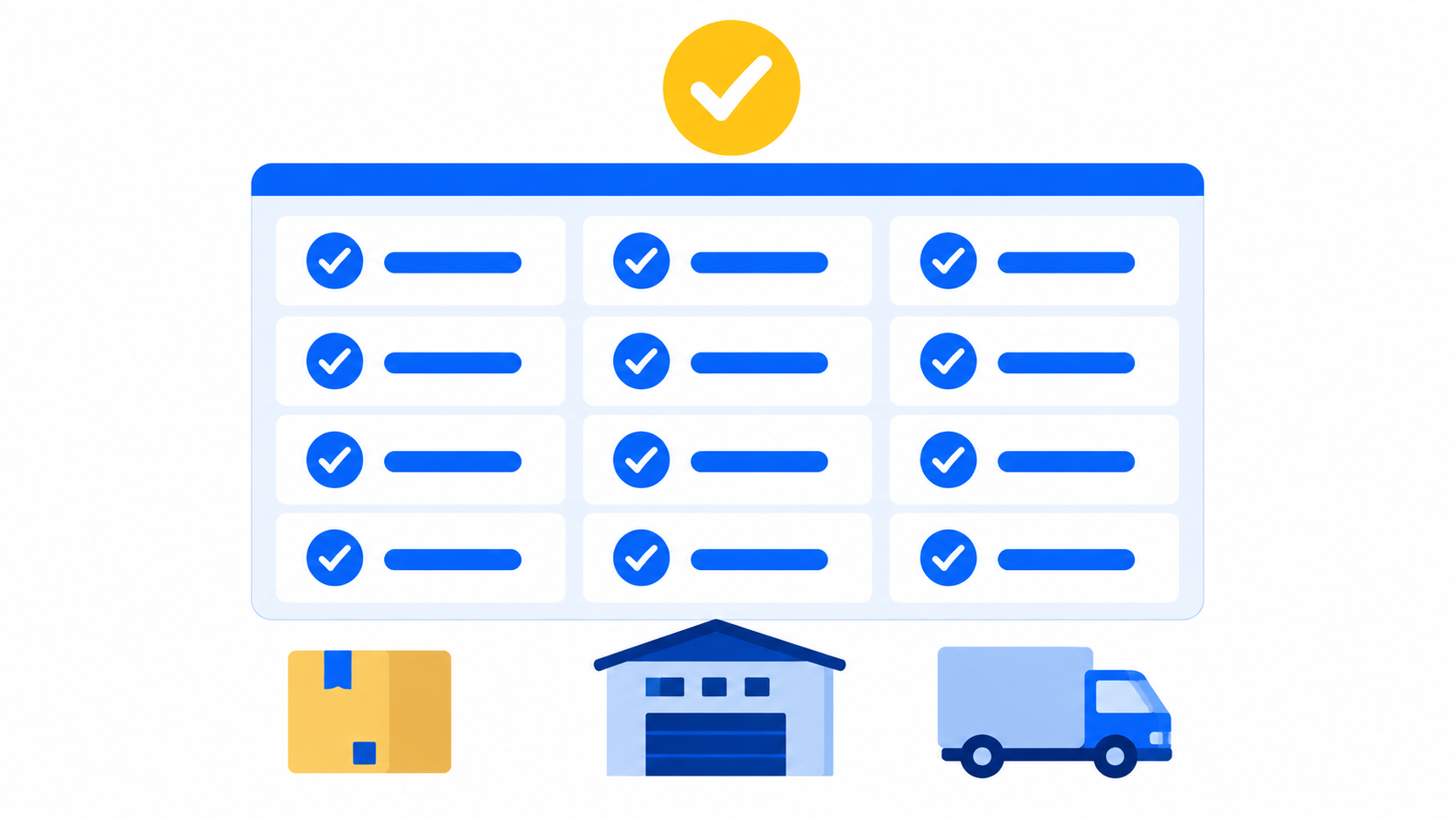
Reviewing pre-order prep and post-holiday wrap-up separately makes the next holiday easier
Frequently asked questions
Q1. What data should be checked first for franchise inventory management before Chuseok?
POS sales for the same period last year and each store's operating and closed days. With these two data sets, you can set expected demand by item and order deadlines.
Q2. Should holiday safety stock be set differently than usual?
Yes. Forecast refrigerated, frozen, and ambient items separately, and set item-specific standards that reflect longer lead times due to supplier closures.
Q3. How should we respond if orders are delayed or items run out?
Define the notification process between HQ and stores in advance, and set up a flow that alerts stores as soon as a delay is confirmed at the inventory and shipping stage. This shortens response time.
Q4. What data should be organized after the holiday?
The gap between actual sales and forecasts, plus return and disposal data. These records become the basis for improving order accuracy at the next holiday.
Chuseok comes around every year, but store counts and item mixes change from year to year, so applying the same ordering approach every time is hard. The most practical way to reduce inventory risk around the holiday is to start now: secure sales data and store schedules first, reset safety stock by item, and check that the flow from ordering to shipping doesn't break.
Is your store-level ordering and inventory data connected?
Before Chuseok logistics kick in, check how well your sales, ordering, and inventory data are connected.
Contact salesExplore Logidam Explore Balju.com
franchise inventory management, holiday ordering, food supply logistics, safety stock, lead time management, store ordering system, franchise ERP, POS sales aggregation, Logidam, Balju.com, FDAM, return and disposal data