AI Delivery Review Replies: An HQ Guide to Brand Consistency
Delivery review replies differ at every franchise store: how headquarters can unify them in the brand’s tone
Delivery review management is the operational work of monitoring customer reviews that pile up on delivery apps and responding with replies, and AI delivery review replies refers to a feature in which AI automatically suggests reply drafts that match the brand’s tone.
The higher a store’s share of delivery sales, the more weight a single review carries. Because most customers check star ratings and replies before ordering, responding to reviews is no longer just customer service; it ties directly to converting new orders. But from a franchisor headquarters’ perspective, there is one more concern that independent stores don’t have: the tone and quality of replies vary from store to store.
Key takeaways
Store owners hold primary responsibility for replying to delivery app reviews, but because the brand’s image is at stake, headquarters also needs a way to step in. FDAM supports both store owner replies and direct HQ replies, and manages the operating flow from monitoring to draft suggestions, review, and posting in one system. By unifying reply tone across five brand tones, it keeps the brand’s voice from fragmenting as the number of stores grows.
Why delivery reviews became an HQ issue
Delivery app reviews don’t stop at a single store’s reputation. Customers often compare several stores by brand name rather than searching for a specific location, and one store’s low rating or careless reply colors the impression of the entire brand. The stores are different, but the sign is the same.
So responding to reviews is both a store owner’s customer service and a brand asset that headquarters must manage. As the number of franchise stores grows, so does the total volume of reviews headquarters needs to look after, and as differences in responses accumulate across stores, the trust the brand has built erodes little by little. That is why review management can’t be left to stores alone.
First, the responsibility structure
Primary responsibility for replying to delivery app reviews lies with the store owner who runs the store, since the owner knows the order situation and the customer’s circumstances best. That doesn’t mean headquarters should stand back, though. Because the image of the entire brand is at stake, headquarters needs a way to step into replies.
FDAM supports both. Store owners can reply directly, and headquarters can also write and post replies directly. Headquarters can pick up reviews that busy owners missed, or respond directly to reviews that are sensitive at the brand level. Primary responsibility stays with the store owner, while headquarters keeps room to step in directly for brand consistency. This is where it differs from many automated review reply tools on the market, which work only at the individual store level.
Why do replies end up so inconsistent?
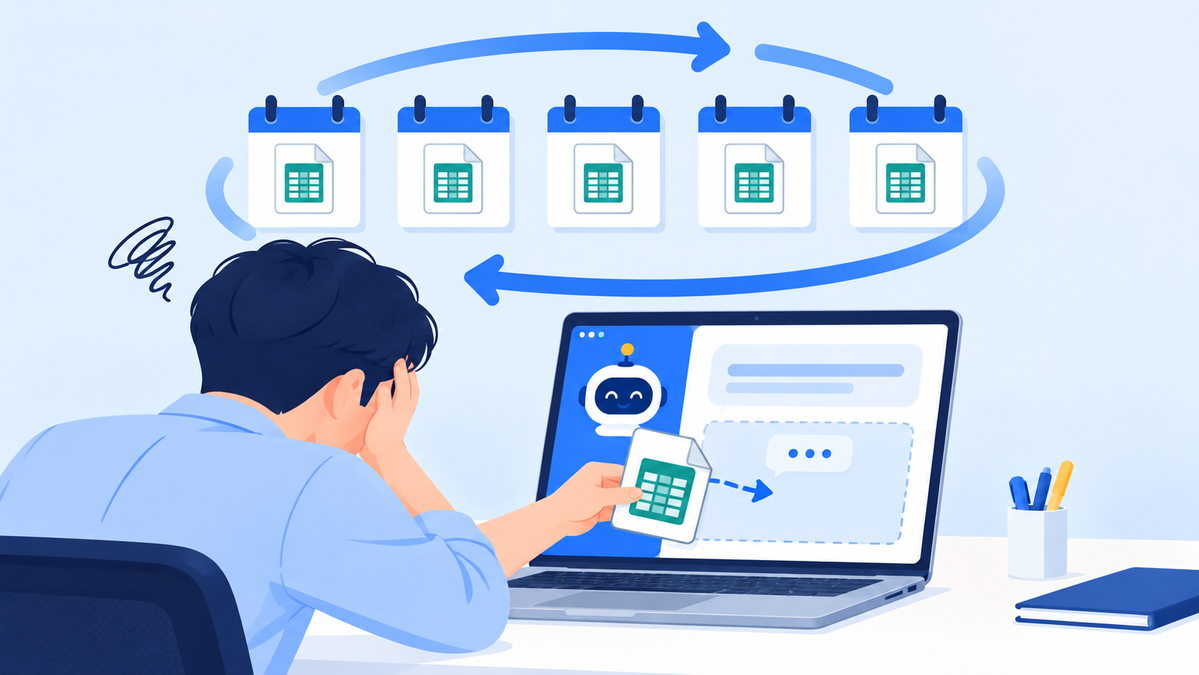
Store owners juggle the kitchen, the dining room, packaging, and delivery pickups all at once. When 10 to 20 reviews come in a day, even one to two minutes per reply adds up to 20 to 40 minutes daily on replies alone. After the rush, negative reviews may get a one-line “Sorry,” or no reply at all.
The problem arises when these differences mix within a single brand. If Store A responds thoughtfully and Store B carelessly, the brand impression customers get differs from store to store. Brand-level trust ends up depending on each operator’s writing skills and how much time they have that day. Regardless of whether responses are good or bad, the lack of predictable consistency is itself a weakness for the brand.
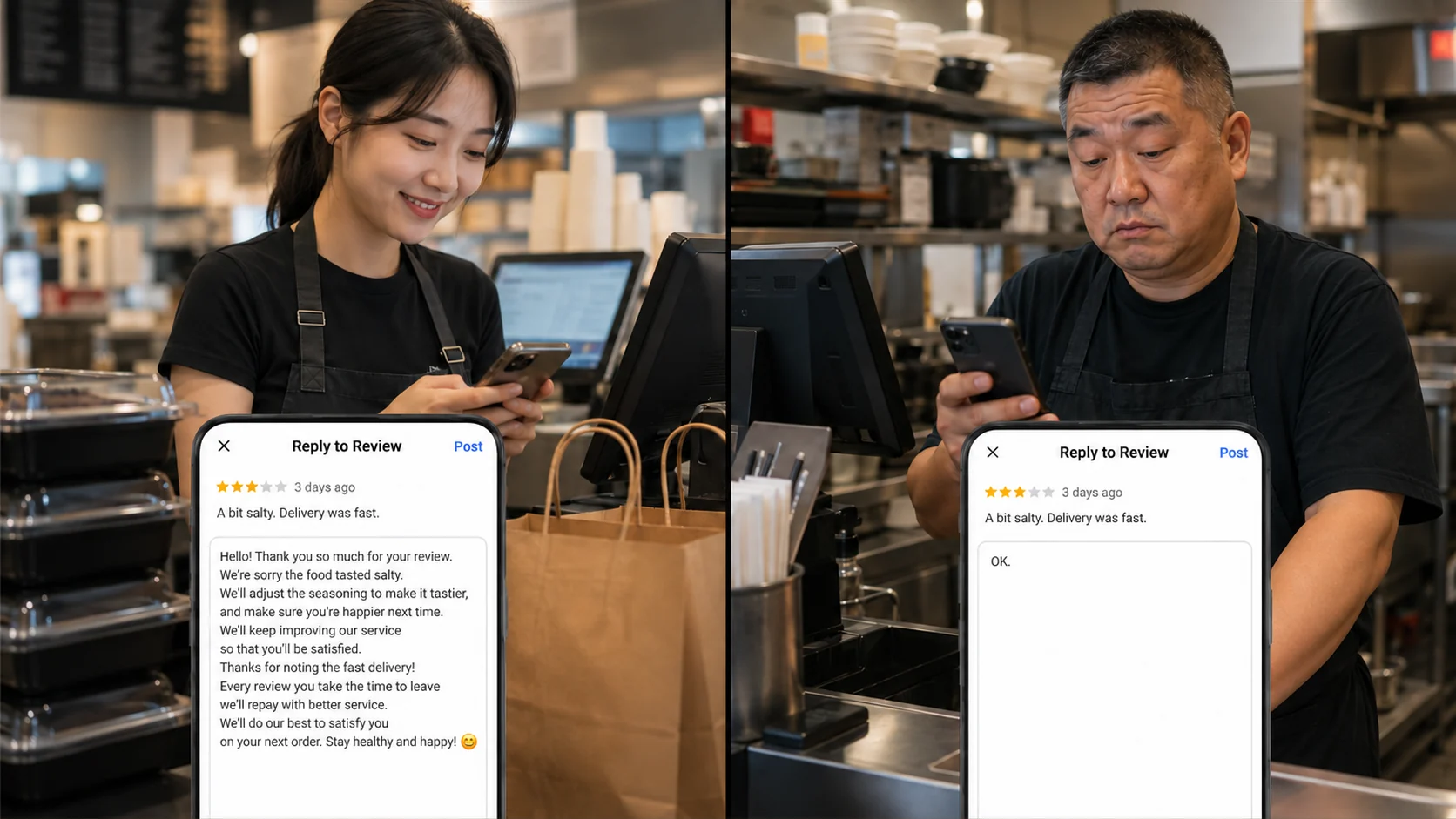
When stores under the same brand respond differently, the brand impression wavers
Response principles by review type
How you respond should depend on the nature of the review. Pasting the same sentence on every review actually looks careless. Setting principles for three broad types brings order to response standards that used to vary from store to store.
Positive reviews: an opportunity to build relationships
Praise is easy to brush past, but it is actually the best touchpoint for driving reorders. Responding specifically to the menu items or words the customer mentioned leaves a completely different impression than a formulaic “Thank you.” But if the level of care varies from store to store, the effect is halved, so positive responses also need a tone set by the brand.
Negative reviews: the area that calls for the most care
The key point about complaint reviews is that the author isn’t the only one reading the reply. Many potential customers considering an order read it too. Responding with excuses or defensiveness loses not only the author but also the customers watching. You need a restrained tone that conveys an apology and a commitment to improve without getting emotional, and this balance is also the hardest for busy owners to strike every time. For negative reviews that are sensitive at the brand level, having headquarters reply directly is a meaningful option.
Leaving reviews unanswered: the most common and most wasteful loss
Surprisingly, the biggest loss comes not from replying poorly but from not replying at all. A store with empty replies signals to customers that it is “not being looked after.” Since the burden of responding is the main reason replies get skipped, automatically providing a starting point for replies to lighten that burden is the most realistic way to reduce neglect.
How AI delivery review replies work
The core of AI delivery review replies is unifying the starting point of each reply. Broken into steps, the flow works like this.
Step 1 · Monitoring
Reviews that come into each store are gathered on one screen. Even with many stores, headquarters can follow review trends across the entire brand without missing anything.
Step 2 · Draft suggestions
AI suggests a reply draft based on the review’s content. The burden of starting from a blank page disappears, and above all, every draft starts from the tone the brand has set. This means the first sentence of each response doesn’t scatter in different directions from store to store.
Step 3 · Review and edit
The store owner or headquarters checks the suggested draft and refines it to fit the store’s situation. AI only creates the starting point; people hold the final judgment and responsibility. Because replies go through human review rather than being posted automatically, off-target replies don’t go out as-is.
Step 4 · Posting
The reviewed reply is posted. Whether the store owner or headquarters posts it, it is handled in the same flow, so the brand tone stays consistent no matter who responded.
The value of this flow goes beyond saving time. Responses get faster and fewer replies are missed, but from a brand perspective, what matters more is that every store’s replies start from the same standard.
How to lock in the brand tone with a system
Even with principles by type and an operating flow in place, one variable remains at the end: tone. Whether you go for the friendly feel of a neighborhood shop or polite, tidy responses, the direction of a reply to the same review should differ. It is hard for people to explain and train this tone one by one, and the gap widens as the number of stores grows.
FDAM, an ERP built specifically for franchisor headquarters, solves this with brand tones. Select one of five tones for replies, and AI drafts review replies in that style. Whether headquarters or the store owner replies, the starting point is the same tone, so the voice the brand aims for doesn’t fragment store by store. In effect, it structurally reduces the problem of tone becoming harder to align manually as the number of stores grows.
Another difference is that review management sits within the HQ operations system rather than in a separate tool. Because review responses are part of a flow that handles sales, opening, and operations management in one system, review data is less likely to get lost by being managed separately.
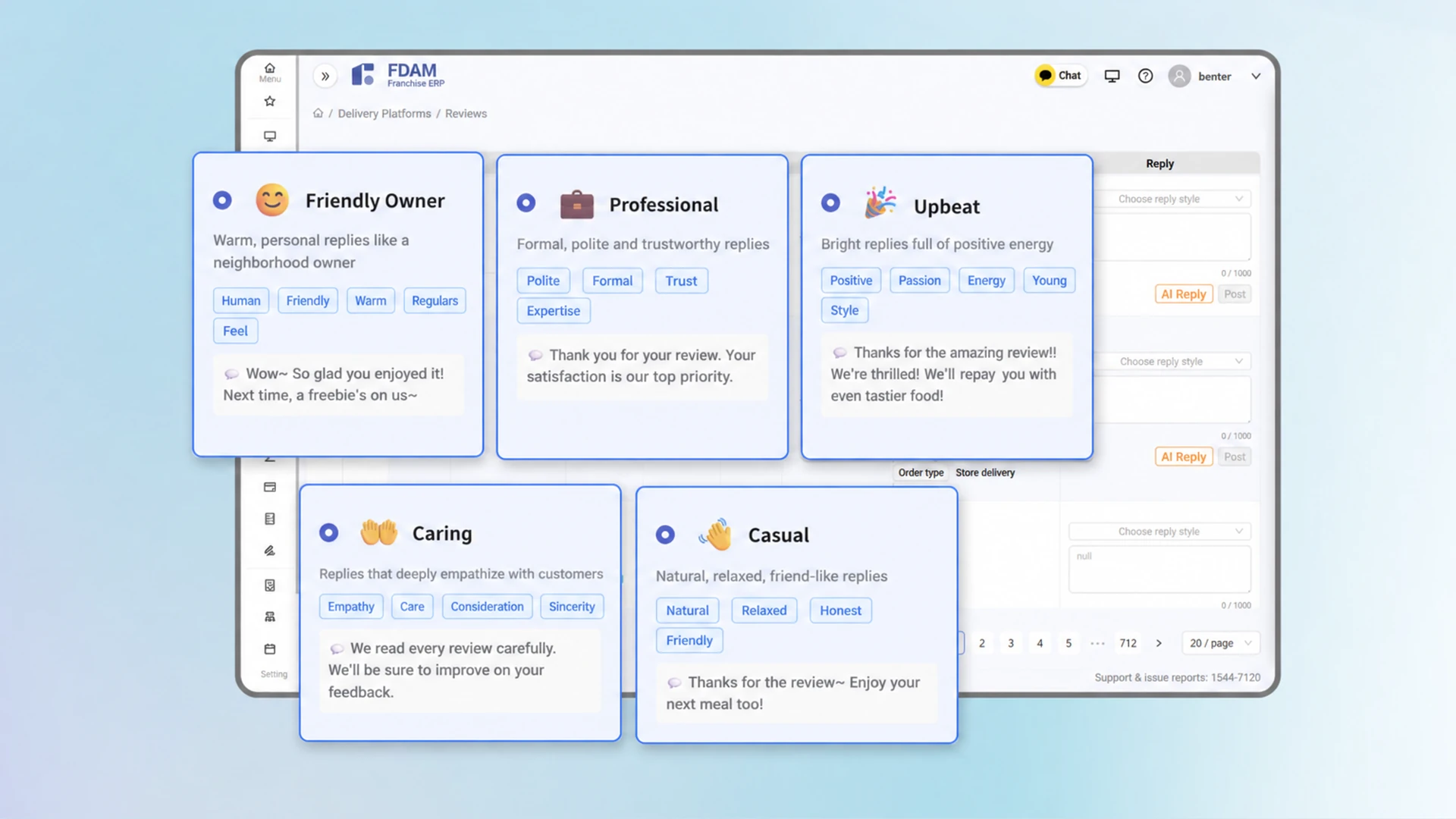
Choose a brand tone, and every reply starts from the same place
Delivery reviews are not going away. Balancing a lighter response burden for store owners with a consistent brand tone, and solving that balance with a system, is the role of AI delivery review replies.
Frequently asked questions
Q. Who should reply to delivery reviews, headquarters or the franchise store?
A. Primary responsibility lies with the store owner, who knows the store’s situation best. In FDAM, however, headquarters can also write and post replies directly, so it can look after reviews the owner missed or reviews that are sensitive at the brand level.
Q. Do AI delivery review replies get posted automatically?
A. AI suggests reply drafts based on the review’s content. The store owner or headquarters checks and refines the content before posting, so the burden of writing from scratch is lighter while people still handle the final review.
Q. How should you respond to negative reviews?
A. Remember that negative reviews are read not only by the author but also by potential customers considering an order. It is better to convey an apology and a commitment to improve in a restrained tone than to make excuses, and for reviews that are sensitive at the brand level, headquarters can also respond directly.
Q. How do you fix replies having a different tone at every store?
A. FDAM sets reply tone using five tones. No matter which store replies, the starting point is the same tone, so the brand’s voice doesn’t fragment by store even as the number of stores grows.
Delivery review management that protects your brand tone:
get started with FDAM
See in a consultation how AI delivery review replies for both headquarters and franchise stores would work for you.
Contact salesDelivery review management, AI delivery review replies, Delivery app review replies, Delivery review responses, AI review replies, Negative review response, Brand consistency, Franchise ERP, Franchise store management software, Franchisor headquarters, FDAM