
How Franchise AI Generates Action Items and the Preparation Steps

When store data converges on a single screen, AI analysis gets its starting point.
CORE SUMMARY
✓ In the global franchise industry, AI is moving from merely presenting analysis to assigning execution sequences to responsible parties.
✓ Meaningful AI recommendations require at least six standardized data sets—POS, labor, inventory, scheduling, CS, and finance.
✓ Store managers, regional supervisors, and headquarters executives must receive information at different depths so alerts don’t become a workload burden.
✓ FDAM standardizes QSCV checks and POS sales aggregation at the franchisor level, creating the data foundation needed before AI adoption.
Franchise AI refers to operational support technology that analyzes store‑level sales, staffing, and inventory data and notifies franchisor staff of items requiring action. Recent global examples show the technology shifting from a pure analysis stage to a stage that assigns who does what and when. As the number of stores grows, it becomes increasingly impossible for headquarters to manually filter every anomaly.
This article walks through the shifts observed in global cases, the data prerequisites for AI‑driven actionable insights, the distinction between report‑type and execution‑type AI, and the step‑by‑step data organization a franchisor headquarters should follow to prepare for this trend.
Why Franchise AI Is Gaining Attention Now
Franchisor headquarters adopt AI not because they want new tech, but because staff numbers can’t keep pace with expanding store counts. With ten stores, a manager can manually review sales reports and inspection results, but at fifty or one hundred stores, daily manual data review hits a physical limit.
At this point, AI’s role isn’t to make data look prettier—it’s to filter out anomalous signals that humans easily miss. For this to work, store data must be collected on a uniform basis. If each manager uses a different checklist format or sales are aggregated differently per store, AI can’t even compare the data. Thus, the first step in AI adoption is internal data standardization, not model selection—a pattern repeatedly confirmed in the global cases below.

As the number of stores rises, the volume of anomalies the headquarters must filter also increases.
Recent shifts in the global franchise market
In the United States, Taco Bell operatorBy linking POS, labor costs, inventory, work schedules, customer feedback, and financial data from 23 stores to an AI platform, the system automatically detects sales anomalies, labor inefficiencies, and inventory mismatches, then recommends actions for each responsible party (QSR Web, 2026.09.02).
POINT 01
A contemporaneous study reported that digital channel sales accounted for about 23%an increase of approximately 22%compared with the same month last year, and the average ticket for digital orders was 28%higher than in‑store orders (Food On Demand, 2026.09.01).
When you consider both trends together, the implication is clear: as sales channels diversify, the volume and variety of data the franchisor headquarters must monitor also grow. If digital orders, in‑store orders, inventory, and labor costs reside in separate systems, each new channel creates additional blind spots for the headquarters. Conversely, when these data are consolidated into a comparable format in one place, adding channels actually provides richer inputs for more precise decision‑making. For franchisor headquarters in Korea, the shift toward fragmented channels—delivery apps, physical stores, proprietary apps—is already underway, so this example is not merely an external case.

Aggregating data from multiple locations enables cross‑store comparisons.
Six data elements required for AI to generate actionable recommendations
For franchise AI to suggest meaningful actions, at least six data types must be provided together.POS sales, labor costs, inventory, work schedules, customer feedback (CS/reviews), and financial dataare required.
Understanding why these six are needed is easier when you think in reverse. POS sales alone tell you how much revenue changed, but not why. Adding inventory data lets you distinguish losses due to stockouts. Including customer feedback provides evidence of quality or service issues. In other words, each additional data type narrows the range of possible causes that AI must consider.
Problems caused by fragmented data
The issue is that these six data sets are typically managed by different owners, tools, and cycles. Sales live in the POS system, inspection results in Excel or paper, and customer inquiries in KakaoTalk or personal email inboxes. In such a siloed environment, even the best AI model will only flag something as “anomalous” without delivering actionable insights that pinpoint the cause and responsible store.
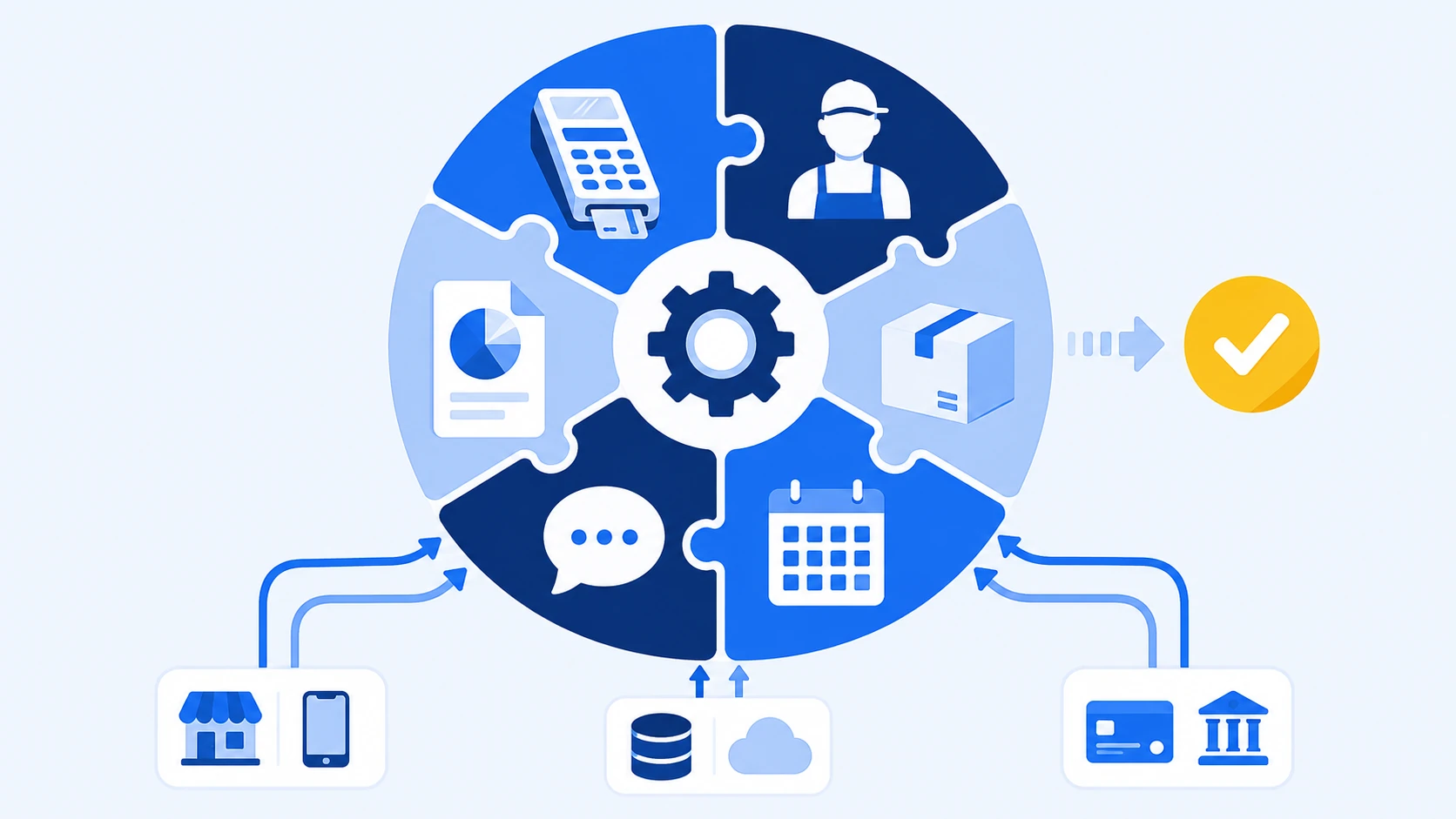
If even one of the six data points is missing, the AI cannot pinpoint the cause.
What distinguishes report‑type AI from action‑type AI?
Report‑type AI merely summarizes past data, while action‑type AI links anomaly signals to responsible staff, specific stores, and deadlines, then recommends next steps. For example, if a store’s sales suddenly drop, the report‑type view shows a graph only, but the action‑type system, when a manager asks the AI assistant for the cause, pulls QSCV inspection history and recent customer review data and presents a prioritized list of items to check.
This difference isn’t just a feature tweak—it reduces the workload for headquarters operations staff. With a report‑type setup, managers must interpret graphs and infer causes on their own each time. With an action‑type setup, the already‑collected inspection and review data are provided as evidence, cutting inference time. However, this model still depends on the six data types discussed earlier—especially standardized inspection results and customer response data—being stored in a uniform format.

Even the same anomaly can trigger different actions depending on how the results are presented.
Designing information that varies by store, region, and role
The depth of information required differs for store staff, regional supervisors, and headquarters executives. Store staff need the items to verify today, regional supervisors need a prioritized view across multiple stores, and executives need brand‑wide trends.
A common pitfall when designing this structure is assuming that giving everyone more of the same information is safer. In reality, the opposite is true. If store staff receive regional statistics, their immediate tasks become unclear; if executives receive detailed store‑level items, they may miss the overall trend. The key is tailoring depth to each role’s decision‑making scope, not simply increasing volume. Without this balance, alerts and reports can become an added burden rather than a help.
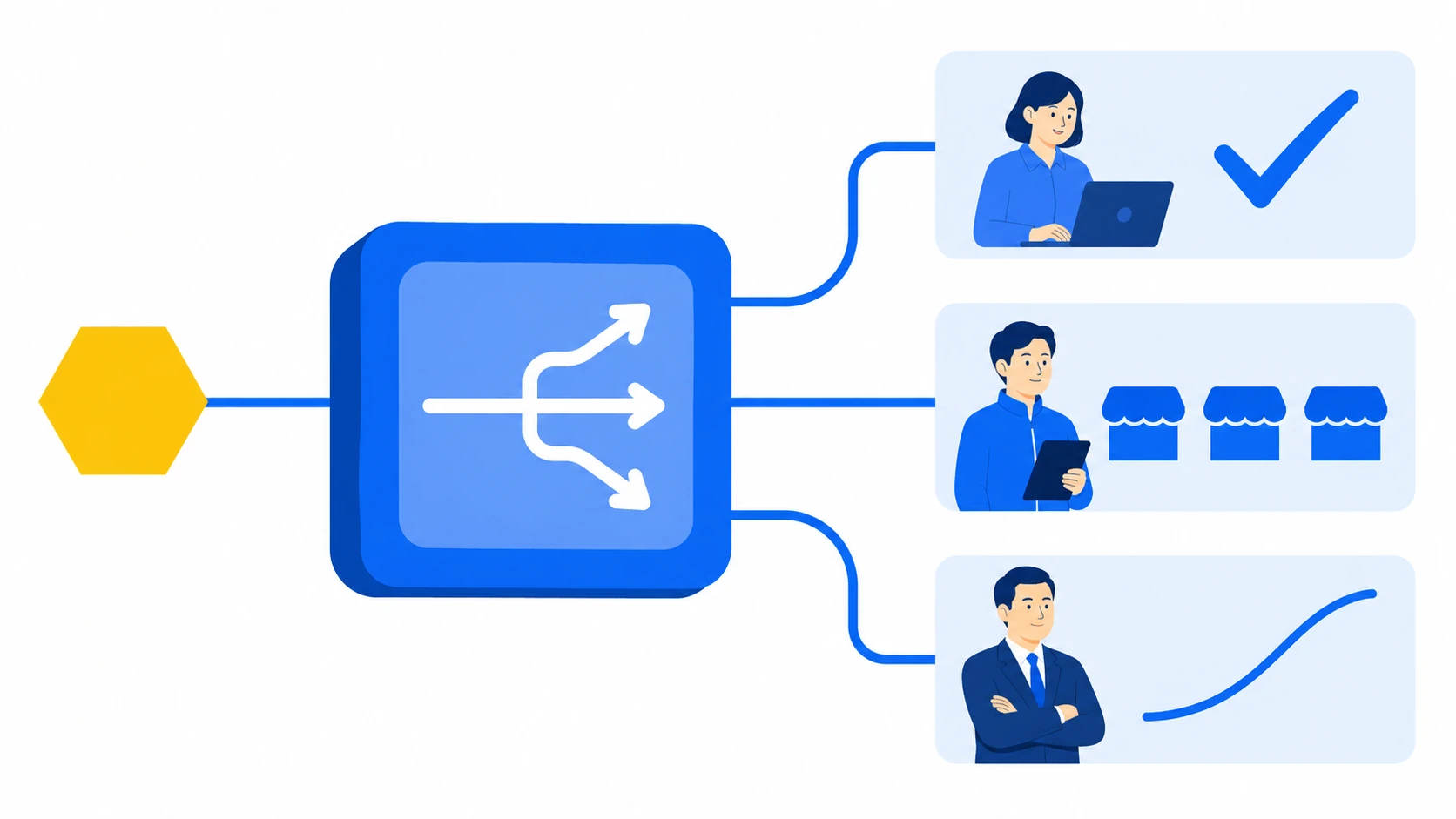
The depth of needed information varies by role, even when the underlying data is the same.
The sequence domestic franchise headquarters should follow
Before adopting AI, headquarters must first standardize their data. The three steps below translate the global best practices and data requirements discussed earlier into a practical roadmap for domestic franchise headquarters.
| Step 1 | Standardize QSCV inspections, POS sales, and CS request data to a common baseline. |
| Step 2 | Segment data by manager, store, and region to define who receives which information. |
| Step 3 | Prioritize recurring anomaly patterns and convert them into AI analysis items. |
FDAMOur Franchise Operations Management module standardizes franchise location QSCV inspections, POS sales aggregation, and franchise location information to the franchisor headquarters baseline, supporting the first-step tasks shown in the table. When inspection results and sales data are aligned, AI analysis can quickly pinpoint which store and metric are signaling an issue.
Adding the Customer Service Management option lets you view customer inquiries and review flows within the same framework, consolidating scattered information into a single screen per responsible team member. MS Venter, the nation’s first franchise‑focused software developer, has built FDAM to reflect this workflow.
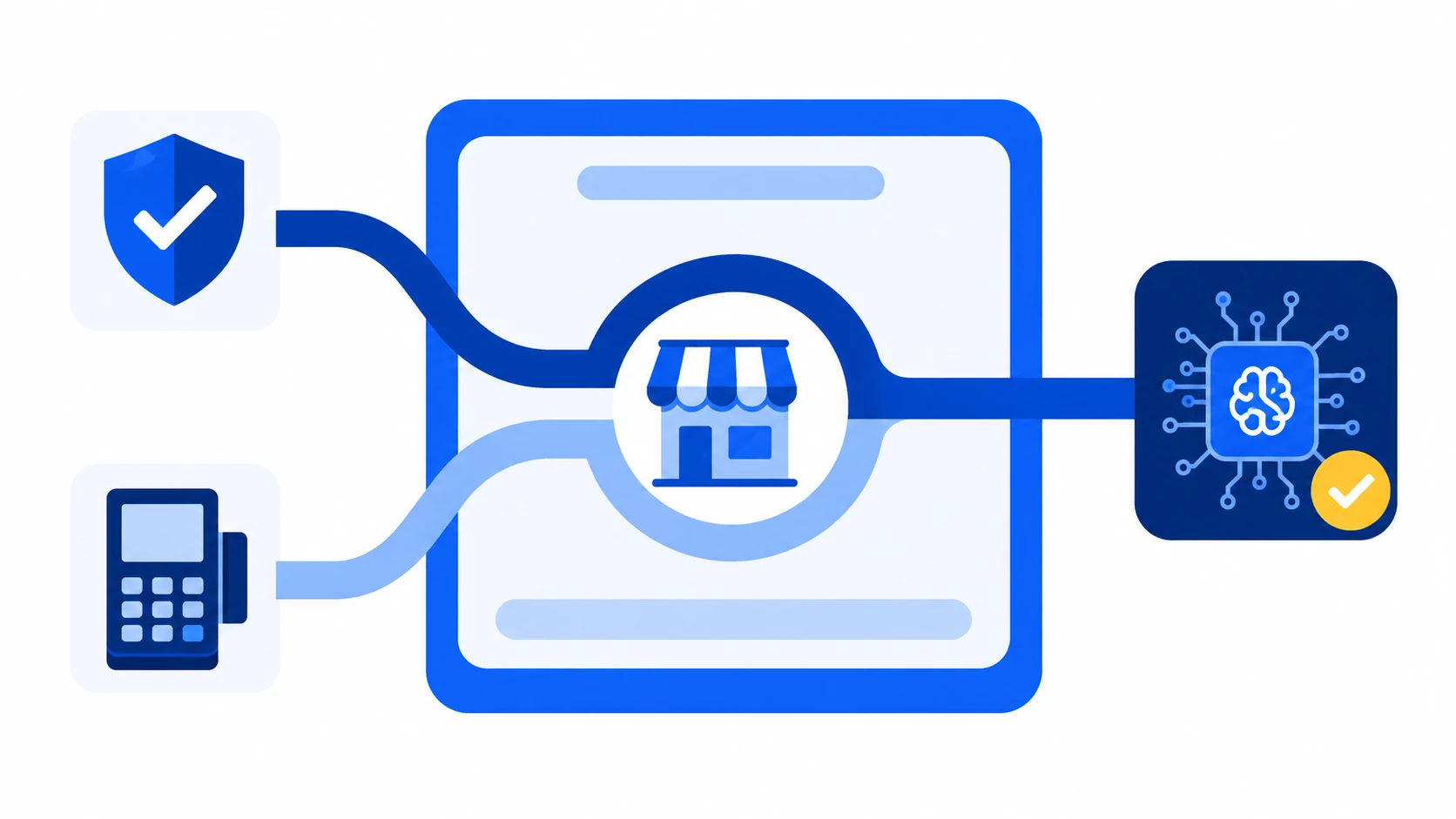
When inspection and sales data share a common standard, introducing AI analysis becomes straightforward.
Frequently Asked Questions
Q1. Do we need a large number of franchise locations to adopt franchise AI?
Standardized data matters more than the number of locations. If inspection, sales, and Customer Service Management data are stored uniformly, meaningful analysis is possible even with a modest number of franchise locations.
Q2. Can FDAM perform AI analysis directly?
FDAM provides the Franchise Operations Management foundation by standardizing QSCV inspections, POS sales aggregation, and franchise location information. With this data organized, you can seamlessly extend to the AI analysis stage.
Q3. If data is scattered across multiple systems, is AI adoption impossible?
It’s not impossible, but effectiveness drops sharply. AI can detect anomalies in fragmented data, yet delivering actionable insights that identify root causes and specific franchise locations requires data to be consolidated under a single standard.
Q4. Is AI used for review responses?
AI generates draft replies to reviews to help maintain brand tone, while the final response is still handled by the franchisee.
In the global franchise market, AI is increasingly being used not just as a visualization tool but as an execution‑assignment tool. To keep pace, franchisor headquarters must start by standardizing inspection, sales, and Customer Service Management data into a unified structure.
Is our franchisor headquarters’ POS, QSCV, and CS data structured for AI analysis?
Standardizing franchise operation data with FDAM
Inquire About FDAM Implementation