
Weekly Briefing · 2025.12.22
Global Foodservice Franchises
Weekly Briefing
This Week’s Keywords · United States — Regional hit brands expanding to new markets and testing experience‑focused concepts · China & Taiwan — Large chains scaling up and reshaping brand portfolios · Japan & Singapore — New formats and casualization driving longer stays and higher spend per guest · Hong Kong & Vietnam — Targeted promotions and price redesign amid rising costs · South Korea — BBQ enters the U.S. NRN ‘TOP 500’ at rank 180, the only Korean brand in the TOP 200 |

This weekly briefing delivers the latest overseas franchise and foodservice industry updates for domestic franchisor headquarters. We’ve compiled key developments from ten countries and regions—including the United States, China, Japan, and Southeast Asia. Review these trends to inform your overseas expansion strategy and operational decisions.
Summary: FDAM – Franchise‑focused ERP
1. West United States | PopUp Bagels launches its first store in Brentwood, Los Angeles

Image © pixabay
PopUp Bagels, a rapidly expanding bagel chain from New York, opened its first West Coast location in Brentwood, Los Angeles on December 19, 2025, confirming the westward push of regional hit brands. Since the pandemic, the brand has built a strong local following and is accelerating expansion by leveraging flagship products and high‑turnover operations.
Key Takeaways for Korean Franchisor Headquarters When entering LA, design the format—turnover, traffic flow, and peak‑time productivity—before localizing the menu. Validate demand with a small flagship, then expand to multiple franchise locations using a phased approach. |
2. East Coast, USA | December New York new‑open rush, ongoing concept and area experiments

Image © pixabay
New York continues opening new restaurants into mid‑December, with regional culinary‑concept tests ongoing. Since Dec 17, an Indian restaurant in Brooklyn has combined local menu identity with cocktail and service experiences—a growing trend.
Korean franchisor headquarters takeaways In the New York‑type market, brand story and spatial experience are assumed. Key competitive capabilities are: (1) designing media and review pathways at launch, and (2) standardizing reservation, wait‑time and turnover data to secure replicable operations for the next franchise location. |
3. China | Mixue Bingcheng, first U.S. LA store…global ambitions of the world’s largest chain

Image © pixabay
Mixue, now the world’s largest fast‑food chain, opened its first U.S. store in Hollywood, Los Angeles, accelerating Chinese restaurant brands’ entry into the U.S. As of June 2024, Mixue operates over 53,000 locations worldwide, surpassing McDonald’s and Starbucks.
Beyond Mixue’s low‑price drinks and ice‑cream (≈₩1,200/ ¥6), Chinese brands such as Nai Shede Cha, Louising Coffee, and Haidilao are also entering the U.S. Market experts say Chinese brands are raising local service standards through high‑efficiency operations and innovative consumer experiences.
Korean franchisor headquarters takeaways The global rollout of an ultra‑low‑price model hinges on cost and logistics structures that preserve margin per franchise location, rather than simple price competition. For franchisor headquarters expanding overseas, the top priority is to build a system that standardizes and manages the profit structure of each franchise location alongside price‑point design. |
4. Japan | Godiva launches its first “Godiva Crêpe” concept store

Image © pixabay
In Japan, new formats directly operated by brands continue to appear in the dessert‑café market. Godiva opened its first crêpe‑focused concept, moving beyond product sales to on‑site cooking and experience‑driven menus that boost dwell time and average ticket.
Korean franchisor headquarters takeaways In the Japanese market, franchisor headquarters should design not only localized menus but also on‑site performance elements—visible cooking, limited‑edition items, collaborative goods—to build brand fandom. Leverage that data to expand from department‑store or station‑area pop‑ups to permanent franchise locations. |
5. Hong Kong | Fast‑food chains defend demand with senior‑citizen discounts and targeted campaigns

Image © pixabay
Local Hong Kong media reported on December 22 that fast‑food operators are strengthening senior discounts and niche promotions to protect demand. Rather than pushing ticket size amid rent and labor cost pressure, they are securing visit frequency by designing benefits for specific segments—seniors, families, and office‑lunch crowds.
Implications for franchisor headquarters In an inflationary environment, protect sales with targeted benefits (time‑based offers, membership perks, set‑menu bundles) instead of blanket discounts, and build a system to review promotion performance instantly via POS and app data. |
6. Taiwan | Wang Pin (Wang Pin) signals accelerated expansion to 500 stores across Taiwan and China

Image © pixabay
According to the Taiwan Economic Daily, Wang Pin announced plans to exceed 500 combined stores in Taiwan and China by 2026 as the Chinese market shows recovery after restructuring. The rollout focuses on brand portfolio refinement, price‑point redesign, and profitability‑driven store operations. In China, consumer spending and price tiers are reshaping, intensifying competition above the 200‑yuan segment.
Implications for franchisor headquarters When entering Taiwan and China, redesign ticket‑size and cost structures to local standards, and manage brand‑portfolio focus on high‑performing categories as a group‑level KPI. |
7. Singapore | ‘Casual French’ boom drives a wave of bistros, brunch spots, and wine bars

Image © pixabay
Singapore media notes a surge in the ‘casual French’ trend, with bistros, brunch venues, and wine bars opening in quick succession. The concept lowers the barrier to upscale French dining while preserving core experiences—sauces, steaks, and wine pairings—to encourage repeat visits.
Implications for franchisor headquarters In high‑cost markets like Singapore, consider a ‘high‑low mix’ model: ① simplify core menu items to reduce kitchen complexity, ② supplement margins with alcohol and desserts, and ③ separate lunch and dinner peaks to boost table turnover. |
8. Philippines | Bistro Group projects strong 2025 results and expansion, betting on a rebound in dining out

Image © pixabay
Philippine business media reported that Bistro Group, buoyed by improved performance, is strengthening its brand‑portfolio management and expressed confidence in growth based on a rebound in dining demand. In the Philippines, dining consumption is driven by mall and mixed‑use districts, so tenant strategy and brand mix determine results.
Key takeaways for franchisor headquarters When entering the Philippines, prioritize (1) partnerships with mall operators and developers, (2) set and shared menus that reflect family and group demand, and (3) staffing and operational standardization for weekend peaks to minimize early‑stage missteps. |
9. Vietnam | Expanding tax and cost issues for F&B small businesses, pressure to redesign pricing and promotions
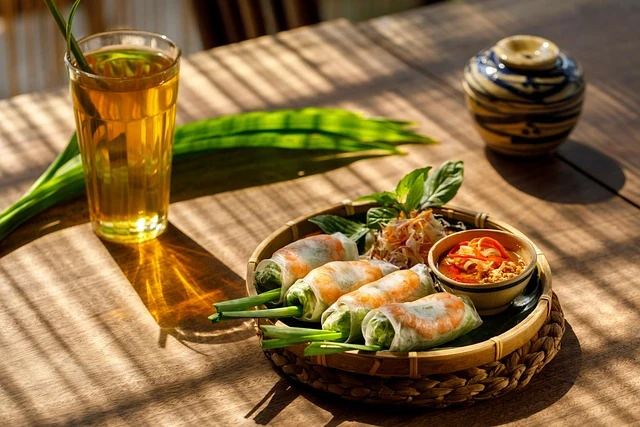
Image © pixabay
Vietnamese business media noted in mid‑December that changes in taxes and cost burdens affecting small‑business and F&B operators could translate into pressure to raise prices. When regulatory shifts combine with rising raw‑material and labor costs, a low‑price, discount‑focused model can quickly erode margins.
Key takeaways for franchisor headquarters In Vietnam, franchisor headquarters should first establish (1) a menu architecture resilient to cost fluctuations, (2) a promotion strategy that shifts from discounts to bundled or set‑up‑selling, and (3) a weekly profit‑and‑loss monitoring system per franchise location to enable stable expansion. |
10. Korea | BBQ ranks 180th in NRN’s U.S. TOP 500, the only Korean brand in the TOP 200.
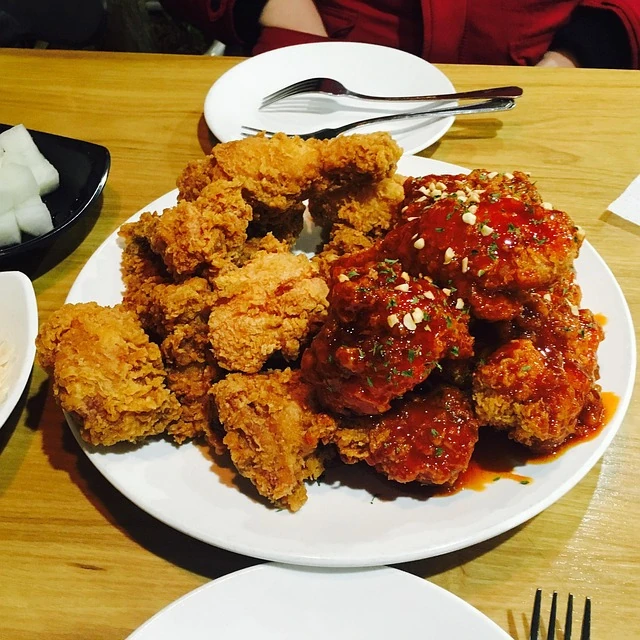
Image © pixabay
Genesis BBQ Group placed 180th in NRN’s (Nation’s Restaurant News) 2025 U.S. Restaurant Franchise Brand TOP 500, marking its fourth consecutive year of upward movement. BBQ entered the list at 376th in 2021, then rose to 333rd in 2022, 270th in 2023, 223rd in 2024, and now reached 180th.
This is the only Korean brand to break into the TOP 200 in the United States, the birthplace of the franchise industry. NRN’s TOP 500 ranks brands based on annual sales, number of locations, growth rates and other metrics, and is regarded as the most authoritative benchmark in the sector.
Key takeaways for franchisor headquarters in Korea This signals that Korean franchise global awareness is building incrementally. When expanding overseas, franchisor headquarters must equip a system that standardizes and compares operational data across each franchise location, enabling growth to translate into profit. |
Insight for this week
Across the U.S. and Asia, restaurant franchises are expanding and restructuring.These trends are unfolding simultaneously. In the U.S., regional hit brands are expanding into new markets and testing experiential concepts, while in China and Taiwan, large chains are scaling up and reshuffling portfolios, intensifying competition.
Japan and Singapore are boosting dwell time and average spend through new formats and casualization, and Hong Kong and Vietnam face rising costs, making target‑specific promotions and price‑strategy redesign key challenges. From the perspective of Korean franchisor headquarters,format‑driven expansion, store‑level profit‑and‑loss management, and brand‑portfolio strategyare becoming increasingly critical.
Franchisor headquarters operations ERP
All A‑to‑Z tasks for the headquarters,
FDAM franchise ERP
Manages sales, contracts, openings, and operations within a single system,
and standardizes each franchise location’s operational data to the franchisor headquarters baseline.