

A brand’s presence in AI answers starts with consistent official information and uniform franchise location operations.
CORE SUMMARY
- AI brand competitiveness does not automatically align with the number of locations or market share.
- Managing AI exposure requires accurate official data and a consistent operational foundation.
- Franchisor headquarters must manage QSCV checks and franchise location information using the same standards.
- Entrepreneurial inquiries that begin with AI searches must be tracked from the first consultation through contract signing.
AI Brand CompetitivenessThis metric shows how often a specific brand appears, is mentioned, and is used as a recommendation or citation source within generative AI responses. Unlike traditional search results where users pick links, generative AI presents candidate brands and the reasoning behind them in a single answer. Brands now need to ensure they not only appear on search screens but also provide the information AI can reference when constructing answers.
AIBIX, released by AI Big Lab for July 2026, measured 30 F&B and franchise categories covering 715 brands across ChatGPT, Gemini, Perplexity, and Claude from July 20 to August 4. The study found that 127 brands—17.8% of the total—were never mentioned by any of the four AIs. Only 10 of the 30 categories had the same top‑ranked AI across all platforms. Detailed figures are AIBIX July 2026 Official Releaseavailable here.
These results show that even well‑known brands are not guaranteed top placement across all AI systems, and AI brand competitiveness should not be treated as a one‑off marketing task. This article first explains the meaning and limits of the index, then outlines how franchisor headquarters can integrate official information, franchise operations, and entrepreneurial inquiries into a single management flow.
What the AI Brand Competitiveness Index Reveals to Franchisor Headquarters
AIBIX highlights that offline market position and AI‑based brand standing are distinct management concerns. The index compares brand appearance rates, mention share, and citation of official sources across the four AIs using repeated consumer questions. It reflects trends derived from cross‑question, cross‑AI analysis rather than a single user query. The specific design principles are AIBIX Measurement Methodologypublished publicly.
First, “non‑mention” signals that a brand may be absent from AI information channels altogether.Of 715 items, 127 scored zero on your AI, indicating the brand did not make the recommendation list for those questions and time frame. This doesn’t mean the brand is unknown in the market, but you should verify that relying solely on AI could cause the brand to be omitted from consumer choices.
Second, examine the variance across platforms.Mega MGC Coffee ranked 1st on Gemini, 3rd on Claude, 5th on Perplexity, and 7th on ChatGPT, with an overall position of 4th. Because recommendation order can shift dramatically across different AIs, you can’t gauge the situation based on a single service’s results.
Third, look at the questions and supporting evidence, not just the rankings.Identify which scenario’s question featured the brand, the accompanying description, and whether official data was cited—these clues point to real improvement tasks. AIBIX does not reflect sales, market share, product quality, or overall consumer preference. The index should be treated as a starting point for diagnosing brand presence in AI responses, not as a conclusion about business performance.
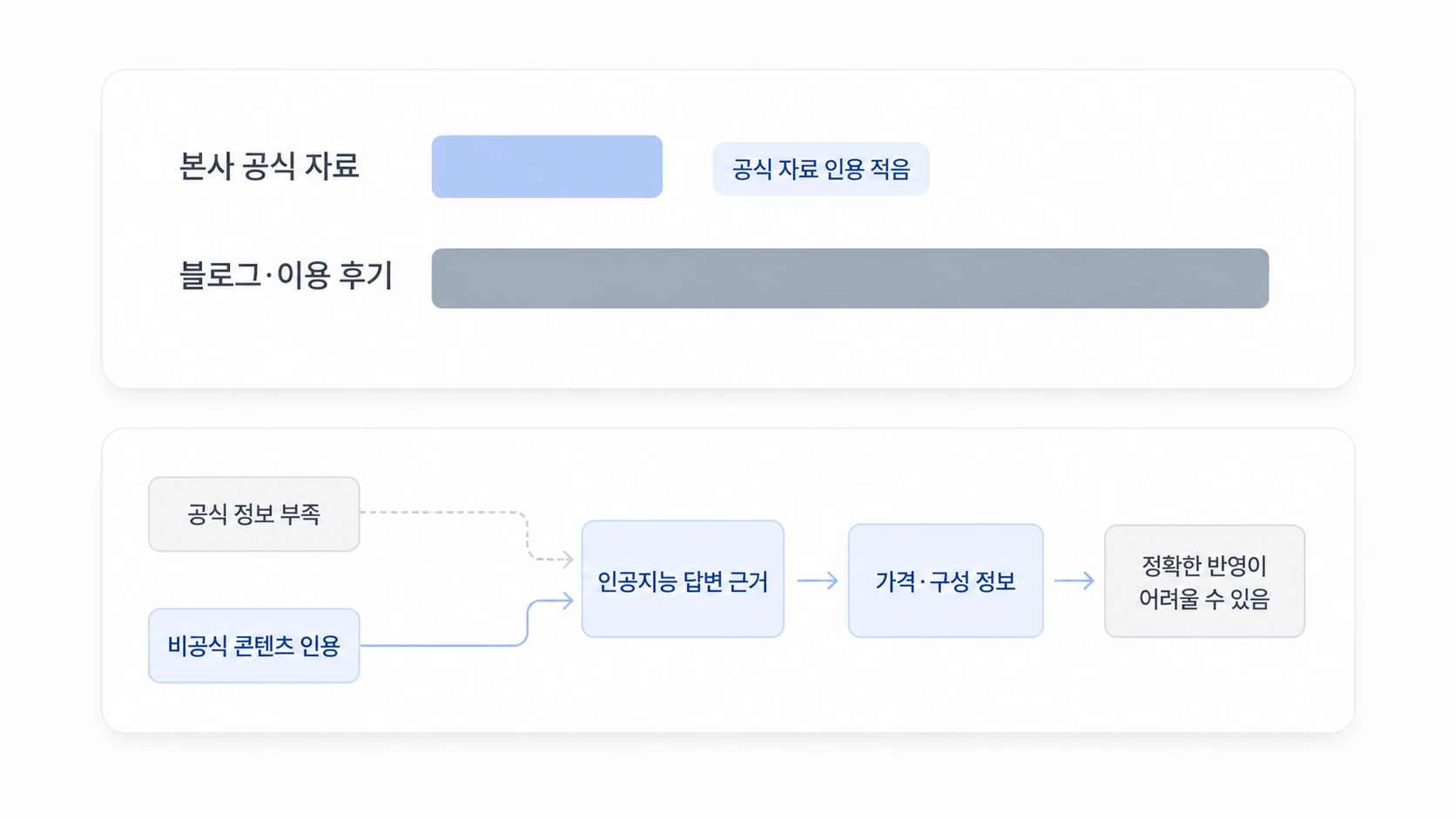
Even the same brand can receive different recommendation rankings and explanations across generative AIs.
Why AI brand competitiveness diverges between in‑store experience and official information
A franchise’s AI brand competitiveness can depend on how consistently the franchisor’s official data and customers’ in‑store experiences are aggregated. The AIBIX announcement notes that citations of official brand materials were generally limited, and when official information is scarce, the AI leans on unofficial content such as blogs and reviews. This is especially critical for franchisor headquarters.
A franchise implements a single brand promise across multiple franchise locations. Headquarters content may highlight friendly service and clean spaces, but if the same complaints recur at many sites, a gap emerges between public reviews and official statements. Conversely, when the franchisor defines clear operating standards and continuously addresses on‑site issues, official information and actual experiences are more likely to align. This doesn’t mean AI reads internal audit logs; it means the quality of internal operations drives the consistency of information that appears externally.
The information the franchisor must manage can be divided into three layers.
- Official facts — Brand name, franchise location basic data, menu/service names, policies—information that must be accurate
- Operational facts — QSCV inspection results, recurring issues, corrective actions—information that ensures promises are kept
- Public evidence — Official website, newsroom, FAQ, press releases, store guides—information verifiable externally
All three layers must be linked so that content reflects reality and on‑site operations support the content’s promises.
In practical audits, verify five items: whether each official channel uses the same brand and service names; whether there are defined criteria and owners for updating franchise location information; whether major claims have verifiable evidence and a reference date; whether recurring customer complaints are turned into operational improvement items; and whether FAQs deliver a clear answer from the first sentence. If you can’t answer these, prioritize aligning information and operations before expanding visibility.

Operational facts need to become consistent, publicly verifiable evidence via official content and the customer experience.
AI brand competitiveness franchise GEO 4‑step management system
The franchisor headquarters’ GEO response starts not with increasing content volume but with building a system that collects operational facts, validates them, and turns them into public information. The execution flow can be organized into four steps: define questions, gather operational evidence, create citation‑ready content, and feed the results back.
Step 1. Define the real questions from customers and prospective owners.
First, separate the questions consumers ask when choosing the brand from the questions prospective owners ask when evaluating a franchise. For each question, categorize whether the headquarters can answer it officially, whether verification is needed, or whether it must remain confidential. Linking each answer to a responsible department and source material reduces repetitive outdated explanations.
Step 2. Gather evidence from store operations.
Record QSCV inspections, franchise location basic‑info changes, on‑site support activities, and recurring complaints using the same criteria. The key is not the volume of records but classifying identical issues under the same name and standard. Even if staff change, previous actions and open items remain visible, turning operational facts into organizational assets.
Step 3. Convert verified facts into citation‑ready content.
Our blog and official pages should include a defined opening sentence, a core summary, step‑by‑step standards, and FAQ‑style queries that mirror actual search questions. Clearly state publication and revision dates, the information owner, and scope, and use consistent terminology for identical concepts. Describing the actual procedures and decision criteria the headquarters follows is more trustworthy than exaggerated performance metrics.
Step 4. Feed AI answer differences back into operations and sales.
Regularly audit multiple AI outputs to see which questions surface about the brand, whether explanations are outdated or inaccurate, and whether official sources are being used. If misconceptions about cleanliness, service, or quality recur, route them to the operations team’s checklist; if questions about franchise terms or contract procedures repeat, channel them to the sales team’s guidance materials and counseling flow. Set the review cadence to match information change frequency and organizational capacity, and always act on the findings rather than just noting them.
This system cannot be built by marketing alone. Operations must provide field facts, sales must supply prospective‑owner questions, and content owners must deliver the public answers. Designating a final approver for each piece of information lets you prioritize accuracy over speed and makes root‑cause tracing easier when updates are needed.

The cycle is: define questions, collect operational evidence, create content, and reflect back into operations and sales.
Why QSCV inspections and franchise location information standardization are essential for AI brand management
Franchisor headquarters’ AI brand management sustains only when the same standards are applied across all franchise locations and results are tracked. If inspection outcomes remain only in documents and follow‑up actions are hard to locate, or if franchise location data is managed inconsistently by different staff, the headquarters cannot quickly verify that official content matches on‑the‑ground reality.
At this point, the headquarters’ operating ERP calledFDAMorganizes scattered tasks into flows for Franchise Sales Management, Store Opening Management, and Franchise Operations Management. For example, if a QSCV inspection is performed but it’s hard to trace previous results and improvements, FDAM’s operations module can record and track regular inspections of quality, service, cleanliness, and value criteria. It creates a structure that links problem detection to the next verification step.
Franchise location address, contact info, and basic operational items often accumulate in disparate formats; franchise location information management addresses this. Standardizing data to headquarters’ specifications reduces the time needed to locate support and inspection information, and makes it easier to verify baseline data when updating official channel listings. When needed, you can also view POS sales aggregates to examine operational status and sales trends from a separate perspective. However, avoid jumping to conclusions about causality between inspection results and sales.
Additionally, FDAM provides an AI draft generator for responding to customer reviews that accumulate at franchise locations, and we are developing predictive AI features based on operational data. However, these tools cannot exceed the quality of the operational data recorded by franchisor headquarters. The tone of replies and the direction of improvement actions ultimately depend on how consistently QSCV inspections and franchise location information are maintained.
FDAM does not directly measure AI rankings or guarantee exposure gains. Its role is to enable franchisor headquarters to record and verify the operational facts that underpin AI brand management using consistent standards. While regular audits are performed, if franchisor headquarters sees no follow‑up actions, repeatedly receives requests to amend franchise location information, or struggles to reconcile official messages with on‑ground execution, it should start by reviewing the structure of its operational data.
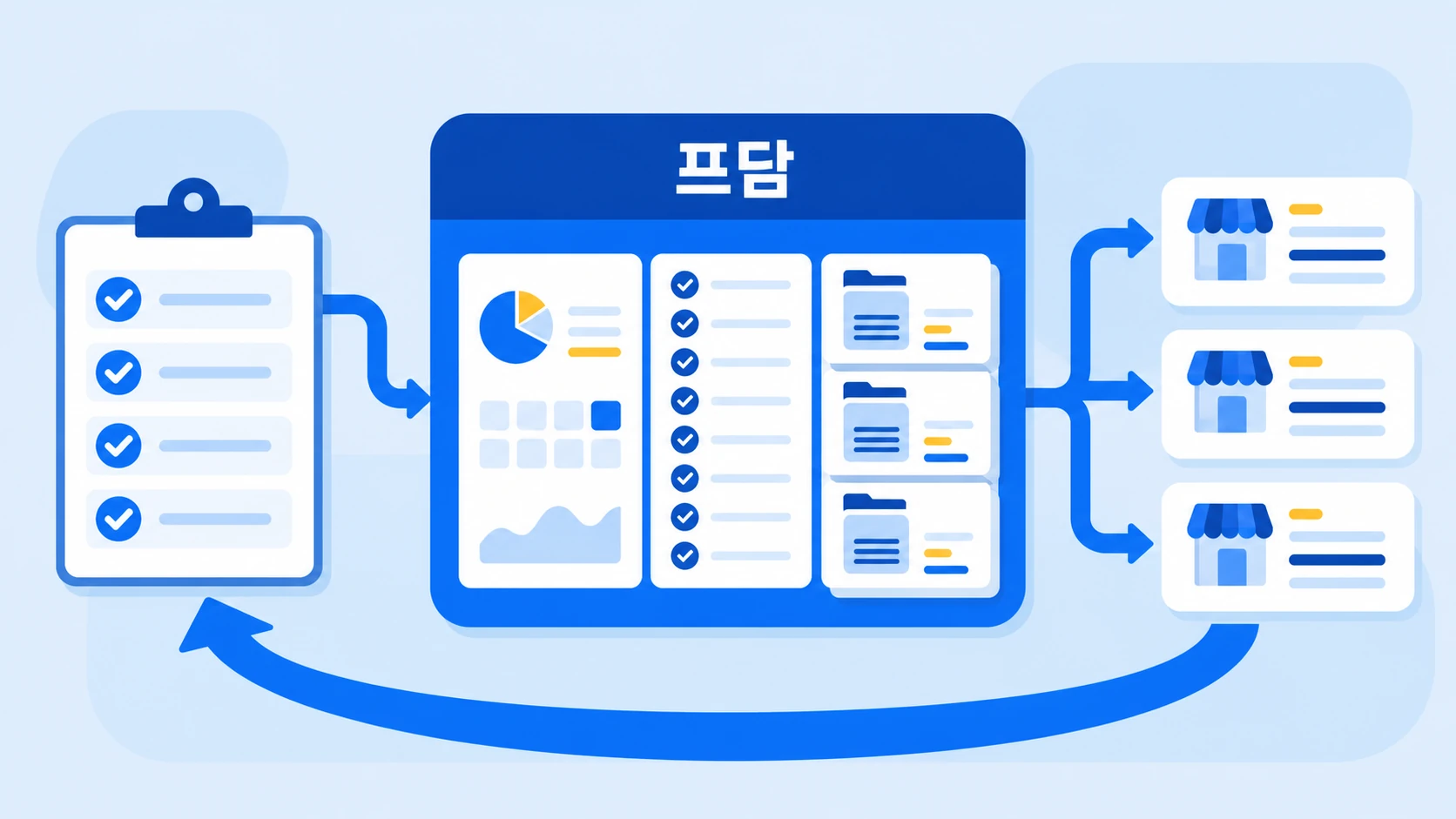
Recording inspection results and franchise location data according to franchisor headquarters standards is essential for tracking follow‑up actions.
How to convert AI‑generated franchise inquiries into signed franchise agreements
For AI‑driven brand interest to translate into business results, franchisor headquarters must reliably manage the context and subsequent steps of franchise inquiries. Prospective franchisees arriving via AI answers have varied questions about costs, support scope, and contract procedures. If consultation notes and status updates are scattered across representatives, it becomes impossible to know which information was shared or what the next steps should be.
FDAM Franchise Sales Management registers franchise sales inquiries as leads for prospective franchisees and accumulates their consultation status and history. Viewing each manager’s pipeline alongside consultation progress lets you distinguish new inquiries, follow‑up consultations, and pending cases. The key is not just counting inquiries but logging the full trail from the initial question to the next action.
During the pre‑document stage, you can generate documents, send them via KakaoTalk, email, or SMS, and log the transmission timestamp. This creates a clear audit trail of when documents were issued and viewed, simplifying verification of pre‑contract procedures. The process then moves to electronic franchise contracts, with the e‑contract module automatically sending alerts 30 days before expiration.
The workflow must remain continuous after contract signing. Franchisor headquarters should itemize paperwork, interior progress, training schedules, forms, and evaluations in Store Opening Management, and then continue with Franchise Operations Management to maintain franchise location information and QSCV inspections after opening. If AI exposure is the starting point, performance assessment should consider missed inquiry registrations, prolonged stalls in consultation stages, pre‑document view histories, and any incomplete post‑contract opening tasks.

Interest generated through AI search is linked to consultation history, pre‑provided documents, and electronic franchise contracts.
Frequently Asked Questions
Q. Does a high AIBIX score mean higher sales?
No. AIBIX measures how often the brand appears, is mentioned, or cited in generative AI responses over a specific period. It does not directly reflect sales, market share, product quality, or overall consumer preference. You must separate business performance metrics from AI presence indicators when interpreting the results.
Q. Is checking our brand on a single AI platform sufficient?
No. In the initial release, the brand ranked first on different AI platforms in 20 out of 30 categories, and rankings varied across the same brand. It’s advisable to evaluate multiple AI systems and question types under consistent conditions, focusing on recurring trends rather than isolated results.
Q. Should we publish a large volume of content to boost AI brand competitiveness?
No. First verify that official facts, operational facts, and publicly available evidence align. Publishing outdated or field‑inconsistent content can increase information mismatches. After consolidating accurate source data, expand content around definitions, procedures, decision criteria, and FAQs.
Q. Will implementing FDAM instantly raise our AI brand ranking?
No. FDAM is not a tool that directly improves AI exposure or AIBIX scores; it is an ERP that standardizes and records franchisor headquarters’ sales, opening, and operational activities. However, systematic management of QSCV inspections, franchise location information, and franchise inquiry and contract histories can strengthen the consistency between official information and field execution, laying the groundwork for better AI representation.
AI brand competitiveness is not a ranking achieved by a single campaign; it is a continuous management task of confirming what the brand promises and how it is executed at each franchise location. Headquarters must verify that official statements can be validated against field standards, track corrective actions after inspections, and follow AI‑search‑originated startup inquiries through to contracts and store‑opening preparation.
MS Venter has been developing franchise‑specific software since its 2007 founding, building systems for more than 500 brands. Backed by GS certification and a government‑recognized franchise IT research institute, we propose solutions that align with headquarters’ actual workflows. If your headquarters wants to define operational and sales standards for the AI search environment, start by diagnosing the breakpoints in your current processes.
Start with operational and sales standards
Organize them with FDAM
Kakao Consultation
Phone 1544-7120 | Email msb@benter.co.kr
#AIBrandCompetitiveness #FranchiseGEO #GenerativeAISearch #AIBIX #FranchiseBrandManagement #FranchisorHeadquartersERP #QSCVInspection #franchise location information management #FranchiseOpeningInquiryManagement #FDAM